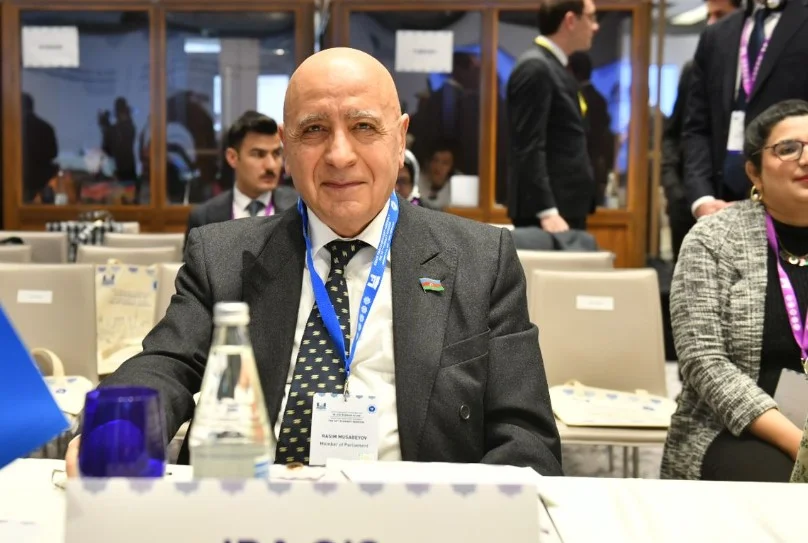
Armenia has largely severed its working relationship with the Collective Security Treaty Organization while remaining a member legally, leaving Moscow without an easy response, Azerbaijani lawmaker Rasim Musabekov said.
Musabekov made the comments in an ARB24 interview about the future of Russian-Armenian relations. He said CSTO membership had effectively lost its political and military significance for Yerevan.
According to Musabekov, Moscow initially expected Prime Minister Nikol Pashinyan’s government to lose power. Russian officials believed that a change of government through elections or protests could restore Armenia’s full participation in the organization, he said.
Those expectations were not realized.
Armenia froze its participation in CSTO activities, stopped sending representatives to the organization’s events and distanced itself from its mechanisms. Yerevan has not submitted a formal withdrawal notice, however, leaving its future membership unresolved.
Why Moscow Faces a Dilemma
Musabekov said allowing Armenia to remain a CSTO member while ignoring the organization’s obligations creates an awkward precedent for other members.
If one country can effectively disregard its commitments without leaving, other states could eventually do the same, he said, undermining the organization’s internal discipline and effectiveness.
Moscow has no simple solution. Armenia’s government shows no intention of returning to full cooperation but is also in no hurry to formalize its exit.
Why Pashinyan Has Not Formally Withdrawn
Musabekov attributed Yerevan’s caution primarily to economic interests.
Armenia still wants to preserve its membership in the Eurasian Economic Union because its economy depends significantly on ties with the bloc, he said.
Armenian authorities are also weighing the possible political consequences of a formal CSTO withdrawal for relations with Russia and participation in other integration structures.
In security matters, however, Yerevan no longer relies on the CSTO’s collective mechanisms, Musabekov said.
Armenia prefers to preserve those aspects of its relationship with Russia governed by bilateral agreements. As for the CSTO’s other members, Yerevan has long believed many of them hold positions closer to Azerbaijan, he said.
Discounted Russian Weapons No Longer an Incentive
One practical benefit Armenia previously derived from CSTO membership was access to Russian weapons on preferential terms.
Musabekov said those supplies could be priced at Russia’s domestic rates, substantially below export prices.
The situation changed after Russia began its full-scale war against Ukraine. Russia’s defense industry now gives priority to its own armed forces, limiting supplies to other countries, he said.
As a result, Armenia has lost that incentive to remain active in the organization.
“No political support, no military support and no opportunity to buy weapons at low prices. Then what is this organization needed for?” Musabekov said, summarizing what he described as Yerevan’s logic.
Would Withdrawal Create New Security Risks?
Some Armenian opposition groups argue that a definitive CSTO withdrawal could create additional security risks for the country.
Musabekov rejected that assessment. The organization no longer provides Armenia with effective guarantees, so formal withdrawal would make little practical difference, he said.
He also questioned critics who oppose a break with the CSTO without offering a convincing explanation of the real benefits of continued membership.
In Musabekov’s assessment, the Armenia-CSTO crisis has moved beyond a temporary dispute. Yerevan has effectively stopped participating in the Russian-led collective security system while retaining legal membership mainly out of political and economic caution.
Armenia has not formally withdrawn, and the next decisions by Yerevan and Moscow remain open questions.
Source: Vesti Baku.