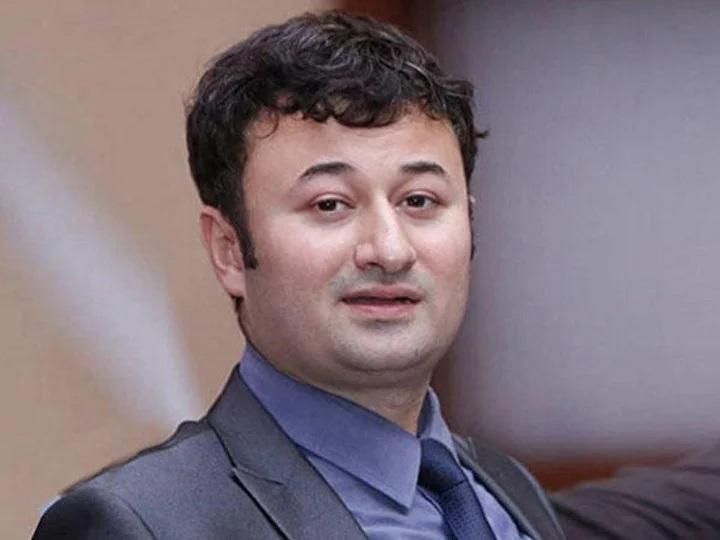
Recent tension between Baku and Ankara is driven less by disputes over Israel or restrictions on hijabs in Azerbaijani schools than by Azerbaijan’s changing role and its demand for an equal partnership with Turkey, political analyst Rovshan Ibrahimov said.
Ibrahimov, who currently works in Uzbekistan, made the assessment in an interview with Daily Europe Online.
He said the disagreement did not amount to a deep crisis between the two states, noting that tensions in 2008 and 2009 were considerably more serious. The current episode nevertheless exposed a problem the allies must address, he said.
Azerbaijan No Longer Sees Itself as the “Younger Brother”
Ibrahimov said Azerbaijan’s international standing changed after 2020. In his assessment, Baku has gradually moved from the category of a small state to that of a regional power with a medium level of influence.
That shift has forced Russia, Iran and France to revise their assumptions about Azerbaijan, and Turkey must now do the same, he said.
Ibrahimov recalled that Ankara encountered Baku’s refusal to subordinate its national interests to Turkey’s foreign policy agenda in 2008 and 2009. Similar contradictions have now resurfaced.
He said part of Turkey’s political establishment still interprets the “one nation, two states” formula as implying a degree of hierarchy. Azerbaijan, by contrast, views the relationship as an alliance between two equal sovereign states.
Where brotherhood ends and independent state policy begins is one of the central questions in the current debate, he said.
Hijab and Israel Disputes Are Triggers, Not the Root Cause
Addressing Turkish criticism of Azerbaijan over restrictions on religious clothing for schoolgirls, Ibrahimov pointed to what he described as a selective reaction.
Comparable restrictions exist in other Central Asian states without provoking a similar response in Turkey, he said.
Azerbaijan developed historically as a secular state, and government policy in schools is intended in part to protect children from outside ideological influence, Ibrahimov said. He distinguished between the religious freedom of adults and state requirements in public schools.
He also argued that the politicization of Islam in Azerbaijan is substantially encouraged by foreign centers of influence, making the preservation of the state’s secular character important.
Azerbaijan’s cooperation with Israel has become another sensitive issue, especially amid developments in the Middle East. But neither Baku’s relationship with Israel nor the hijab dispute alone explains the latest tension, Ibrahimov said.
Some political and ideological groups in Turkey are using those issues to express deeper dissatisfaction with Azerbaijan’s independent policies, he argued.
Turkey’s Role in the 2020 War
Ibrahimov also addressed statements by Turkish politicians and public figures about Ankara’s role in Azerbaijan’s victory in the Second Karabakh War.
Azerbaijan’s armed forces conducted the fighting in 2020, while Turkey’s support was primarily military-political and strategic, he said. Ankara’s position helped deter possible intervention by third countries.
Regarding Turkish weapons, Ibrahimov cited President Ilham Aliyev’s position that Azerbaijan paid for the military equipment it acquired from Turkey.
It would be wrong either to diminish Ankara’s role or to portray its assistance as creating an unlimited political debt for Baku, Ibrahimov said.
He added that the 2021 Shusha Declaration established mutual security obligations. Turkey needs Azerbaijan no less than Azerbaijan values cooperation with Turkey, he said.
TRIPP Matters More to Armenia, Ibrahimov Says
The interview also covered the Trump Route for International Peace and Prosperity, or TRIPP, which is intended to provide a transport connection between mainland Azerbaijan and Nakhchivan through Armenia.
Ibrahimov argued that the route is more important to Armenia than to Azerbaijan. Baku already has alternative transport routes and participates in the development of the Middle Corridor, he said.
Opening a route through Armenia would expand regional trade, but a lack of progress would not endanger Azerbaijan’s existing logistics projects, he said.
For Yerevan, TRIPP could help break transport isolation, reduce dependence on Russia and integrate Armenia into international economic links.
Ibrahimov said the project’s practical implementation remains uncertain because it is not yet clear which U.S. company would carry it out or exactly what functions would be transferred to that company.
Armenia is delaying decisions despite having the strongest interest in starting the new communications quickly, he said.
Armenia’s Constitution
Ibrahimov said he supported revising Armenia’s constitution.
He argued that Armenia’s current model of statehood does not clearly separate the interests of the Republic of Armenia from the broader idea of a global Armenian national community, including the diaspora.
Strengthening the state requires defining the independent political interests of its citizens rather than relying on the concept of a single Armenian world without state borders, he said.
The interview also addressed ideas about a possible second Armenian state. Ibrahimov said any such concept could not be pursued at the expense of Azerbaijan’s territorial integrity.
“Turan” Requires More Than Common Roots
Ibrahimov expressed skepticism about the Organization of Turkic States evolving into a single Turkic state or a full military-political bloc.
Shared history, language and culture are not enough for deep integration, he said. Economics must be the main unifying force.
Turkic states already belong to different international organizations and follow divergent foreign policy strategies. Kazakhstan and Kyrgyzstan are members of the Eurasian Economic Union, Turkey has a customs union with the European Union, while Azerbaijan and Uzbekistan prefer greater independence.
Under those conditions, Ibrahimov said the most realistic path is to develop transport projects, trade and technical cooperation, while gradually aligning security standards.
The idea of a unified “Turan,” he said, remains primarily a historical and ideological concept rather than a practical program for political unification.
Uzbekistan’s Growing U.S. Ties
Ibrahimov said Uzbekistan has actively expanded its international ties under President Shavkat Mirziyoyev, attracting foreign universities, investment and new technologies.
He said a visit by U.S. Secretary of State Marco Rubio and talks involving Uzbek business representatives demonstrated Washington’s growing interest in Central Asia.
Ibrahimov cited agreements worth about $12 billion covering critical minerals, artificial intelligence, industry and high-technology manufacturing.
He also highlighted the China-Kyrgyzstan-Uzbekistan railway project, which could strengthen Central Asia’s role as a transport hub.
Europe Returns to National Defense
The final part of the interview covered European security, Russia-NATO relations and the prospects for a new system of international guarantees.
Ibrahimov said the postwar European security model, which relied heavily on U.S. commitments to allies, is undergoing a major transformation.
President Donald Trump’s policies are pushing European states to invest more actively in their own defense capabilities, he said.
Creating a unified supranational European Union security system remains difficult. Amid growing hybrid threats and a reassessment of the U.S. role, European governments are increasingly focused on strengthening national defense mechanisms, Ibrahimov said.
His central argument was that the international balance of power is changing and Azerbaijan is increasingly demanding recognition as an independent political actor. That shift affects not only its relationship with Turkey but also regional transport links, Turkic integration and its dealings with major powers.
Source: Vesti Baku.