AZE.US
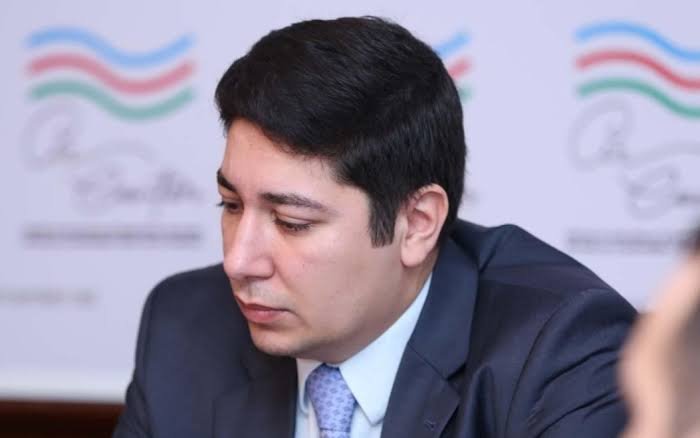
Azerbaijan is steadily turning its geographic position into a political and economic asset, while Armenia is only beginning to build a diversified foreign policy and remains caught between reducing its dependence on Russia and preserving access to the Russian market, according to Kamal Makili-Aliyev, a doctor of law and associate professor at the University of Gothenburg.
Speaking in an interview with the YouTube channel Modern Conversation with Rasim Babayev, Makili-Aliyev said President Ilham Aliyev’s participation in the Shanghai Cooperation Organization summit in Bishkek should be viewed as part of Azerbaijan’s expanding engagement with Central Asia and China.
He argued that the wars involving Ukraine and Iran, sanctions, and growing instability along traditional trade routes are creating both risks and new opportunities for the South Caucasus.
Azerbaijan, he said, is seeking to strengthen its role as a link between East and West and become a major hub for transportation, energy and commercial infrastructure across Eurasia.
“The western direction is more or less clear and predictable. The opportunities emerging from closer cooperation in the east are far more relevant today,” Makili-Aliyev said.
Pashinyan’s “Fourth Republic”
The interview also focused on Armenian Prime Minister Nikol Pashinyan’s concept of a “Fourth Republic.”
Makili-Aliyev described the term primarily as a political narrative intended to promote a new national direction. Renaming the state model or amending the Constitution would not by itself create a new republic, he said.
The more significant development, in his view, is Armenia’s attempt to reconsider the ideological foundations of its post-Soviet statehood, particularly territorial claims against neighboring countries and the placement of conflict at the center of national identity.
Makili-Aliyev said Pashinyan’s calls to abandon territorial claims against Azerbaijan, Türkiye, Georgia and Iran indicate the emergence of a more pragmatic approach.
“This is a return to a normal understanding of statehood and relations with neighboring countries,” he said.
“It is a difficult transition because many people find it painful to admit that ideas glorified for decades did not lead the country toward development.”
He described this reassessment as an expression of Armenia’s instinct for self-preservation. However, he cautioned that talk of a “Third” or “Fourth Republic” would remain political packaging unless followed by substantive changes in Armenia’s relations with its neighbors.
Armenia Seeks to Escape Its Dependence on Russia
According to Makili-Aliyev, the revision of Armenia’s former state model inevitably affects its relations with Moscow.
A substantial part of Armenia’s strategic assets, security structure and economy became closely tied to Russia over several decades. Yerevan is now attempting to reduce that dependence, but a rapid separation would be politically and economically painful.
“Some degree of disengagement from Russia has become necessary, but it cannot be comfortable over a short period,” he said.
Russia, for its part, does not want to lose an ally and is pressing Armenia to make a clearer geopolitical choice. Makili-Aliyev characterized Moscow’s position as: “You are either with us or against us.”
Armenia does not want to return fully to Russia’s orbit, but it is also not prepared to leave the Eurasian Economic Union. Such a move could cause serious economic disruption, he argued.
Access to a common market, free trade arrangements and established commercial ties remain important to Armenia’s economy. Russia is using that dependence as one of its principal instruments of pressure.
Even if Yerevan were to freeze its European ambitions, relations with Moscow would not return to their previous state, Makili-Aliyev said. Armenia’s attempt to strategically reorient itself has already changed how the Kremlin views the Pashinyan government.
“Armenia finds itself in a situation in which it loses something with every choice, without immediately receiving anything better in return,” he said.
“That is why it is now trying primarily to delay the decision.”
Makili-Aliyev predicted that a final choice cannot be postponed indefinitely and that tensions between Armenia and Russia will continue to grow.
What Azerbaijan Stands to Gain
Against this background, Azerbaijan is pursuing a pragmatic policy by offering Armenia participation in energy, trade and transportation projects, the analyst said.
Baku could help Armenia diversify its economy, provide electricity and open access to new regional communications. In return, Azerbaijan expects Yerevan to take a constructive approach toward opening regional routes, including transport links through Zangezur.
Such an approach could ease some of Armenia’s difficulties while creating a system of mutual obligations between the two countries.
Makili-Aliyev said Azerbaijan has applied a similar model for decades in its relations with Russia, Iran and Georgia. Baku has built interdependence without becoming fully reliant on any single external power.
“Azerbaijan has a genuinely diversified foreign policy,” he said.
“There is no single country on which it is completely dependent. Armenia is now trying to accomplish what Azerbaijan spent decades building.”
The absence of such a carefully constructed system of balances, he argued, helps explain Armenia’s abrupt foreign policy shifts.
The South Caucasus Gains Strategic Importance
Makili-Aliyev also linked Azerbaijan’s growing engagement with Central Asia to the conflicts involving Russia and Iran.
War, sanctions and restrictions on air and land transport have complicated the movement of goods and energy along traditional Eurasian routes. As a result, the South Caucasus is gaining importance in trade between Asia and Europe.
Azerbaijan’s negotiations with countries east of the Caspian Sea will inevitably attract attention in European capitals, particularly amid persistent concerns over energy security, he said.
Baku should use this window of opportunity to secure as many infrastructure projects, commercial contracts and long-term agreements as possible.
“Azerbaijan must attract the maximum possible amount of infrastructure and agreements while also connecting Georgia and Armenia to these processes,” Makili-Aliyev said.
“The more links Azerbaijan can build around itself today, the stronger its position will be in the future.”
AZE.US