AZE.US
Armenia’s parliamentary elections kept the peace track with Azerbaijan alive, but they did not settle the central questions still standing between Baku and Yerevan.
That was the main message from a discussion on PRESS CLUBS TV, a joint Armenian-Azerbaijani media platform created by the Yerevan and Baku press clubs.
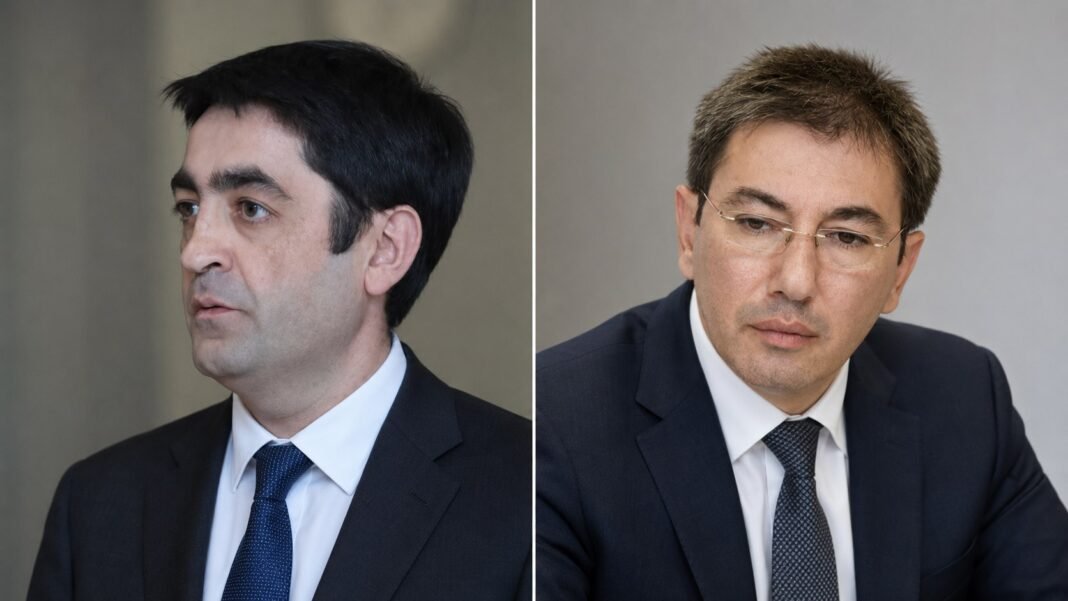
Azerbaijani political analyst Ilgar Velizade and Armenian expert Arsen Kharatyan discussed the election results, external reactions and the future of the peace process between Azerbaijan and Armenia.
The ruling Civil Contract party of Prime Minister Nikol Pashinyan remains in position to form a government. That matters for Baku because the current Armenian leadership is seen as the political force most closely associated with the peace agenda.
Velizade said the outcome gives the peace process a chance to continue, even if it has not yet become irreversible.
But the elections also showed the limits of that process. Pashinyan’s team did not secure a constitutional majority, making the issue of constitutional change in Armenia more difficult.
For Azerbaijan, the Armenian Constitution remains one of the key political questions. Baku has repeatedly argued that references in Armenia’s constitutional framework must be brought into line with a future peace treaty.
Velizade said the issue is important for Azerbaijan, but also argued that Pashinyan may need a new constitution for Armenia’s own internal political transformation.
According to him, the constitutional debate is not only about Azerbaijan’s demands. It is also about Pashinyan’s effort to build a new political system in Armenia and draw a line under the country’s previous political order.
Kharatyan warned, however, that tying the peace treaty too directly to constitutional reform could be counterproductive. He said if the two sides want to sign a document that has already been largely agreed, they should move faster and avoid turning the process into a hostage of a difficult referendum.
The discussion also focused on Russia’s reaction to the Armenian elections.
Kharatyan said Moscow’s questioning of the legitimacy of the vote was highly unusual for Armenia’s post-Soviet history. In his view, it showed that Russia had an interest in delegitimizing the election result and weakening Pashinyan’s mandate.
Velizade said the elections were closely watched in Azerbaijan because they were not only about Armenian domestic politics. They were also about the broader direction of Armenia’s foreign policy, the role of Russia and the West, and the future structure of regional relations.
Both experts agreed that the Azerbaijan-Armenia peace process was one of the central themes of the Armenian campaign.
Kharatyan said fears of a new war were used heavily during the election period, often in a manipulative way. He said the risk of major escalation today is lower than it was several years ago, but warned that the absence of war does not yet mean peace.
That distinction is now at the heart of the post-election period.
The sides may be able to move forward on several tracks even before a final peace treaty is signed. Velizade pointed to trade, possible movement of goods, border delimitation, communication routes and civil society contacts as areas where progress could continue.
He said the peace agenda cannot simply wait for constitutional reform in Armenia. It needs practical steps to keep the process alive.
One such area is border delimitation and demarcation. Velizade said around 27 km of the border has already been delimited and demarcated, and further progress could serve as a concrete sign that the process is moving.
Another major track is transport connectivity.
The discussion touched on TRIPP, the proposed route that would connect mainland Azerbaijan with Nakhchivan through Armenian territory. Kharatyan said the United States appears seriously interested in advancing the project, while Velizade noted that regional infrastructure could move ahead in stages, even before all political issues are resolved.
The role of the West was another major theme.
Velizade said the United States and the European Union have a clear interest in changing the conflict paradigm into a peace paradigm, partly because they want Armenia to be integrated into wider regional connectivity, including routes toward Central Asia.
Kharatyan also said there is a rare degree of consensus between Washington and Brussels on this issue.
But Russia remains a factor. Armenia is still tied to Moscow through economic, security and institutional links, and any rapid movement toward Western-backed transport and peace projects will affect Armenian-Russian relations.
That makes the next stage more complicated.
The election result did not close the question of peace with Azerbaijan. It only preserved the political possibility of continuing the process.
What comes next will depend on whether Baku and Yerevan can move from statements to practical steps: renewed high-level contact, further border work, progress on communications and a clearer path toward signing the peace agreement.
The peace process is still alive. But after the Armenian elections, it enters a harder phase where political will alone will not be enough.
AZE.US