AZE.US
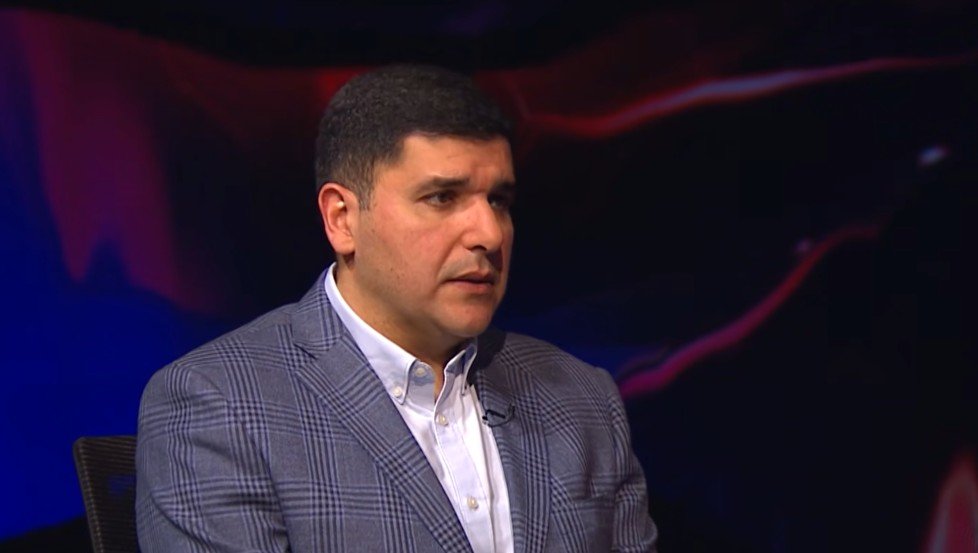
The peace agenda between Azerbaijan and Armenia is likely to continue after Armenia’s elections, although its pace will depend on Yerevan’s next steps, Azerbaijani political analyst Farhad Mammadov said.
Speaking on the YouTube program “News of the Caucasus,” Mammadov said Baku has not yet issued an official reaction to the Armenian election results, likely because it is waiting for the final outcome to be formally announced.
He also noted that Azerbaijan and Armenia do not have diplomatic relations, which means there is no established tradition of official congratulations after elections.
“The general mood is that the peace agenda, in its current form, will continue. There is a predictable leader who has agreed to the peace agenda. The mood is fairly positive. I did not sense in Baku any return of the conflict to war,” Mammadov said.
According to him, Armenia now has a government that has already accepted the peace agenda with Azerbaijan. He said transit cargo continues to move as it did before the elections, and contacts between state institutions have not stopped.
Mammadov said the next important step could be a meeting between the leaders of Azerbaijan and Armenia. Such a meeting could take place either in a special format or on the sidelines of an international summit.
He identified two key markers that Baku will be watching.
The first is the issue of a possible referendum and a new Armenian constitution. Mammadov said the topic remains sensitive, but it could show how far Armenia’s leadership is prepared to go in formally consolidating the new political reality.
The second marker is the transport and communications agenda. If there is progress in this area, he said, it could give the peace process more practical substance.
“It can be said that no one is going to abandon the peace agenda now. But we will see at what pace it develops and in which directions,” he said.
Mammadov said transport links could, in principle, begin operating even without a signed peace treaty. But he added that the long-term stability of such projects depends not only on logistics, but also on politics, security and a shared understanding of regional interests.
He also pointed to the role of the United States and the European Union. According to Mammadov, Washington is building a strategy toward Central Asia and the South Caucasus as one broader space, and Armenia is seen as part of that wider puzzle.
“If the United States and the European Union want to invest in this region and see a strategy in which Armenia’s involvement is considered important, then Baku and Ankara should use that in their relations with Washington and Brussels,” Mammadov said.
At the same time, he stressed that Western initiatives should take into account the interests of Azerbaijan and Turkey, rather than turn into pressure on them.
Speaking about Russia, Mammadov said Moscow appears to have made mistakes in its approach toward Armenia. In his view, Russian pressure did not produce a quick result, while pro-Russian forces in Armenia lacked the tools to sharply change the situation after the vote.
The key issue for Armenian Prime Minister Nikol Pashinyan after the election, Mammadov said, has already been resolved: power. The question now is how quickly Yerevan will move on the elements of the peace agenda.
“There is no need to rush,” he said, summing up the outlook.
Mammadov added that he sees the chances of serious deterioration as very low.
“I think the chances that things could get worse are very small. The peace process will move forward. At what pace is another question,” he said.
He said the most important achievement remains the fact that there has been no shooting on the Azerbaijan-Armenia border for a long period.
“Worse means when shooting starts again. And here, I hope, there will be no shooting,” Mammadov said.
AZE.US