AZE.US
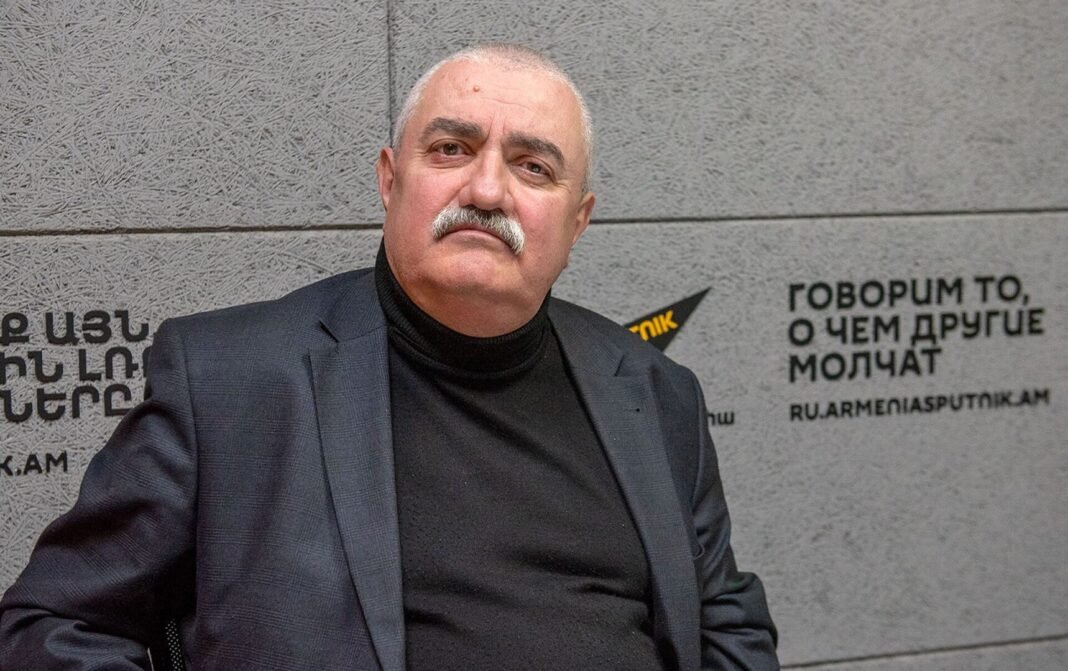
Armenia’s election result should not be read as a sharp geopolitical turn from Russia toward the West, Armenian political analyst Aram Safaryan said, arguing that Prime Minister Nikol Pashinyan received a mandate for balance rather than rupture.
Speaking on the YouTube program “News of the Caucasus,” Safaryan said foreign policy was one of the major themes of the campaign, but reducing the vote to a simple choice between Moscow and the West would be misleading.
He said several parties openly advocated closer ties with the European Union and the United States, but none of them, apart from Pashinyan’s team, received significant support.
“To say that the idea itself inspired and guided the political movement would be an excessive approach,” Safaryan said.
According to him, Pashinyan won support from roughly half of Armenia’s voters for continuing the foreign policy he has already been pursuing. At the same time, Safaryan said, about half of the Armenian electorate still supports preserving and developing relations with Russia, but under changed regional and global conditions.
Safaryan said Armenia needs “balanced, good and calm relations” across all major directions. He named the European Union, the United States and Russia as key foreign policy vectors, while also singling out relations with Azerbaijan and Turkey as a separate and critical track.
He said Armenia’s future also depends on its ties with Georgia, Iran and China, as well as its ability to integrate more naturally into the South Caucasus.
The post-election period, Safaryan said, will make relations with Russia one of the central questions for Yerevan.
He described two possible Russian approaches. The first would be a tougher line, with Moscow trying to punish Armenia for moving closer to Europe. Safaryan said that would bring Russia no real benefit.
“What does it get in return? Nothing. It gets damage to its image, deterioration of relations with Armenia and a reduction of its influence in the South Caucasus,” he said.
The second scenario, in his view, would be for Russia to update its strategy toward Armenia and the wider South Caucasus. Safaryan said he expects this approach to prevail because it better serves Russia’s own interests.
He noted that Russia still has its 102nd military base in Armenia and that Armenia remains a member of the Eurasian Economic Union. Pashinyan, he said, has been telling voters that Armenia does not intend to leave the bloc.
Safaryan said a possible post-election visit by Pashinyan to Russia would be the right step. He said the Armenian prime minister would likely try to reassure Moscow that Yerevan wants constructive relations with Russia, but in a modernized format that reflects new regional realities.
At the same time, Safaryan said Russia must understand that Armenia’s expanding cooperation with the European Union and the United States does not automatically mean a break with Moscow.
He also argued that the South Caucasus is becoming more important against the backdrop of the war in Ukraine and closed routes between Russia and Europe. In that context, he said, Russia could also benefit from the Middle Corridor, even though the route bypasses Russian territory.
Safaryan said the development of the Middle Corridor, including through Armenia, can no longer be stopped. He argued that routes through Georgia and Armenia do not have to undermine each other, but can instead complement one another and help turn the South Caucasus into a major logistics hub.
Speaking about possible Russian pressure, Safaryan acknowledged that Moscow could theoretically hurt Armenia, including through gas supplies or restrictions on agricultural exports. But he called such a path a dead end.
He said Armenia has limited internal reserves and possible alternatives, including Iran and Azerbaijan as gas-producing countries.
“Yes, it would be painful. Yes, it would be difficult. But solutions can always be found,” he said.
Safaryan said Armenia’s main task after the election is to preserve its fragile internal balance and prevent political tensions from damaging the country’s stability.
He argued that Armenia’s future should not be built at the expense of Russia or Europe, but through peaceful relations with all neighbors.
“When Armenia understands that it must have peaceful relations with all its neighbors, then there will be calm life and calm development,” Safaryan said.
He added that all South Caucasus countries need deeper integration, both within the region and in a broader geopolitical space.
Safaryan said the economies of all three South Caucasus countries have grown significantly over the past five years, showing that the region has strong potential for further development.
“For that, we need others not to interfere with us,” he said.
AZE.US