AZE.US
A debate that began as a trade story is quickly turning into something far more sensitive in Azerbaijan. The latest trigger was Armenian Economy Minister Gevorg Papoyan’s statement that Armenian and Azerbaijani companies had started talks on the supply of a specific product from Armenia to Azerbaijan, though he did not say what the product was.
That remark landed in an already tense atmosphere. Just days earlier, Azerbaijani customs data showed imports from Armenia worth $960 in March 2026, the first such entry in the statistics. The figure immediately drew attention, but Azerbaijan’s State Customs Committee later clarified that the shipment involved roses produced in the Netherlands, sent to Armenia, and then forwarded to Azerbaijan. In other words, the customs line listed Armenia as the partner, but the goods themselves were not Armenian in origin.
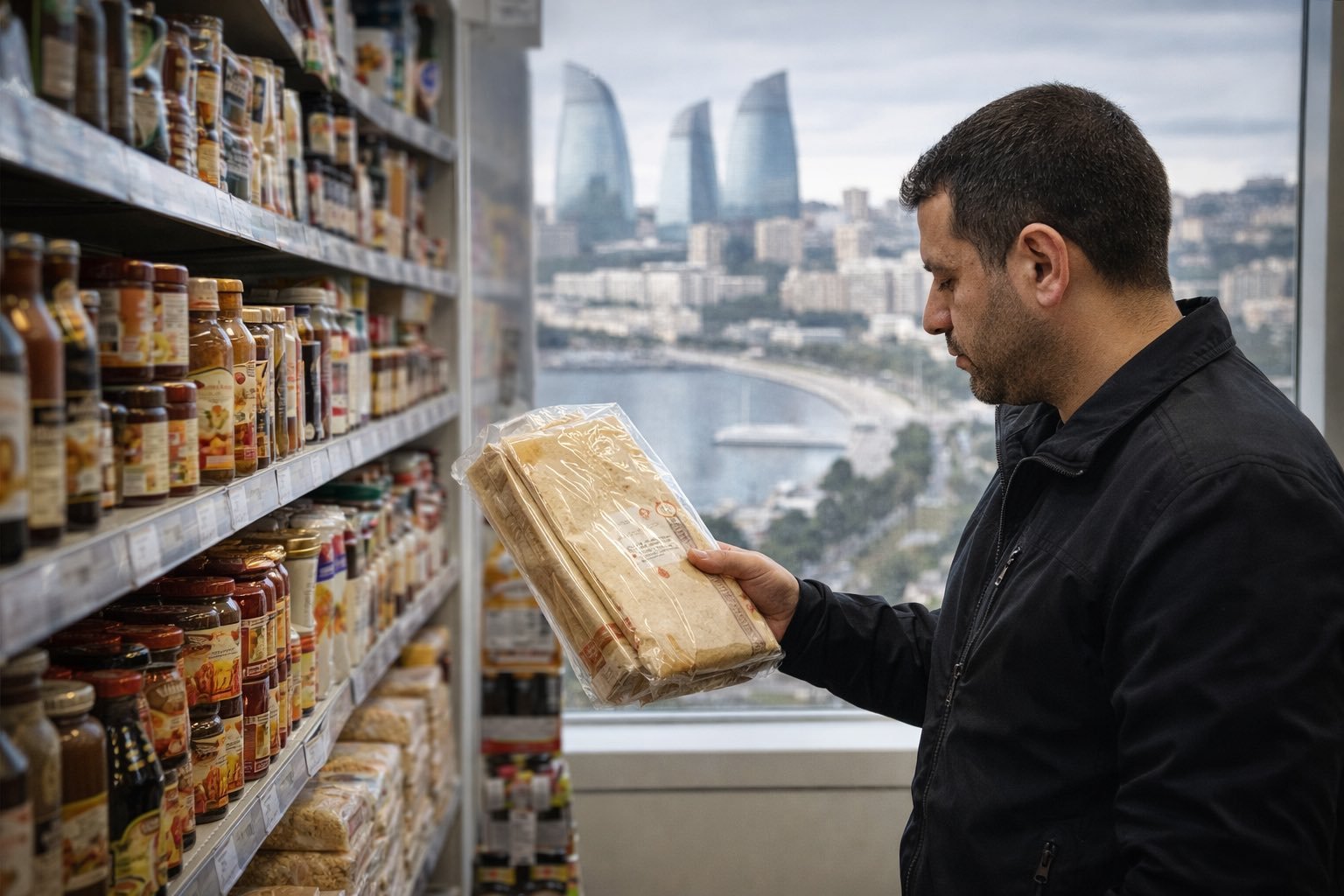
Still, the public reaction did not stop at the technical explanation. The bigger question surfaced almost instantly: if Armenian-made goods do begin reaching Azerbaijani shelves in a real and visible way, is Azerbaijani society ready to accept them as ordinary market products? That is where the conversation stops being only about customs data, supply chains, or prices. It becomes a test of how far economic pragmatism can go in a society where memory of war, displacement, and years of hostility remains politically and emotionally alive.
One camp argues from a practical standpoint. In that view, if a product is officially inspected, cleared for sale, and poses no safety risk, then its origin should not automatically disqualify it. This is the logic of regulation, not emotion: if the state allows it, and if the product meets standards, then the market can decide. That argument is likely to gain force if any future trade is framed narrowly around consumer need, pricing, or logistics rather than symbolism. The existence of ongoing company-level talks, as described by Papoyan, gives that scenario at least some factual basis.
But there is an equally strong opposing instinct, and it is not really about economics. For many in Azerbaijan, the issue is inseparable from the memory of conflict. In that frame, buying Armenian goods would not be a neutral consumer act. It would carry emotional and moral weight. That is why even very small numbers can cause disproportionate reactions: the debate is not driven by trade volume alone, but by what such trade appears to normalize.
The $960 episode showed exactly that. A statistically tiny import line still produced outsized public attention because the symbolic meaning was much larger than the amount itself.
There is also a third, more cautious position emerging between outright acceptance and outright rejection. Some people who remain personally uncomfortable with the idea still acknowledge that emotion alone cannot shape every long-term economic decision. From that perspective, any future discussion would have to be judged through narrower national-interest filters: safety, control, leverage, reciprocity, and whether such trade serves Azerbaijan’s interests rather than merely creating political noise.
That line of thinking does not amount to enthusiasm, but it does suggest that the argument inside society may become more layered over time. The fact that officials and businesses are already discussing possible supply arrangements makes that a live question rather than a theoretical one.
For now, though, the numbers remain tiny and the politics remain large. In the first quarter of 2026, Azerbaijan exported goods worth $5.757 million to Armenia, while the import figure from Armenia stood at just $960 before customs clarified the details of that shipment. That imbalance alone shows that there is still no broad, normalized two-way consumer trade to speak of. But the public argument has already begun, and that may prove more consequential than the trade volumes themselves.
What this means is that Armenian goods in Azerbaijan are no longer just an economic hypothetical. They have become a social marker. For some, the issue is about rational trade and state control. For others, it remains a red line shaped by distrust, memory, and principle. The market may eventually test both instincts, but right now the real story is that the argument has moved out into the open.
AZE.US