AZE.US
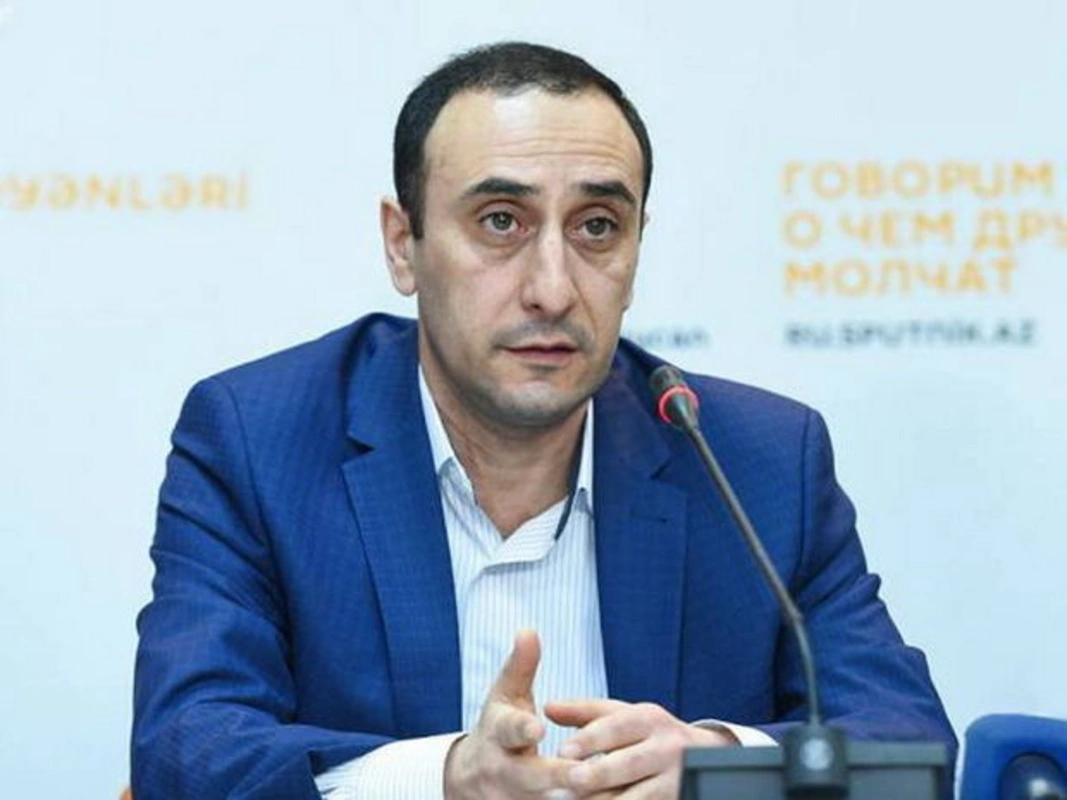
Azerbaijan is set to become a key driver of Trans-Caspian projects within the Organization of Turkic States, political analyst Rizvan Huseynov said in an interview with the YouTube channel Novosti Kavkaza.
Huseynov said the recent OTS summit in Turkestan showed that Turkic states are placing transport, transit and infrastructure cooperation at the center of their agenda. He described the location of the summit as symbolic, noting Turkestan’s historical connection to the Turkic world.
According to Huseynov, the emerging regional logistics system is increasingly focused on a route connecting Central Asia, the Caspian Sea, Azerbaijan, Georgia, Turkey and Europe. He described Turkey, Azerbaijan, Kazakhstan and Uzbekistan as the “four-stroke engine of Turan,” arguing that these states are pushing the process forward.
He said the importance of land routes is growing as maritime routes become more exposed to conflict and instability, including tensions in the Persian Gulf and around major sea chokepoints. While sea shipping remains cheaper, he argued, rising risks on maritime routes are making alternative overland corridors more strategically valuable.
Huseynov also pointed to the Digital Silkway project, saying digitalization could reduce bureaucratic barriers, simplify border procedures and speed up cargo movement along the Middle Corridor.
Azerbaijan’s upcoming chairmanship of the OTS could be especially important, he said. Huseynov argued that Baku has long been one of the main initiators and drivers of Turkic cooperation and is now well positioned to give new momentum to Trans-Caspian transport and energy projects.
He said Azerbaijan could also play a role in reducing risks linked to Russia’s and Iran’s wary attitude toward Trans-Caspian routes. According to Huseynov, both Moscow and Tehran are uncomfortable with projects that increase the strategic value of the Caspian and bypass traditional northern and southern corridors.
In that context, he also mentioned the possible acceleration of the Zangezur road and other infrastructure projects in Azerbaijan. Transit and energy, he said, are likely to be the main areas where Baku’s OTS chairmanship could produce practical results.
On Turkey’s role, Huseynov said Ankara supports the development of the Organization of Turkic States, but rejected the idea that the organization is simply a tool of Turkish dominance. He said Turkey’s relations with Azerbaijan, Kazakhstan and Uzbekistan are based on equality, and that regional states do not allow outside agendas to be imposed on them.
Huseynov also addressed claims that the OTS could evolve into a military alliance. He recalled Kazakh President Kassym-Jomart Tokayev’s position that the organization is not a military bloc. Still, he said countries in the OTS may gradually expand military-technical cooperation, especially if external pressure grows and major infrastructure routes require protection.
China, in Huseynov’s view, does not see the strengthening of the Turkic format as a threat. On the contrary, Beijing is interested in stable overland routes across Eurasia. But he said China remains cautious in the South Caucasus because major projects in the region inevitably affect the interests of Russia and Iran.
Huseynov’s comments portray the OTS as a platform moving beyond symbolism into a more practical phase of transport, economic and digital integration. For Azerbaijan, that means a central rather than peripheral role in the emerging logistics architecture linking Central Asia, the Caspian, Turkey and Europe.
AZE.US