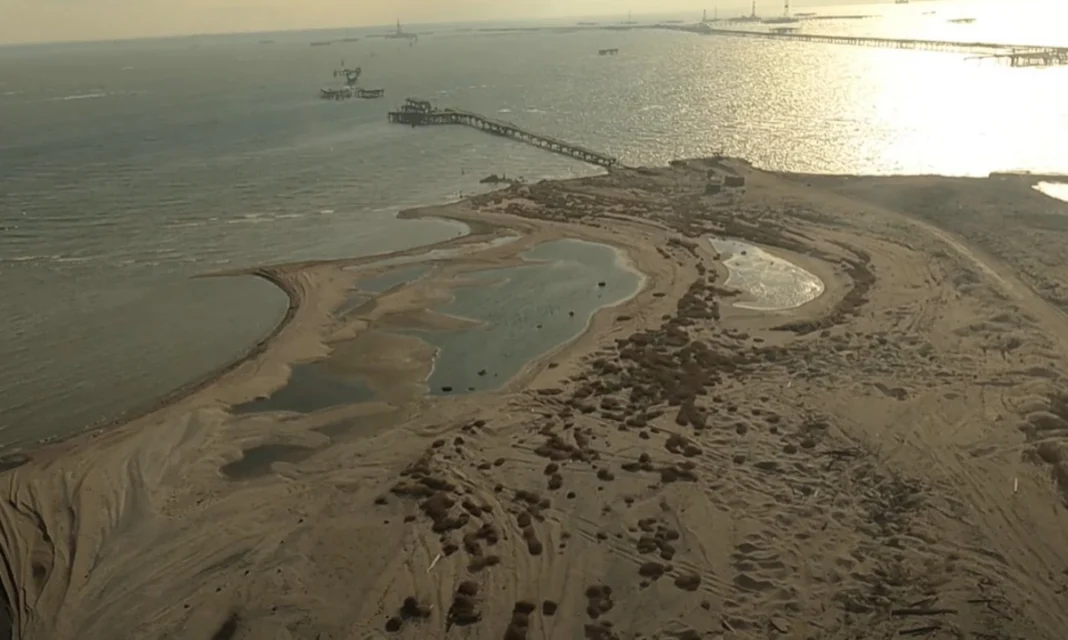
Dead Caspian seals have been found along the shoreline at Pirshaghi near Baku, while authorities in Kazakhstan have separately reported 173 sturgeon carcasses on their side of the Caspian Sea.
A witness in Pirshaghi said about seven seal carcasses were visible over a two-kilometer stretch and that they had not been there several days earlier. Some were badly decomposed and producing a strong odor.
Azerbaijan’s Fisheries and Aquaculture Center said possible causes could include disease, viral infection, environmental change or human activity. Officials have also pointed to broader pressures such as fluctuating Caspian water levels and reduced winter ice in the north. None of those explanations has been confirmed as the cause of these deaths.
Currents and wind may have carried the animals to shore, but laboratory testing would be needed to determine how they died. The Caspian seal is endemic to the sea and protected. Members of the public have been warned not to touch carcasses.
In a separate case, inspectors in Kazakhstan’s Mangystau region found 173 dead sturgeon along roughly 15 kilometers of coastline in the Karakiya district on Oct. 20. An initial inspection found no fishing nets or hooks. A west wind may explain why the fish washed ashore, but not what killed them.
The carcasses were reportedly too dried out to provide useful laboratory samples, and authorities began collecting and disposing of them.
There is no evidence directly linking the Kazakhstan fish deaths to the seal deaths near Baku. Scientists and officials have nevertheless stressed the need for coordinated monitoring across the shared Caspian basin.
The Azerbaijan report, including a video segment, was published by Vesti Baku.