By AZE.US Editorial Team
Azerbaijan’s hard response to the European Parliament should not be mistaken for a rupture with Europe.
Baku is not closing the door to the European Union. On the contrary, recent diplomatic contacts show that Azerbaijan continues to work with European leaders, the European Commission and key EU member states on energy, transport, trade and regional security.
What Baku is rejecting is something else: a political platform that repeatedly adopts anti-Azerbaijani resolutions while ignoring the realities that have emerged in the South Caucasus after the end of the Karabakh conflict.
The latest European Parliament resolution was not just another unfriendly document. It was a political mistake. More importantly, it did not seriously damage Azerbaijan. Baku has long understood the nature of such texts. The real damage is to the peace process between Azerbaijan and Armenia.
The resolution brought back themes that do not help peace. It raised the issue of the return of Karabakh Armenians as a political demand. It pressed the issue of former separatist figures now facing justice in Azerbaijan. It revived talking points that even Armenian Prime Minister Nikol Pashinyan has tried not to place at the center of the current peace agenda.
That is why the document matters. It gives ammunition to Armenian revanchist forces that accuse Pashinyan of weakness and argue that he is abandoning old claims. These groups can now say: Europe supports what Pashinyan refuses to pursue.
That is not support for peace. It is support for political destabilization.
For Azerbaijan, this is the core problem. The European Parliament speaks in the language of values, but its resolutions often end up serving the interests of forces that want to keep the conflict alive. The result is a dangerous contradiction: Brussels talks about peace while one of its institutions helps reopen the very wounds that peace requires both sides to close.
There is also a deeper issue of double standards.
European states know very well how they treat separatism inside their own borders. Spain’s response to the Catalan independence movement was tough and legalistic. France has never treated separatist challenges in Corsica as a matter for outside political pressure. In those cases, European institutions did not launch permanent campaigns against Madrid or Paris.
But when Azerbaijan defended its own territorial integrity after decades of occupation, the tone was different. The European Parliament suddenly discovered a level of moral urgency that had been missing for years when Azerbaijani lands were under occupation and hundreds of thousands of Azerbaijanis lived as displaced people.
That is why Baku’s reaction is not emotional. It is political.
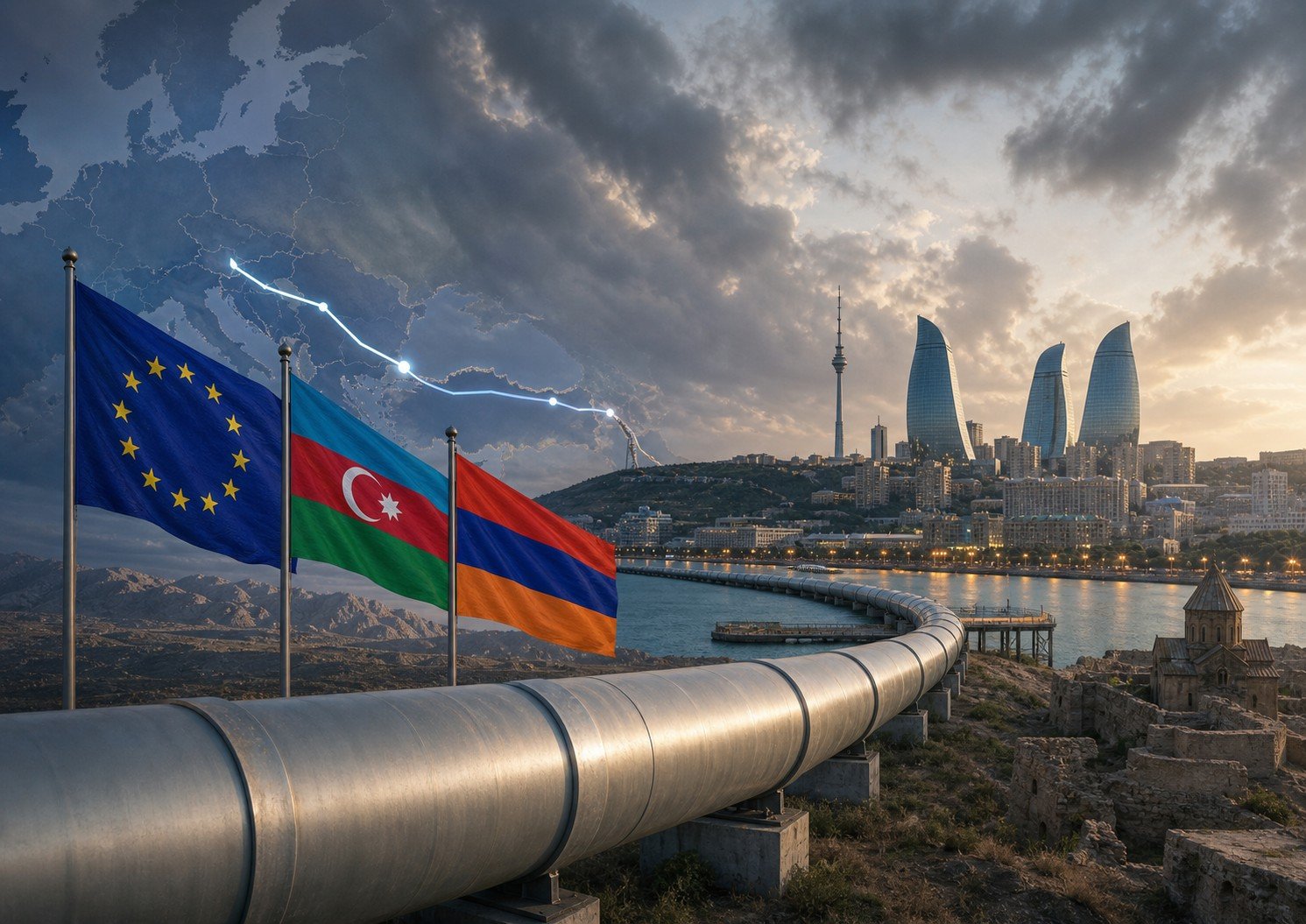
Azerbaijan is separating real Europe from declarative Europe. With the European Commission, there is a practical agenda. There is gas. There is the Southern Gas Corridor. There is the Middle Corridor linking Central Asia, the South Caucasus, Türkiye and Europe. There are transport routes, port capacity, investment needs and long-term energy security.
This is the Europe that understands geography.
After Russia’s war against Ukraine and the sanctions pressure surrounding Russia and Iran, Europe’s options have narrowed. The northern route is tied to Russia. The southern route is constrained by Iran. Between the Caspian Sea and Europe, Azerbaijan has become an irreplaceable transit and energy partner.
That reality cannot be erased by a parliamentary resolution.
Europe needs Azerbaijani gas. It needs reliable routes across the South Caucasus. It needs a stable regional order between Azerbaijan and Armenia. It needs a partner that can connect the Caspian basin, Central Asia and European markets.
Azerbaijan, in turn, does not need illusions. It does not have to trust Europe blindly. It needs pragmatic relations based on interests, sovereignty and mutual respect.
That is the new line from Baku: cooperation where there is seriousness, distance where there is pressure.
The European Parliament can continue adopting symbolic documents. But pipelines, ports, railways and trade corridors are built through governments, contracts and geography, not through slogans.
If Europe truly wants peace in the South Caucasus, it should help Armenia and Azerbaijan close the conflict, not reopen it under new language. It cannot claim to support Pashinyan while strengthening the arguments of those who want to weaken him. It cannot speak about stability while inserting into its documents demands that radicalize the Armenian domestic debate.
The choice before Europe is simple. It can be a partner in the region’s future, or it can remain trapped in the politics of the past.
Azerbaijan has already made its position clear. It is not against Europe. It is against the part of European politics that refuses to accept reality.
Peace in the South Caucasus will not be built by reviving old claims, protecting separatist narratives or turning the European Parliament into a platform for pressure against Baku. It will be built only when outside actors stop feeding the conflict and start respecting the new regional balance.
AZE.US