AZE.US
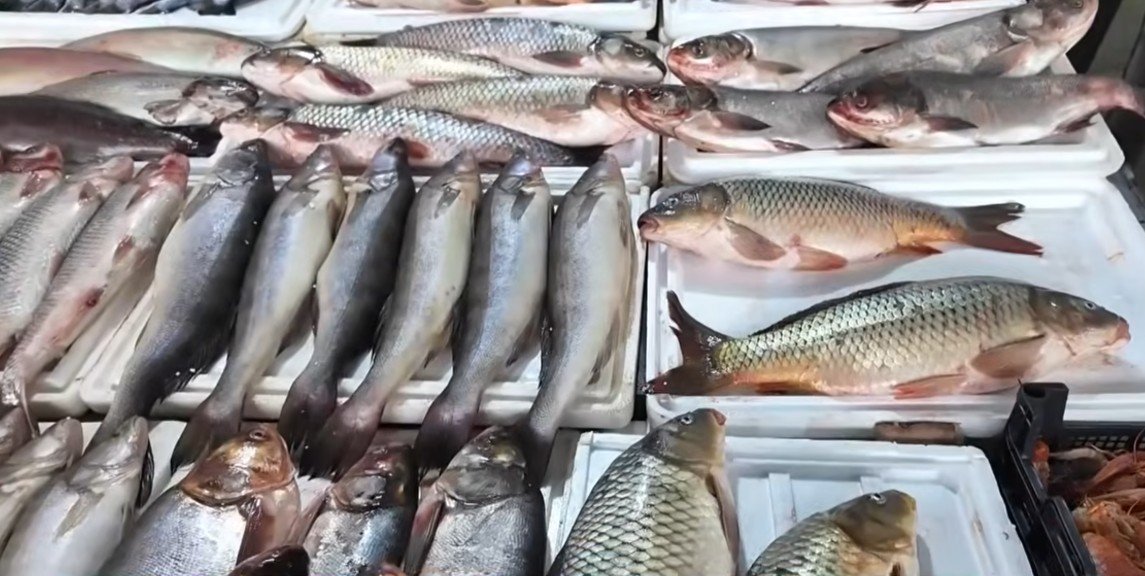
Fish markets in Azerbaijan are showing a narrower selection and more sensitive prices as several pressures hit the trade at once: the seasonal fishing ban, lower supplies from Iran, logistics problems and higher costs linked to summer storage.
Traders say the situation was easier before fishing restrictions took effect. With the sea effectively closed for regular supply, there is less natural sea fish on the counters. The market is now relying more heavily on farmed fish from local producers and imports from neighboring countries.
Kutum has become one of the clearest examples. Buyers say fish previously brought from Iran could often be found for around 10-12 manats, or about $5.90-$7.10. Now the price is closer to 14 manats, or about $8.20. Some customers say they have not noticed a dramatic jump, but others say the fish they usually buy has either become more expensive or harder to find.
Still, traders do not describe the situation as a shortage. Local fish farms and imports are helping to keep the market supplied. Russian products such as carp and grass carp remain present, while Turkish sea bass and sea bream have become more visible on the shelves.
Market participants say Turkey’s role has grown. In previous years, Iran and Russia were more commonly mentioned as the main external suppliers. Now Turkish fish is gaining ground, partly because of price and availability.
Price differences are also shaping consumer behavior. Sellers say imported fish can sometimes be 2-3 manats cheaper than local products, pushing some buyers to choose by price rather than origin. At the same time, demand for local fish remains strong, as many consumers still see it as more familiar and trustworthy.
The summer season adds another layer of pressure. Fish requires proper cold storage and faster turnover, which raises costs for sellers. Open-air and street sales also become more difficult in hot weather.
The result is not an empty market, but a changing one. Azerbaijan still has fish on the shelves, but the old balance is shifting: less Iranian and natural sea fish, more farmed production, and a growing role for imports from Russia and Turkey. If supply problems and lower production volumes continue, fish prices may remain under upward pressure.
AZE.US