AZE.US
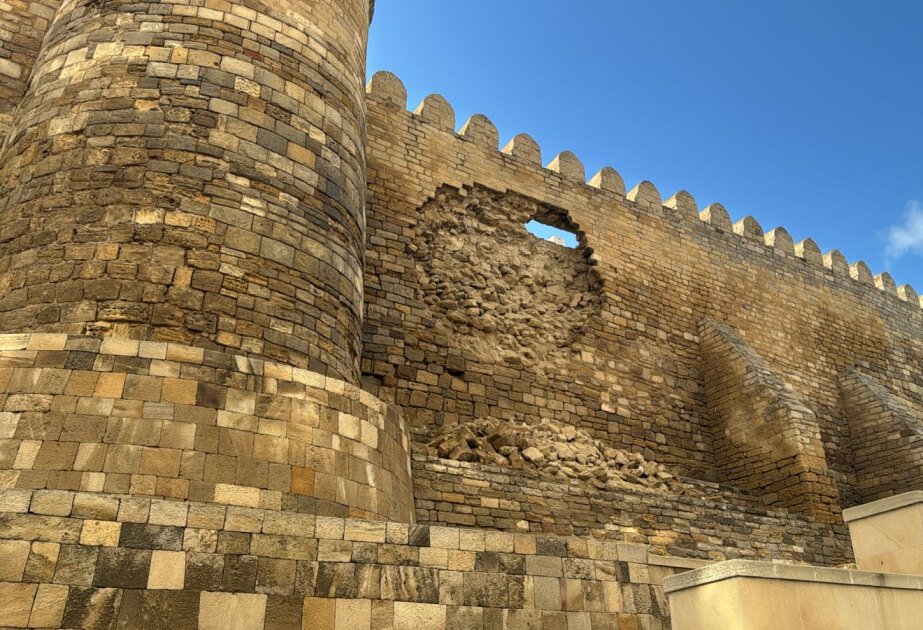
A section of the historic fortress wall in Baku’s Old City collapsed early on April 9, prompting an official explanation centered on prolonged rain and natural erosion – and an immediate backlash from public figures who say the real problem runs much deeper.
According to the Administration of the State Historical-Architectural Reserve “Icherisheher,” the collapse was recorded at around 5:00 a.m. on Thursday on Kichik Gala Street, between towers No. 13 and No. 14.
In its official statement, the administration said preliminary expert findings pointed to moisture caused by uninterrupted rainfall in recent days, as well as natural erosion processes, as the main reason for the collapse.
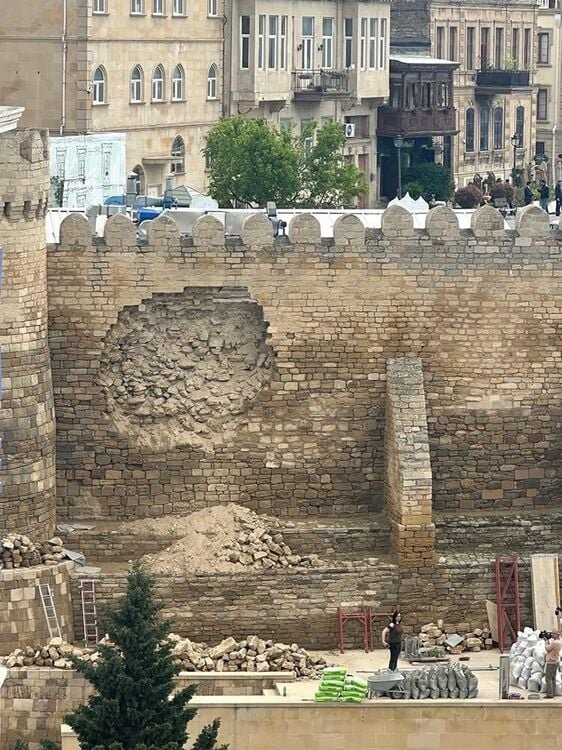
The agency said the area was immediately secured, preventive safety measures were taken, and work has already begun to address the damage at the site. It added that protecting historical heritage and ensuring public safety remain top priorities.
But that explanation was quickly challenged online.
Prominent architect Elchin Aliyev wrote on Facebook that it was hard to take seriously the idea that a wall which had stood for at least 900 years could suddenly collapse because of rain alone. In his view, the real cause was destructive human activity around the site.
Aliyev said that in the early 2000s a wide public boulevard had been created along Kichik Gala Street, but that over time restaurants had taken over the area, leaving pedestrians to walk along the roadway. He pointed in particular to a restaurant adjoining the collapsed section of the wall and said there had long been too little oversight of such activity.
He also raised questions about structural changes that may have affected the wall. According to Aliyev, there had once been a window on the inner side of the wall at the point of collapse, later absorbed into a restaurant interior. What happened to that opening afterward, he said, remains unclear. On the other side of the wall, he noted, is the inner yard of the University of Economics, where various works had also taken place over the years.
Aliyev argued that this was already the second time in recent years that the wall had failed under the pressure of uncontrolled economic activity. At the same time, he said the new leadership of Icherisheher appears to understand the scale of the problem and is making efforts to restore the Old City’s character as a genuine cultural and historical center.
Journalist Hamid Hamidov voiced even sharper criticism. In his Facebook post, he questioned how a centuries-old fortress wall that had survived all kinds of weather could be said to have collapsed simply because of three days of rain.
Hamidov said the wall had been heavily damaged over the past decades, especially during the last 20 years. He described the restaurants built up against the wall from the Icherisheher side as a mistake that should never have been allowed near a site of such historical value.
He also criticized what he described as years of official indifference to real threats facing Baku’s architectural heritage. More broadly, he linked the collapse to wider urban failures exposed by recent storms, including flooded tunnels and homes built in vulnerable areas.
For now, the official position remains that heavy rainfall and natural erosion triggered the collapse. But the public debate in Baku has already moved beyond weather – toward a broader question of whether unchecked development and poor oversight have been eating away at the city’s historic core for years.