AZE.US
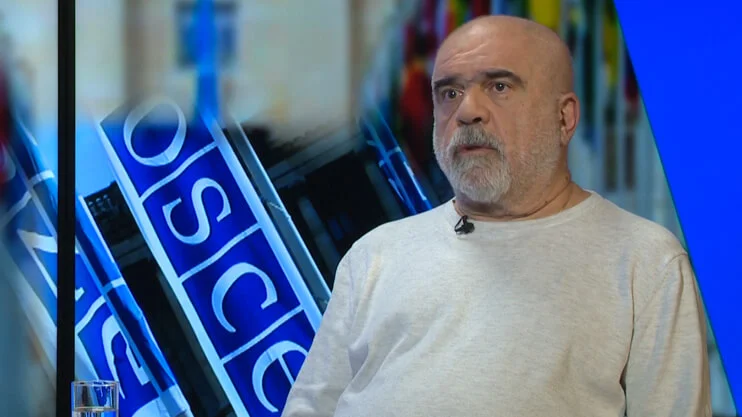
A peace agreement between Armenia and Azerbaijan may stop the shooting, but it will not immediately reconcile the two societies, Armenian political analyst Alexander Iskandaryan said in an interview with Echo Baku.
Iskandaryan, director of the Caucasus Institute, said Armenian society is broadly not looking for a new war with Azerbaijan. But he framed that not as sentimental readiness for friendship, but as a pragmatic recognition of the new balance of power after the 2020 war.
According to him, Azerbaijan is stronger than Armenia in population, economic capacity and military resources, while its army continues to modernize. In that reality, he said, the idea that Armenia could try to retake Karabakh or other territories by force is not taken seriously by rational people.
But the absence of war, Iskandaryan argued, is not the same thing as real peace.
He said people in different parts of Armenia understand “peace” differently. In southern regions closer to the Azerbaijani border, it is often seen first of all as security - a guarantee that there will be no renewed fighting. In other areas, especially those affected by the closed border with Turkey, peace is more often viewed as a possible opening for cooperation, trade and movement.
The most difficult emotional landscape, he said, is among Armenians displaced from Karabakh. For many of them, the loss is not abstract or geopolitical. It is tied to a specific home, village or town. Iskandaryan said it would be unrealistic to expect people who lost their homes to quickly accept the new situation.
He compared real peace to Armenia’s current relationship with Georgia: an open border, ordinary road travel, insurance, hotels, cafes, trade and movement without international monitors, special corridors or emergency arrangements. That, he said, is what normal relations with a neighboring state look like.
But he acknowledged that such a level of normality between Armenia and Azerbaijan is unlikely soon.
The deeper problem, Iskandaryan said, is that Armenians and Azerbaijanis have spent decades seeing each other through hostile images rather than through ordinary human contact. A new generation has grown up on both sides without knowing the other community in daily life. For many young people, the “other side” is not a neighbor, colleague or classmate, but an image from television, the internet or wartime narratives.
He warned that this kind of dehumanization leaves a long aftertaste. Even during war, he said, the enemy should not be reduced to the image of a wild animal, because such language remains in society and is passed on long after the fighting stops.
That is why, in his view, a treaty alone will not be enough. Normalization between governments may come first. Reconciliation between societies will require a much longer effort - by states, journalists, scholars, intellectuals and public figures.
Iskandaryan said Armenians and Azerbaijanis now have to learn a different form of coexistence. In the Soviet period, many lived side by side inside one imperial system. The future, if it comes, will be different: Armenia and Azerbaijan as two neighboring states that went through war and now have to build a workable relationship from the outside.
He did not rule out eventual reconciliation. No conflict lasts forever, he said, and history has many examples of former enemies eventually learning to interact. But he cautioned against expecting a quick emotional breakthrough.
For now, the most realistic first step may be more modest: no shooting, fewer risks, open channels and the gradual acceptance that Armenia and Azerbaijan will remain neighbors - even if peace, for a long time, comes without embrace.
AZE.US