AZE.US
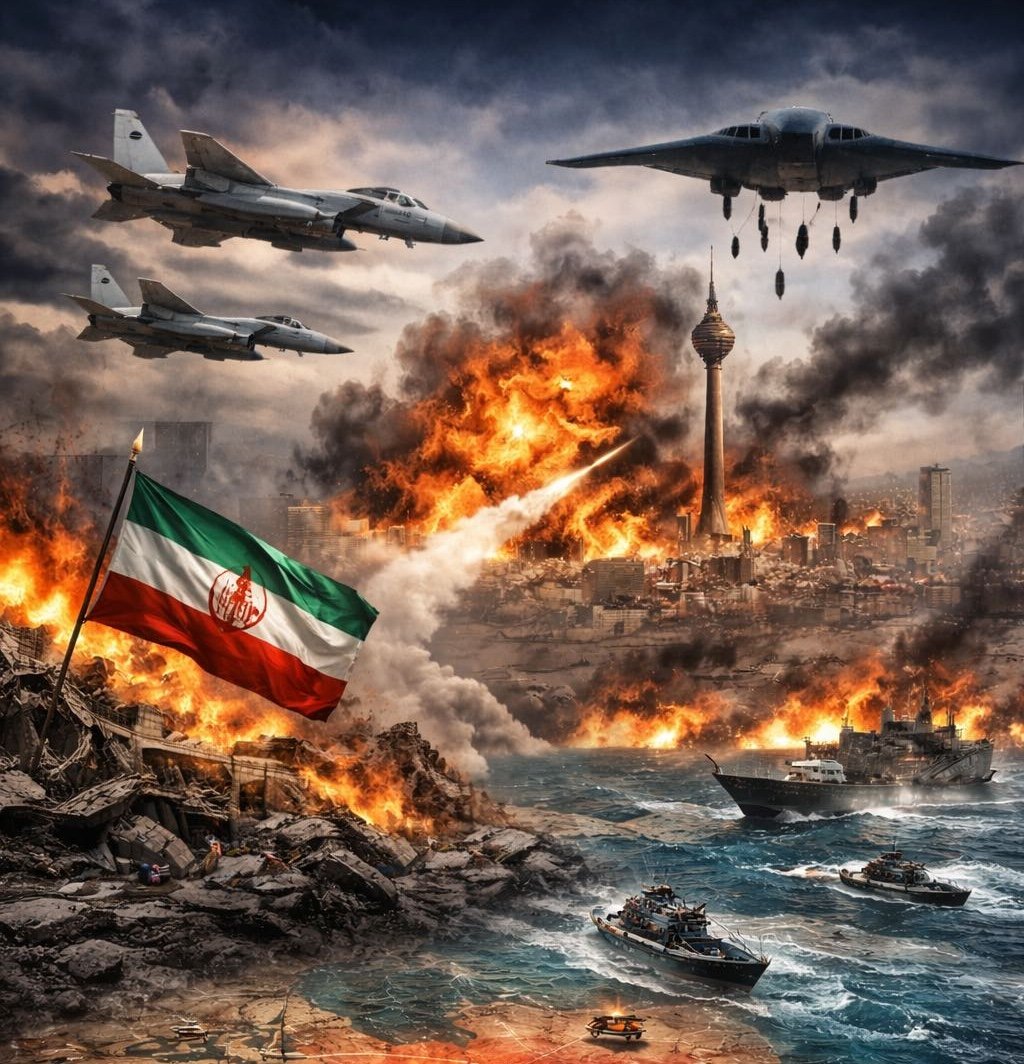
The rapidly escalating crisis in Iran is no longer confined to the Persian Gulf. For the South Caucasus – a region historically shaped by competing empires and fragile balances – the shockwaves are immediate, strategic and deeply consequential.
With Iran facing sustained military pressure, internal elite uncertainty and economic strain, the implications for Azerbaijan, Armenia and Georgia are no longer theoretical. They are structural.
A Southern Border Under Stress
For Azerbaijan in particular, Iran is not a distant geopolitical variable. It is a direct neighbor with deep historical, cultural and demographic ties. Millions of ethnic Azerbaijanis live in northern Iran. Cross-border trade, energy transit routes and regional security dynamics are closely intertwined.
If instability in Iran deepens, Baku faces several immediate risks:
-
Disruption of trade and transport corridors
-
Refugee flows toward northern borders
-
Increased activity by non-state actors
-
Information and ideological spillover
Even absent regime collapse, prolonged instability would force Azerbaijan to recalibrate border security, humanitarian planning and energy logistics.
Armenia’s Strategic Dilemma
For Armenia, Iran has served as a critical economic and geopolitical outlet, particularly during periods of tension with Turkey and Azerbaijan. Tehran has been one of Yerevan’s few reliable regional partners.
A weakened or internally preoccupied Iran could narrow Armenia’s strategic breathing room. Energy cooperation, transport links and diplomatic balancing may all come under pressure. At the same time, escalation involving Western powers complicates Yerevan’s already delicate positioning between Russia, the EU and the United States.
Georgia and the Transit Question
Georgia’s exposure is less direct but no less relevant. As a key transit hub linking the South Caucasus to Europe, any regional instability affects transport corridors, energy pipelines and investor confidence.
Markets react not only to war – but to uncertainty. A drawn-out Iranian crisis increases volatility across the broader Black Sea–Caspian space.
The Refugee and Security Variable
One of the most immediate regional concerns is population displacement. Iran is a country of nearly 90 million people. Even limited internal unrest or economic breakdown could trigger outward migration.
The South Caucasus, geographically proximate and comparatively accessible, would be among the first destinations.
Additionally, prolonged conflict risks the emergence of informal armed networks, smuggling routes and proxy dynamics that could destabilize border regions.
The Energy Equation
Iran sits adjacent to major energy transit infrastructure that runs through Azerbaijan and Georgia toward Europe. Any widening of conflict in the Gulf or strikes affecting energy infrastructure could reverberate through global markets.
Higher oil prices may offer short-term revenue gains for energy exporters in the region. But long-term instability undermines investment predictability – a cornerstone of South Caucasus energy strategy.
Internal Iranian Dynamics Matter Most
While external military pressure is shaping the immediate trajectory, the decisive factor remains internal: whether Iran’s political elite can establish a coherent line – either toward negotiation or toward prolonged confrontation.
A rapid move toward diplomatic engagement could stabilize the broader region.
A prolonged war of attrition, by contrast, risks:
-
Internal fragmentation within Iran
-
Economic collapse scenarios
-
Radicalization of political factions
-
Expanded regional militarization
For the South Caucasus, the difference between those paths is not abstract. It defines the regional security architecture for the next decade.
Azerbaijan’s Calculated Position
Official Baku has responded cautiously, expressing concern and emphasizing stability. Azerbaijan’s foreign policy doctrine prioritizes strategic balance – maintaining working relations with major powers while avoiding entanglement in external conflicts.
That balancing act becomes more delicate as tensions intensify.
The South Caucasus has spent the past several years redefining its post-conflict order. The Iranian crisis introduces a new variable – one that could either accelerate regional realignments or destabilize fragile progress.
For now, the region watches closely. But watching may not be enough.
If the crisis in Iran evolves into systemic internal disruption, the South Caucasus will not remain a bystander. It will become part of the equation.