AZE.US
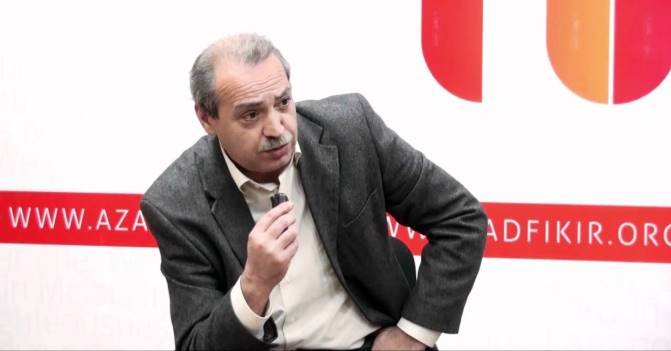
Azerbaijani journalist Arif Aliyev said Russia has moved to a more open and aggressive phase of pressure on Armenia, arguing that recent remarks by President Vladimir Putin and Deputy Prime Minister Alexei Overchuk show Moscow is now speaking far more bluntly about what it expects from Yerevan.
In an interview with Pressklub.TV, Aliyev said Russia had previously used more cautious language when discussing Armenia and its foreign policy choices. But he said that tone has changed, with Moscow now signaling more openly how it views Armenia’s upcoming elections and what steps it may take if events do not develop in line with Russian interests. In his reading, that reflects concern in the Kremlin about losing ground not only in Armenia but across the wider South Caucasus.
Aliyev argued that the pressure is tied not only to Armenia’s domestic politics, but also to a broader regional struggle involving transport routes, the Zangezur corridor debate, the Caspian region and infrastructure linking Azerbaijan with Europe and Central Asia. He said those issues touch both Azerbaijan’s current strategic position and its longer-term regional plans.
He also pointed to what he described as Russia’s economic and political leverage over Armenia, including pressure connected to the Eurasian Economic Union, railways, energy and the broader question of whether Armenia can deepen ties with the European Union while preserving its old framework with Moscow. According to Aliyev, the Kremlin sees that kind of dual-track policy as increasingly unacceptable.
Aliyev said Moscow is likely to intensify efforts to mobilize pro-Russian forces inside Armenia and among Armenians living in Russia, while also using other tools to shape the political environment. At the same time, he said the West is already providing Yerevan with visible political and practical backing, making Armenia a central arena where Russian and European interests are now colliding more sharply.
He said Prime Minister Nikol Pashinyan’s camp still has a realistic path to victory in the elections, though risks tied to outside interference, information pressure and other forms of destabilization remain.
Aliyev added that Azerbaijan’s interest lies not in supporting a particular leader in Armenia, but in backing a broader regional direction that could create more space for peace, cooperation and major connectivity projects.