AZE.US
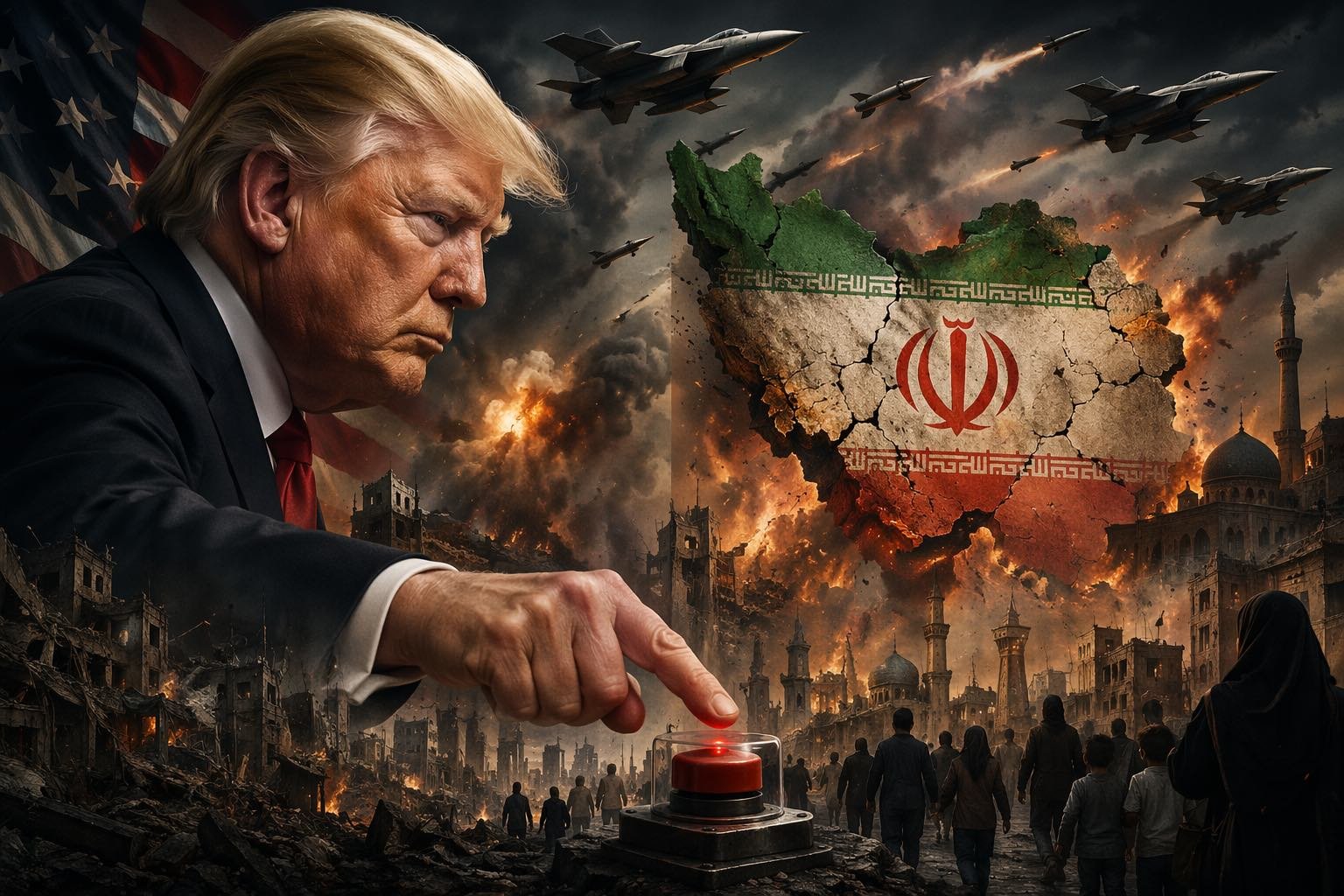
There are moments when political language stops being harsh and starts becoming morally disfiguring. Donald Trump crossed that line when he warned that “a whole civilization will die tonight” if Iran failed to meet his deadline over the Strait of Hormuz. Reuters and AP both reported the remark on Tuesday as part of a broader U.S. ultimatum tied to the regional crisis.
This was not strength. It was not strategy. And it was certainly not statesmanship.
A U.S. president is free to threaten sanctions, military consequences or diplomatic isolation. That is the brutal grammar of great-power politics. But threatening the destruction of a civilization is something else entirely. A civilization is not a regime. It is not a military command post. It is not a missile battery or a naval asset. It is people, memory, cities, language, schools, families, and the accumulated life of a nation over centuries.
That is why Trump’s statement matters beyond the daily shock cycle. He did not merely escalate pressure on Tehran. He widened the target rhetorically from the Iranian state to something far larger and far more human. In doing so, he spoke in the language of collective ruin.
The danger is not only in the sentence itself, but in the logic around it. Reuters reported that Trump also threatened sweeping destruction of Iranian infrastructure if Tehran did not comply, while AP described the rhetoric as part of an ultimatum tied to reopening the Strait of Hormuz. At the same time, reports emerged of strikes affecting bridges, rail infrastructure and other key facilities inside Iran.
That is where the moral mask falls away. Once a leader begins talking about crushing bridges, rail lines, power systems and the backbone of civilian life, the claim that this is only about “deterrence” becomes harder to sustain. Infrastructure is not an abstract chessboard. It is how ordinary people survive. It is how food moves, how hospitals function, how families flee danger, how a society stays alive under stress.
Trump’s defenders will say this is just how he talks – that he bluffs, improvises and performs. But that excuse is wearing thin. A president does not get a moral discount because he is theatrical. If anything, theatricality makes such rhetoric more dangerous, because it turns mass suffering into a stage effect.
That is the deeper pathology here. Trump has long treated geopolitics as an extension of personal spectacle. He speaks as though history is a set built for his own performance: one dramatic line, one apocalyptic threat, one “beautiful” outcome, one final claim of strength. Reuters reported that even in the same burst of rhetoric, Trump paired menace with grandiose language about a transformed Iran and a supposedly historic turning point.
This is not realism. It is vanity fused with coercion.
And the backlash shows why the remark landed so heavily. Pope Leo called Trump’s threat “truly unacceptable,” according to Reuters and AP, while French Foreign Minister Jean-Noel Barrot said, in effect, that civilizations are not to be erased. Those reactions were not diplomatic theatrics. They were reminders that some lines still exist, even in a world numbed by war.
The real scandal is that such language now has to be debated at all. The president of the United States should not have to be reminded that threatening civilizational destruction is grotesque. He should not have to be told that speaking this way corrodes America’s own claim to moral seriousness. When Washington talks like an imperial power unconstrained by law, it does not project confidence. It projects decay.
Trump likely believes this makes him look tough. It does not. It makes him look intoxicated by the idea of force. Truly strong leaders understand that power without restraint is not greatness. It is barbarism with better branding.
And that is the core of this moment. Trump wants the world to hear strength. What the world actually hears is something darker: a leader so consumed by domination that he is willing to speak of an entire civilization as if it were expendable.
That is not resolve. That is political barbarism under the cover of strength.