By AZE.US Editorial Team
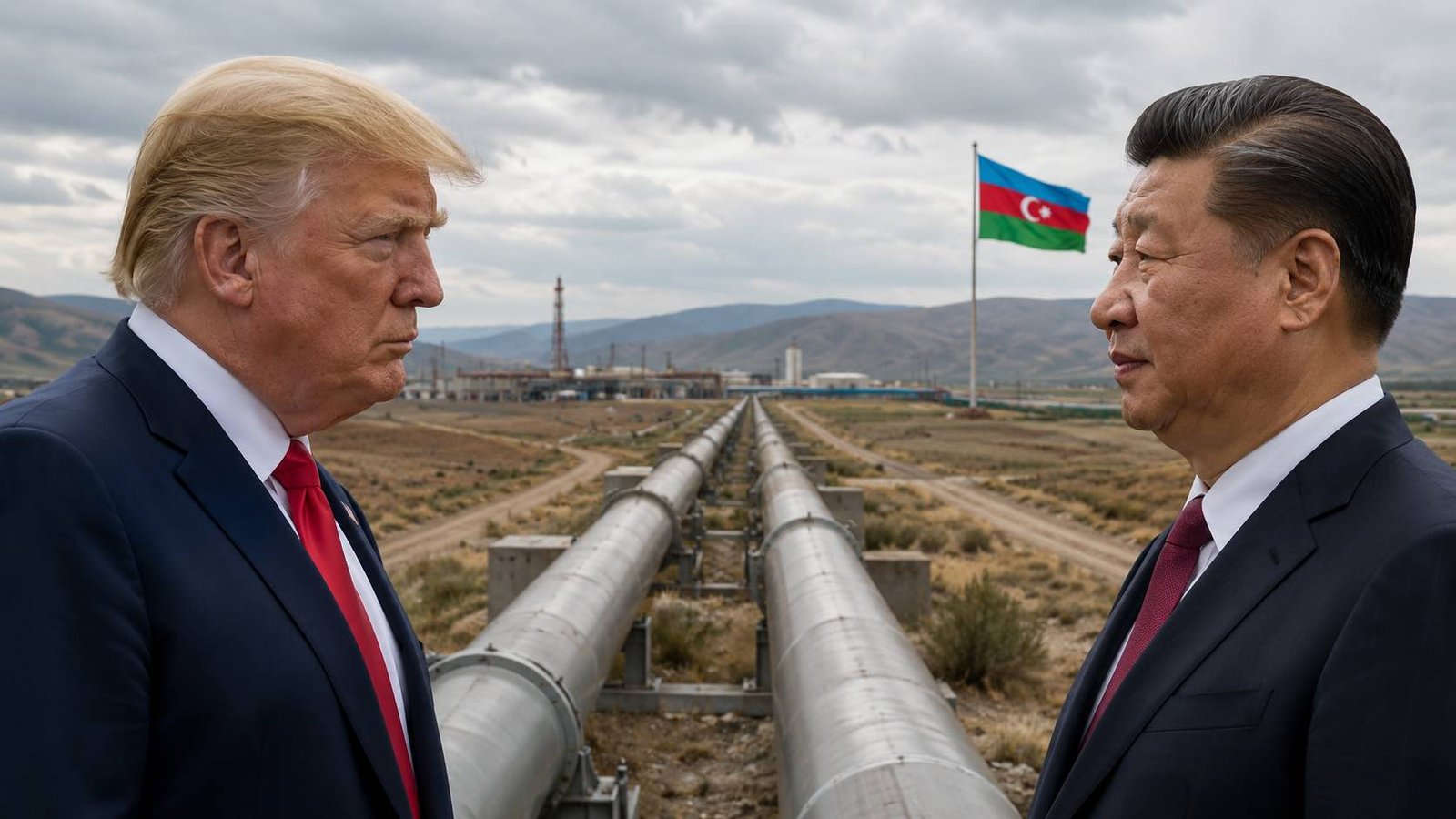
The meeting between U.S. President Donald Trump and Chinese President Xi Jinping in Beijing did not produce a grand bargain. But it did something perhaps more important: it showed where the pressure points of the new global order really are.
The public language was careful. Both sides spoke about stability, dialogue and the need to keep relations from sliding into open confrontation. Behind that diplomatic choreography, however, the agenda was much harder: Taiwan, trade, energy security, Iran, the Strait of Hormuz and the future of global supply routes.
According to AP, Xi warned Trump that mishandling the Taiwan issue could lead to conflict, while the two sides also discussed trade and the wider Middle East crisis. Reuters reported that U.S. officials said China showed interest in buying more American energy, potentially as part of an effort to reduce exposure to the Strait of Hormuz, though Chinese state media did not confirm that part of the discussion.
That combination matters for the South Caucasus.
At first glance, a U.S.-China summit in Beijing may seem far removed from Azerbaijan, Georgia or Armenia. It is not. When Washington and Beijing discuss energy flows, maritime chokepoints and alternative supply chains, they are also indirectly discussing the value of every stable route between Asia and Europe.
That is where the South Caucasus enters the picture.
Azerbaijan does not compete with the United States, China or Gulf producers by volume. Its strategic value lies elsewhere: geography, predictability, energy infrastructure and transit. The more the world worries about chokepoints such as Hormuz, the Red Sea or the Taiwan Strait, the more attention shifts to land and mixed routes that can reduce dependence on a single vulnerable corridor.
The Middle Corridor, linking China and Central Asia to the Caspian Sea, Azerbaijan, Georgia and Turkey, has been discussed for years. But the Trump-Xi meeting gives that discussion a sharper context. This is no longer just about transport efficiency. It is about geopolitical insurance.
For Azerbaijan, the opportunity is real. But it is not automatic.
Large powers like alternative routes in theory. Business uses them only when they are reliable in practice. That means ports, railways, customs systems, tariffs, insurance, digital coordination and political stability matter more than declarations. A corridor becomes strategic only when cargo can actually move through it quickly, predictably and at scale.
The Beijing summit also shows that China will continue to look for options across Eurasia. Beijing does not want to be trapped by one maritime route, one energy supplier or one political crisis. This makes the Caspian and South Caucasus space more important, especially if tensions around Taiwan or the Middle East continue to affect global risk calculations.
For the United States, the logic is different but connected. Washington wants to limit Chinese dominance in strategic sectors while keeping global trade from breaking down completely. That means it may also look more seriously at routes and partners that can reduce dependence on unstable zones or adversarial networks.
This creates a more complex environment for the South Caucasus. The region may gain attention, investment and diplomatic weight. It may also face more pressure from competing powers that want influence over transport, energy and data routes.
Russia remains part of this equation, but not in the same way as before. The war in Ukraine, sanctions and Moscow’s strained relations with the West have changed the map of Eurasian logistics. China is pragmatic. The United States is transactional. Europe is anxious about energy and supply chains. Turkey is expanding its role as a bridge power. In that setting, Azerbaijan’s room for maneuver grows, but so does the cost of mistakes.
The main lesson from Beijing is not that Trump and Xi solved anything. They did not. The lesson is that even when the world’s two largest economies sit at the same table, they are managing rivalry rather than ending it.
For the South Caucasus, that means one thing: the region should not wait for a stable global order to return. It should prepare for a long period in which instability itself becomes the normal operating environment.
Azerbaijan’s task is to turn geography into leverage without becoming hostage to someone else’s confrontation. That requires a careful balance: maintaining ties with China, preserving strategic dialogue with the United States, deepening connectivity with Central Asia and Turkey, and keeping the European energy and transport agenda alive.
The Trump-Xi meeting in Beijing may not have delivered a grand deal. But it made the larger trend visible. The next phase of global competition will be fought not only over weapons, tariffs or technology. It will also be fought over routes.
And in that contest, the South Caucasus is no longer a distant periphery. It is a corridor everyone may need, but no one will protect for free.
AZE.US