AZE.US
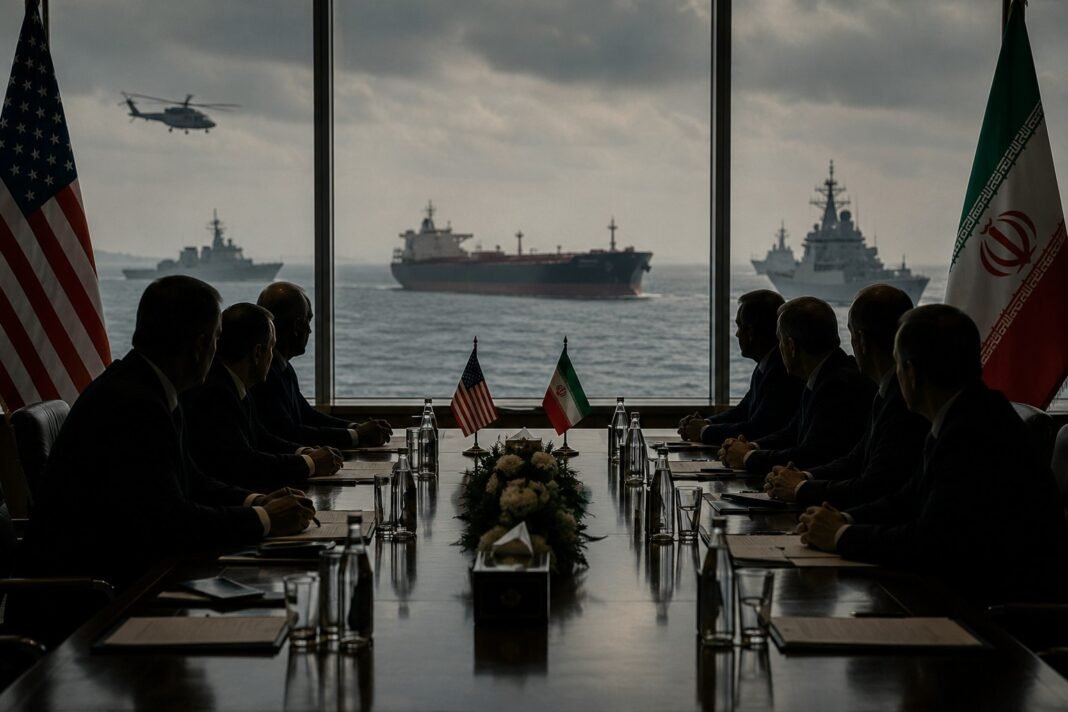
The United States and Iran remain stuck between diplomacy and the threat of renewed escalation, with no final agreement in sight and a fragile ceasefire still under strain.
The latest diplomatic track has not completely collapsed. But it has also not moved the two sides toward a clear settlement. Washington wants tougher commitments from Tehran on its nuclear program, while Iran says it is ready to negotiate only if the United States shows that it is serious. Iranian Foreign Minister Abbas Araqchi said Tehran has “no trust” in Washington, a sign of how difficult the current talks remain.
The Strait of Hormuz remains the main pressure point. Iran says vessels can pass through the waterway only if they are not at war with Tehran and coordinate with the Iranian navy. The strait is a critical route for global oil and gas shipments, and any disruption there immediately turns a regional confrontation into an international economic problem.
Reuters has reported that earlier peace efforts focused on a temporary memorandum that would halt the war, reopen traffic through Hormuz and create a limited window for broader negotiations. That framework, however, has not yet become a durable agreement. The core disputes - Iran’s nuclear program, sanctions, maritime control and regional security - remain unresolved.
The ceasefire is therefore more a pause than a real settlement. AP reported that a lack of trust is impeding talks, while Reuters has described continuing tensions over Hormuz and the wider regional conflict. The absence of a final deal means that a single incident at sea could quickly push the crisis back toward open confrontation.
There have already been dangerous episodes around the strait. AP reported that the U.S. military intercepted Iranian attacks on three Navy ships in the Strait of Hormuz, while Reuters previously reported an exchange of fire in which Washington said it acted in self-defense and Tehran accused the United States of violating the ceasefire.
At the diplomatic level, outside powers are also trying to shape the outcome. China has criticized a U.S.-backed resolution on Hormuz at the U.N. Security Council and called instead for serious negotiations. U.S. President Donald Trump also said he discussed Iran with Chinese President Xi Jinping, including sanctions on Chinese companies that buy Iranian oil and the need to prevent Iran from acquiring nuclear weapons.
The wider regional picture remains unstable. Israel and Lebanon have extended their ceasefire by 45 days after talks in Washington, but that does not remove the broader Iran-linked risks across the Middle East. The conflict is still connected to maritime security, energy exports, Hezbollah, U.S. regional posture and the question of how far Iran’s partners may go if talks fail.
For the South Caucasus, this is not a distant crisis. A renewed escalation around Iran or Hormuz could affect energy prices, transport routes, Caspian logistics and the value of alternative corridors through Azerbaijan and the wider region.
For now, the formula is simple: the talks are alive, but the deal is not. The ceasefire exists, but it is fragile. There is no confirmed path to peace, and one new clash in Hormuz could again change the entire regional picture.
AZE.US