AZE.US
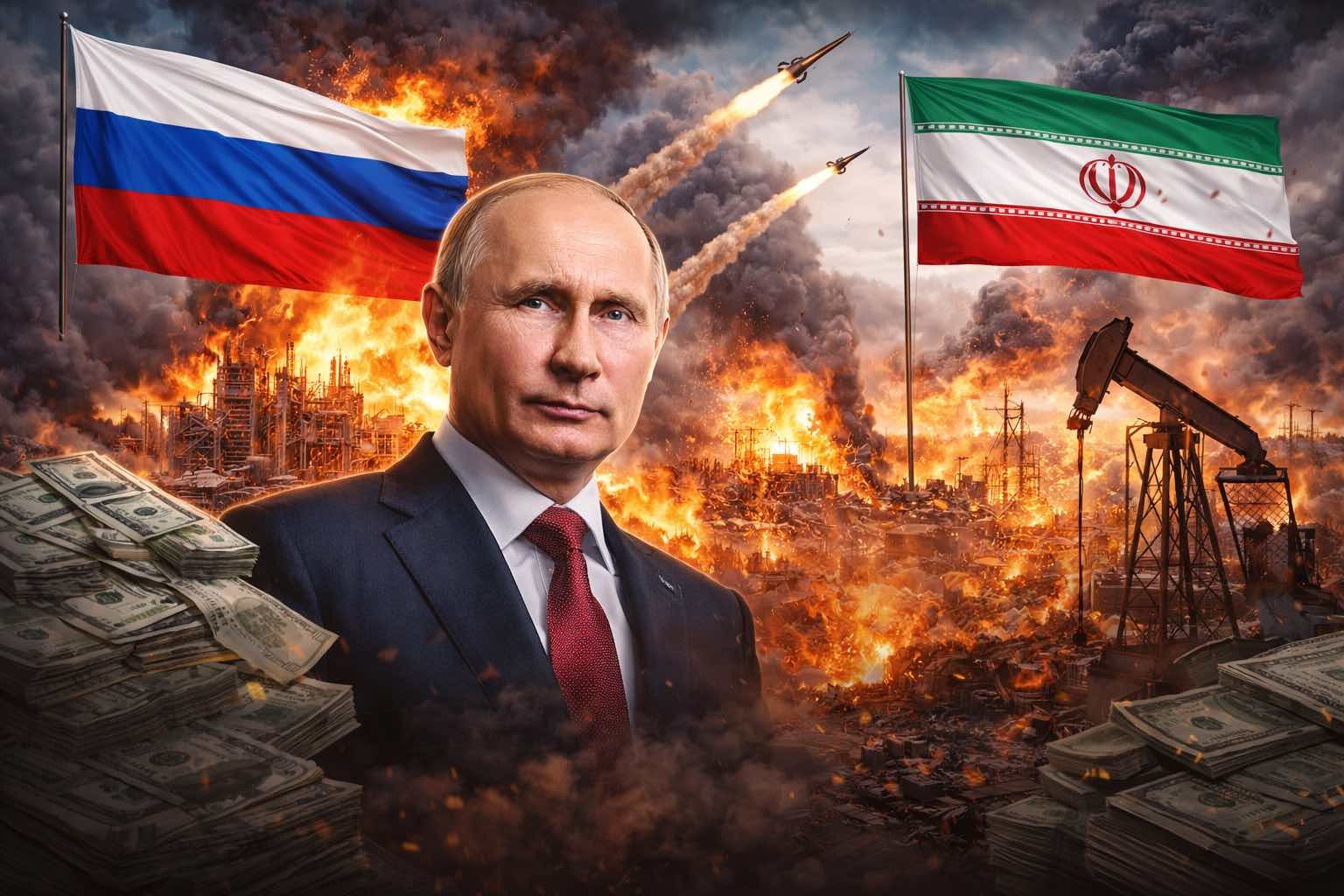
The current conflict sparked by U.S. and Israeli strikes on Iran – including the reported killing of Supreme Leader Ali Khamenei – isn’t just a Middle Eastern problem. It has direct implications for Russia’s strategic position, especially in relation to Ukraine, energy markets, and regional alliances.
Russia Sees Danger – Not Just Opportunity
The Kremlin has publicly condemned the U.S.–Israel operation as “armed aggression” and a dangerous escalation of violence, underlining its concern about instability in the Middle East and possible broader consequences. Russian officials called for diplomacy and a halt to hostilities, reflecting genuine strategic unease.
This isn’t just rhetoric. Iran has been one of Russia’s key geopolitical partners, including in the context of the Comprehensive Strategic Partnership Treaty signed in 2025, designed to deepen defence, economic, and energy cooperation between Moscow and Tehran.
If that relationship unravels – or if a new government in Tehran is less aligned with Moscow – Russia could lose a valuable ally at a time when it already faces deep international isolation over Ukraine.
Short-Term Gains via Energy – But Strategic Costs Loom
In the immediate aftermath of the conflict escalation, Russia could see some tactical benefits:
-
Higher global oil prices may help Moscow balance its budget and fund Ukraine operations, as price spikes often accompany major Middle Eastern crises. Analysts have noted that energy exporters benefit from such volatility in the short term.
-
If Iranian oil exports are disrupted by war and sanctions, Russia might capture a larger share of global markets – at least temporarily.
However, these short-term benefits mask larger structural risks: Russia’s economy and war finance depend heavily on stable high energy revenues. If part of Iran’s energy infrastructure collapses or is reintegrated into Western markets under a future government, global supply dynamics could shift, undermine price control, and reduce Moscow’s leverage over Europe.
Strategic Vulnerabilities Exposed
The crisis reveals deeper Russian vulnerabilities:
a) Over-dependence on energy and sanctioned networks
Iran’s prolonged instability could undermine the very sanctions-evasion networks and markets that have helped Moscow cushion Western financial pressure. A normalized or reintegrated Iranian energy sector could dilute Russia’s pricing power and reduce its ability to leverage energy scarcity against Europe.
b) Reputation of alliances
Recent history shows Russia’s closest regional partnerships – from Syria to now Iran – have faced serious strains. Assad’s regime weakened, and Russian investments in Iran could be jeopardized if leadership or policy pivots occur. This may weaken Moscow’s credibility as a reliable strategic partner.
c) Distracted global focus
A major war in the Middle East could divert Western strategic attention and resources away from Europe, but that doesn’t automatically translate into tactical advantage for Russia – especially if the U.S. recalibrates its Middle East commitments without significantly altering Ukraine policy. Some analysts argue that the United States may use the Iran conflict to strengthen pressure on Russia, including at negotiation tables, even as it tries to balance competing security priorities.
Ukraine and the Allocation of Western Support
One immediate strategic concern for Moscow is how Western military attention and resources might shift. If the U.S. and its allies are drawn deeper into the Iran crisis, there is a risk that commitments to Ukraine – whether in defense matériel or political focus – could be diluted. Analysts highlight that competing priorities may weaken sustained Western backing for Kyiv.
However, this is not a guaranteed win for Russia. America’s political calculus may view pressure on Moscow as complementary to pressure elsewhere, making any reallocation of support more symbolic than substantive.
The Longer Game: Regime Uncertainty and Costs to Russia
If Iran’s internal political disorder deepens, multiple outcomes are possible – including:
-
A more hardline regime that doubles down on confrontational regional posture.
-
A fractured or militarized interim power that prioritises security over economic or diplomatic cooperation.
-
A leadership less friendly to Russian interests, which could shift Iran’s geopolitical orientation.
None of these outcomes is clearly beneficial for Moscow. Even in the “best” scenario – short-term oil price gains – Russia faces structural headwinds that could erode its long-term security and economic position if Iranian instability becomes chronic.
Conclusion: Neither Simple Win nor Total Loss
The Iran crisis does not give Russia a straightforward strategic windfall. Instead, it creates a complex mix of:
Potential short-term advantages
✔ Temporary oil revenue boost
✔ Tactical distraction of U.S. resources
But strategic vulnerabilities
✘ Risk of losing a key regional partner
✘ Undermined energy leverage
✘ Reputation risk and reduced bargaining power
✘ Uncertainty about Western focus on Ukraine
For Russia, the Iran conflict is not a single event – it is a strategic stress test of its alliances, economic model, and geopolitical standing. Whether it ultimately strengthens or weakens Moscow depends on how broadly and deeply Tehran’s crisis reshapes energy markets, diplomatic alignments, and international security priorities.