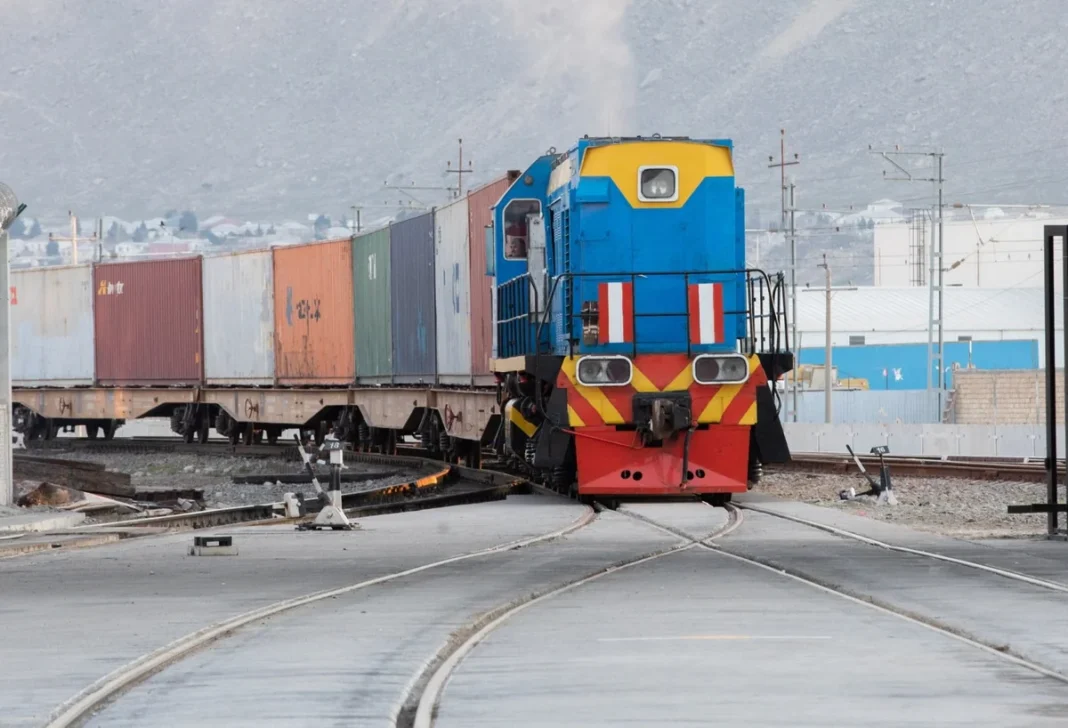
Fully developing the Middle Corridor could add about $1.3 billion, or 1.84%, to Azerbaijan’s gross domestic product, although realizing that potential will require investment in infrastructure, digital systems and transport management, according to World Bank estimates.
The World Bank’s new assessment of the Trans-Caspian International Transport Route also projects that Azerbaijan’s total employment could rise by 1.5%. The gains would come largely from higher transit revenue, increased port and railway activity and expanded trade with Central Asia and Europe.
Azerbaijan Would Need $1.16 Billion
The bank estimates that Azerbaijan’s section of the route will require $1.16 billion in investment through 2040. Its proposed portfolio includes $260 million to complete modernization of the Baku–Alat–Böyük Kəsik railway, $300 million for a dry-port network and another $600 million to expand the line’s capacity later.
The proposed dry ports would be located near the Böyük Kəsik border crossing, in Baku as an extension of the expanded Baku port terminal, and at a southern logistics hub. The southern facility would serve a planned route to Kars through Azerbaijan and Armenia.
Freight Volume Could Rise 3.65-Fold
World Bank modeling indicates that freight volume along the Middle Corridor could rise from 8.8 million metric tons in 2023 to 32.1 million tons in 2040. Non-oil freight crossing the Caspian Sea could increase 4.45-fold, from 3.5 million to 15.6 million tons.
Under an intensive-development scenario, container delivery time between Chongqing and Budapest could fall from the current 47–50 days to 18–19 days.
The bank also recommended that Azerbaijan Caspian Shipping Co., or ASCO, increase its fleet of feeder container vessels and Ro-Pax ships and coordinate schedules with operators in Kazakhstan and Turkmenistan. The report estimates this could reduce vessel waiting time for handling at Alat port to less than 12 hours.
Joint Operator and Through Tariff Proposed
The World Bank further proposed that transport companies in Azerbaijan, Georgia, Kazakhstan and Turkey establish a joint asset-light container operator. It would develop through tariffs, coordinate timetables, respond to disruptions and connect national carriers with logistics companies in China and the European Union.
The assessment says insufficient infrastructure is only one constraint. Faster customs procedures, better service from state transport companies, unified tariffs and digital data exchange will also be necessary. Without those reforms, the projected freight and economic gains would remain a scenario rather than a guaranteed outcome.
Sources: Report.az on the economic estimates; Report.az on the investment portfolio; Vesti Baku.