AZE.US
The death of Supreme Leader Ali Khamenei has triggered the most consequential leadership transition in Iran since 1989. But the central question is not who replaces him. It is who truly holds power.
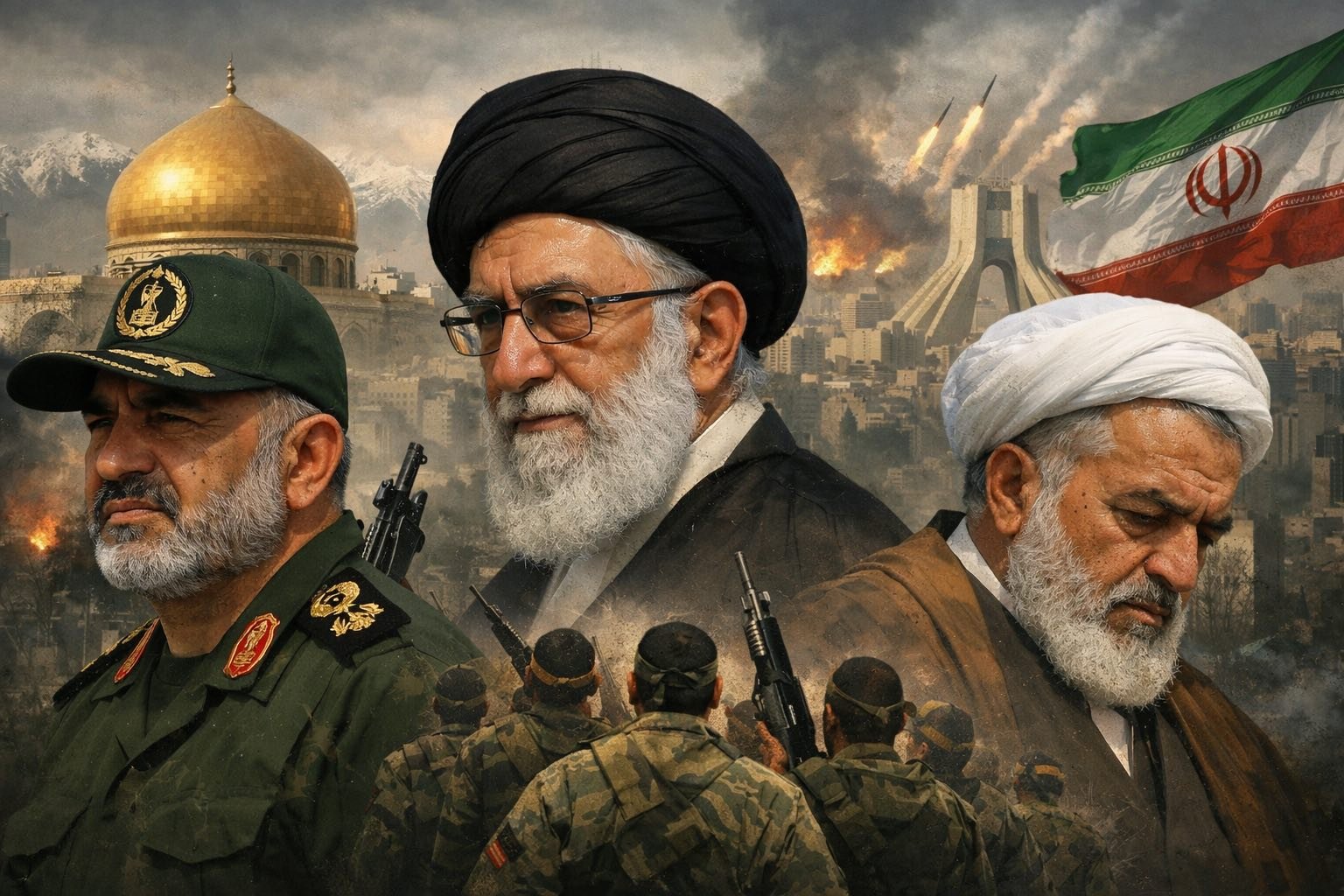
In today’s Iran, authority is layered. The Supreme Leader stood at the apex – but the durability of the system depends on institutions beneath him, particularly the Islamic Revolutionary Guard Corps (IRGC) and the clerical-political establishment.
Whether Iran stabilizes or destabilizes in the coming weeks will depend less on ideology and more on elite cohesion.
The IRGC: The Decisive Power Center
The IRGC is not simply a military branch. Over decades, it has evolved into:
-
A parallel security structure
-
A major economic actor
-
A strategic force with regional reach
-
A key arbiter of internal stability
No meaningful transition can occur without its backing.
If the IRGC remains unified, it will likely shape the selection of the next Supreme Leader and ensure policy continuity. In this scenario, Iran’s foreign and security posture would remain firm – and possibly harden.
If internal divisions emerge within the security establishment, however, the transition could become more fragile and unpredictable.
The Clerical Establishment: Legitimacy and Procedure
Under Iran’s constitution, the Assembly of Experts is responsible for selecting a new Supreme Leader. This body provides the formal mechanism for succession.
But formal procedure does not necessarily determine political outcomes.
The clerical elite maintains religious legitimacy, yet its influence has increasingly intersected with security institutions. Any candidate emerging from the process will almost certainly be one acceptable to both the religious establishment and the IRGC.
The transition, therefore, is likely to be negotiated behind closed doors before it becomes visible in public.
Three Plausible Scenarios
1. Rapid Consolidation
A successor aligned with the existing power structure is chosen quickly. The system projects stability, continuity, and resilience.
This is the most likely short-term outcome.
2. Elite Bargaining Phase
Deliberations extend longer than expected. Different factions within the political and security elite negotiate influence and policy direction.
Markets and regional actors react cautiously.
3. Security-Dominant Adjustment
The IRGC increases its informal political role, effectively strengthening its influence over both domestic governance and regional posture.
The system remains intact — but more securitized.
What This Means for the South Caucasus
For Azerbaijan and the broader South Caucasus, the leadership transition in Tehran is not symbolic. It has practical implications.
A consolidated Iran will:
-
Defend its northern strategic interests more assertively
-
Remain sensitive to developments around Syunik
-
Maintain close scrutiny of regional corridor dynamics
An internally unstable Iran, however, could create:
-
Border uncertainty
-
Economic and logistical disruptions
-
Increased unpredictability in regional engagement
In either case, neutrality of impact is unlikely.
The South Caucasus sits close to the strategic fault line.
Russia and the Broader Equation
Iran has been a key strategic partner for Moscow. The nature of the transition will affect:
-
Energy coordination
-
Sanctions circumvention networks
-
Regional balancing dynamics
A stable transition favors continuity in Russia–Iran relations. A fragmented transition introduces uncertainty for Moscow as well.
The Bottom Line
Khamenei’s death removes the central figure of Iran’s political architecture. But it does not automatically dismantle the system.
The Islamic Republic was designed to survive individuals. Now it must prove that design under pressure.
If the IRGC and clerical elites align, Iran will project stability. If cracks emerge, the consequences will extend well beyond Tehran.
For the South Caucasus, this is not a distant development. It is a structural shift unfolding near its borders.