AZE.US
The latest escalation around Iran is not just another regional conflict. It signals something deeper – a shift in how power is exercised in international relations.
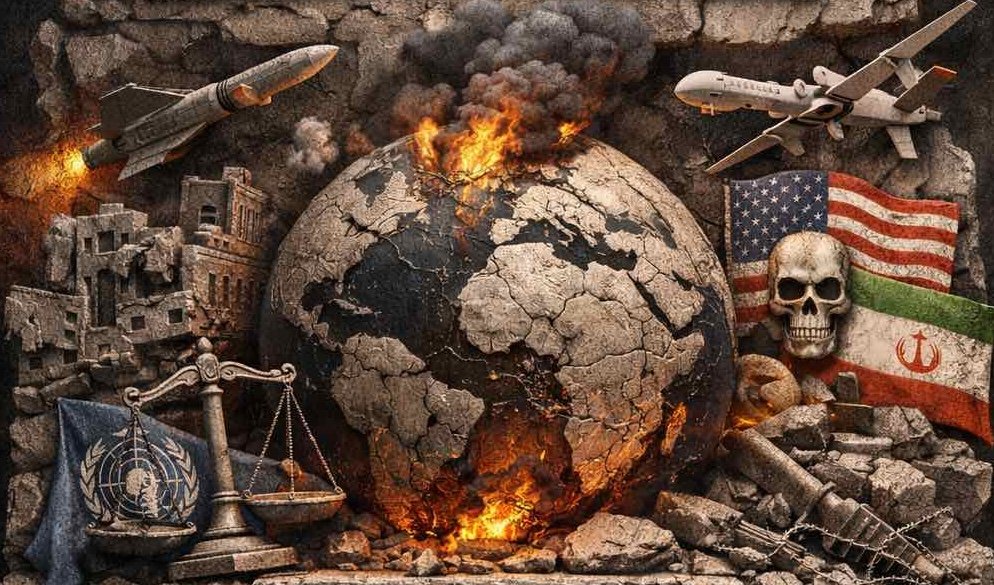
For decades, even major military actions were framed within at least a minimal legal architecture: UN Security Council debates, coalition-building, diplomatic justification. Today, that framework appears increasingly secondary. Decisions are being taken first – explanations follow later.
From Deterrence to Direct Elimination
Targeted strikes against high-ranking political and military figures, conducted without formal international authorization, represent a turning point. The logic of deterrence is being replaced by the logic of elimination.
This matters far beyond the Middle East.
When leadership figures become legitimate military targets without multilateral endorsement, the threshold for escalation drops dramatically. It creates a template others may follow.
The Erosion of Red Lines
International politics has never been purely rules-based. Power has always shaped outcomes. But there was, at minimum, a procedural layer – resolutions, alliances, formal warnings.
That layer is thinning.
If preventive strikes are justified by perceived future threats, the concept becomes elastic. Any state can claim anticipation of danger. The result is a world where subjective threat perception outweighs institutional restraint.
Such dynamics weaken collective security mechanisms and empower unilateral action.
Strategic Ripple Effects
The consequences extend into multiple geopolitical theaters:
-
Energy markets react instantly, altering economic balances.
-
Military resources are redirected, affecting other ongoing conflicts.
-
Regional actors reassess alliances and security guarantees.
For countries outside the immediate conflict zone, the impact may be indirect but substantial.
Implications for Smaller States
Perhaps the most consequential effect concerns states without nuclear deterrence or strong alliance guarantees.
If the principle of sovereign inviolability erodes, vulnerability increases for mid-sized and smaller countries. The incentive to accelerate military buildup – including unconventional capabilities – grows.
This risks triggering new arms races in already fragile regions.
The Multipolar Tension
Major powers observing these developments are recalibrating their strategies. Some may avoid direct involvement but benefit from strategic distraction. Others may use the precedent to justify assertive moves in their own neighborhoods.
In a multipolar system without stable guardrails, parallel crises can escalate faster than before.
A World of Managed Chaos?
The central question is not whether power politics exists – it always has. The question is whether there remain functioning constraints.
If international norms become selectively applied tools rather than shared rules, predictability declines. Markets become volatile. Security guarantees weaken. Diplomatic trust erodes.
For regions like the South Caucasus – situated between major power spheres – such shifts are not theoretical. They alter risk calculations overnight.
The Iranian crisis may eventually stabilize through negotiation or exhaustion. But the precedent being set – that formal authorization is optional and elimination is acceptable – will linger long after the immediate conflict subsides.
And that precedent may prove more destabilizing than the war itself.