AZE.US Editorial Board
Armenia’s parliament has ratified the agreement with the United States on the Trump Route for International Peace and Prosperity, or TRIPP. It is a concrete step forward. Baku is now entitled to expect the next ones: a clear construction timetable, durable transit rules and progress toward signing a peace treaty.
Azerbaijani sovereignty and Armenian sovereignty must become the foundation of workable agreements.
In an address to the Baku Forum on Intercultural Dialogue on Oct. 27, Azerbaijani President Ilham Aliyev made a central point: openness to cooperation does not mean accepting outside control. He said attempts to dictate terms to Azerbaijan would meet firm resistance.
For the South Caucasus, the issue has a practical meaning. External powers have had too much opportunity for too long to determine which borders open, who trades with whom and under what conditions neighbors reach agreements. Closed roads and unresolved conflicts sustained that regional dependence.
There is now a chance to change that system, but only through decisions that can be implemented.
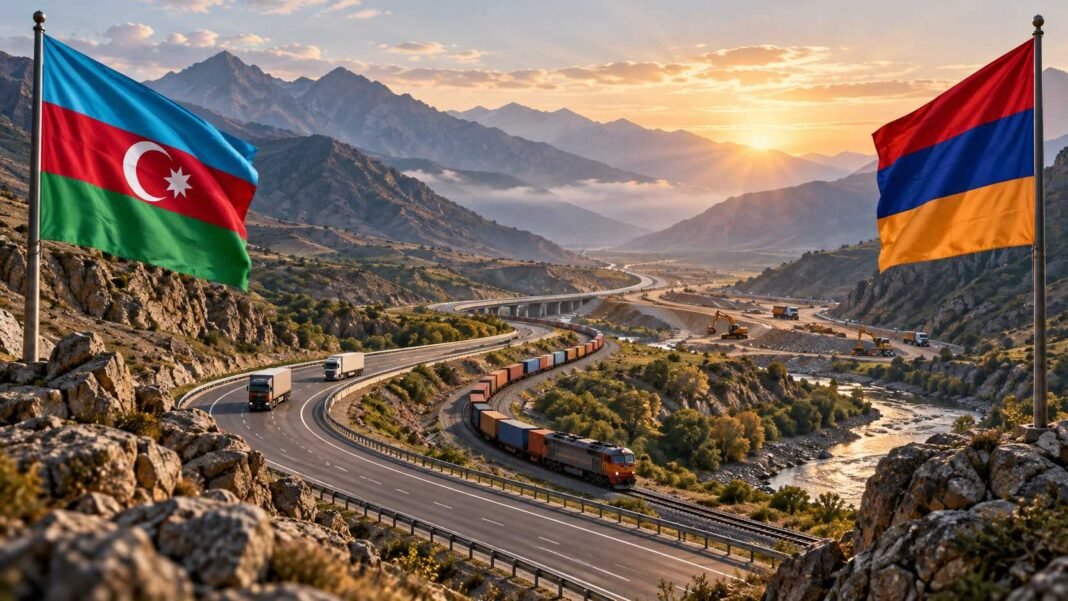
On Oct. 28, Armenia’s parliament ratified the TRIPP framework agreement by a vote of 63-32. The project calls for an Armenian-U.S. company in which the American side would hold 74% and Armenia 26%. Infrastructure on Armenian territory would operate under Yerevan’s sovereignty and jurisdiction.
The decision should not be dismissed simply because the peace treaty has not yet been signed. The parliamentary vote creates a legal basis for further work and fixes political responsibility on the Armenian authorities.
Ratification alone, however, will not deliver freight to Nakhchivan.
The project still requires a company, contractors, financing, technical documents and agreed procedures. This is where it will become clear whether the participants are ready to turn a political agreement into an operating route.
Baku needs a calendar against which implementation can be measured: when design work ends, when construction begins and when individual sections enter service. Any delay should have a specific explanation. Endless waiting erodes confidence even in a promising project.
The demand for a reliable link to Nakhchivan should also be translated into practical guarantees. What inspections will cargo undergo? How long will they take? How will tariffs be set? Who will resolve disputes? What happens during a political crisis?
The more precise the answers, the fewer opportunities there will be to use the route as an instrument of pressure.
Armenian sovereignty is compatible with predictable transit. State jurisdiction does not require arbitrary delays, and reliable transportation does not require a state to surrender control of its territory. Both sides must embed that balance in documents and daily practice.
The transport project does not remove the question of a peace treaty.
Baku has demanded the removal from Armenia’s constitutional system of language it regards as the basis for territorial claims against Azerbaijan. Yerevan calls constitutional reform a domestic matter. Resolving the dispute requires taking account of statements that have already been made.
Armenian Prime Minister Nikol Pashinyan has said publicly that a new constitution should not refer to the 1990 Declaration of Independence. He described that as a decision not to continue the Karabakh movement or return to the logic of conflict.
That statement is significant. The question now is when it becomes a published draft and a completed procedure.
Snap elections could provide a way to secure the support needed for reform. Pashinyan has left that possibility open if other efforts to complete the constitutional process fail. Elections could also delay the decision and once again subordinate the peace agenda to domestic political competition.
Yerevan can therefore reasonably be expected to present an orderly sequence: publish the text, hold discussions, define the procedure and set a voting timetable. Political difficulties explain why the process is complicated, but they do not substitute for a result.
Baku, for its part, has an interest in ensuring that each fulfilled commitment opens the next stage of normalization. If progress produces no tangible benefit, opponents of peace will find it easier to persuade the public that concessions are pointless.
For Azerbaijan, a durable outcome will be measured by freedom of transit to Nakhchivan, secure borders, expanded trade and fewer opportunities for outside interference. For Armenia, it will mean an end to transport isolation and less dependence on decisions by other states.
TRIPP’s ratification has brought both countries closer to that outcome. The next test will come at construction sites, in border procedures and at the negotiating table.
Independence grows stronger when a state can carry out its own decisions and ensure that its partners honor their agreements. That is the result Baku and Yerevan now need.
Sources: Vesti Baku editorial; Armenia-U.S. TRIPP framework agreement.