AZE.US
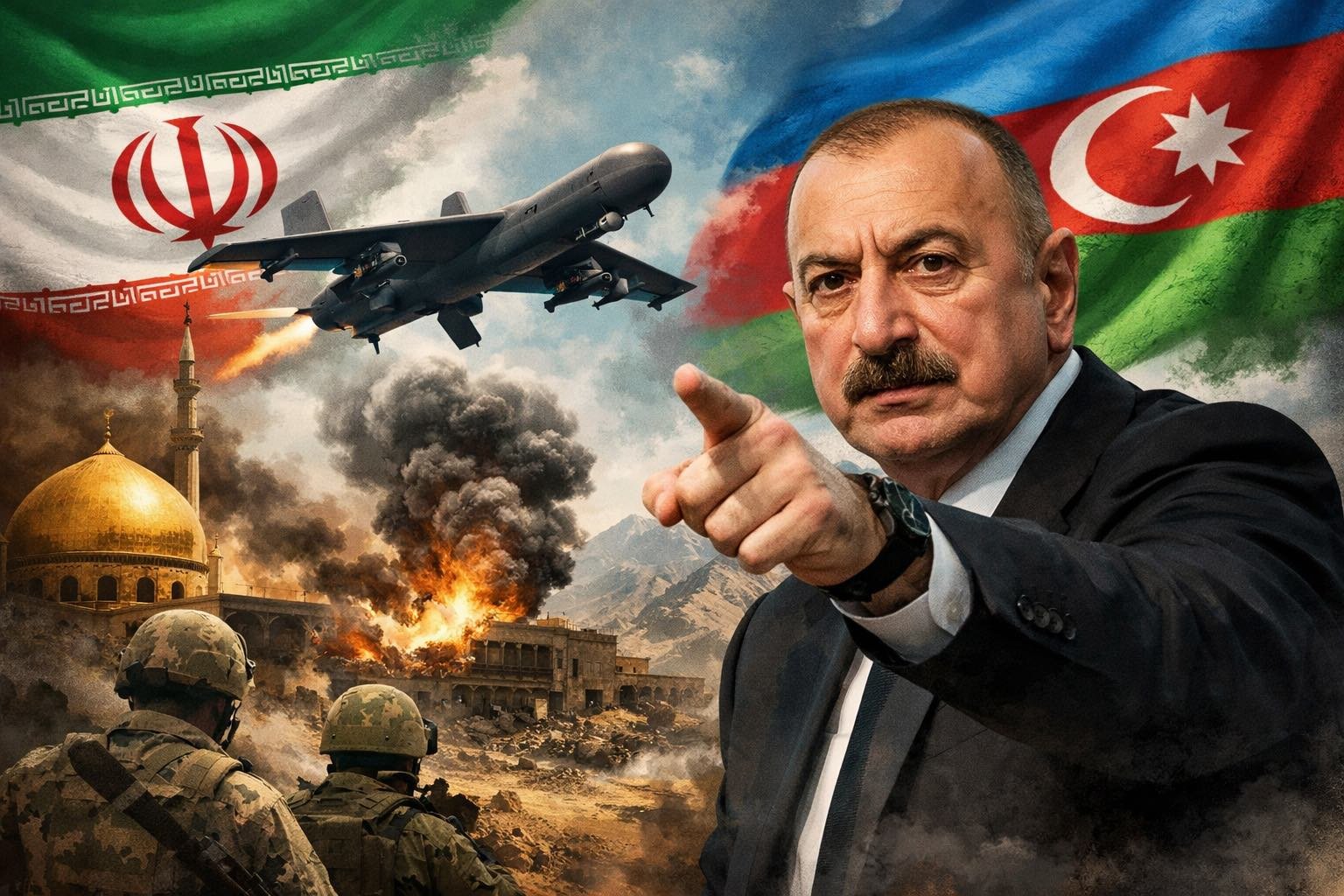
The drone strike on Azerbaijan’s exclave of Nakhchivan Autonomous Republic has opened a new and dangerous chapter in regional tensions, raising urgent questions about who launched the attack and why this strategically sensitive region became the target.
Azerbaijan has accused Iran of launching the drones, after two unmanned aerial vehicles struck civilian infrastructure, including the terminal building of Nakhchivan International Airport and an area near a school in the village of Shekerabad.
Several civilians were injured in the airport strike, while the school building sustained damage but no casualties were reported among students or staff.
President Ilham Aliyev described the incident as a terrorist attack against Azerbaijan and said the country reserves the right to respond.
But beyond the immediate political response, the attack has triggered a broader debate among analysts about what exactly happened and what message the strike was intended to send.
Four Possible Scenarios
Analysts outline several possible explanations behind the attack.
The first – and the one publicly advanced by Baku – is that the drones were launched by Iranian forces as a deliberate signal. Iran has long been uneasy about Azerbaijan’s growing ties with Israel and Western security structures. A strike on Nakhchivan could therefore be interpreted as a warning intended to deter deeper strategic cooperation.
A second possibility is that the attack was a provocation by a third party seeking to inflame tensions between Azerbaijan and Iran. In a period of heightened conflict across the Middle East, actors interested in widening the confrontation could benefit from opening a new fault line in the South Caucasus.
A third scenario involves the possibility that the strike was carried out by an autonomous or loosely controlled military unit. Within Iran’s complex security structure, particularly within organizations such as the Islamic Revolutionary Guard Corps, some units have historically operated with significant operational independence. In such cases, actions on the ground may not always reflect a coordinated strategic decision by the central government.
A fourth and less likely explanation is that the drones were not intended to strike Azerbaijan at all but deviated from their course during operations elsewhere in the region.
At this stage, none of these possibilities has been definitively confirmed.
Why Nakhchivan Became The Target
The choice of Nakhchivan is significant.
Separated from mainland Azerbaijan by Armenian territory, the exclave sits at a sensitive geopolitical crossroads, bordering both Iran and Turkey. The region has long been strategically important because it links Azerbaijan to Turkey and plays a key role in regional transport and energy connectivity plans.
For years, Tehran has watched the growing Azerbaijan-Turkey strategic partnership with caution. Any instability around Nakhchivan carries broader implications for the balance of power in the South Caucasus.
The region also lies near key corridors that could eventually form part of wider Eurasian transport routes connecting Central Asia, the South Caucasus and Europe.
A strike on Nakhchivan therefore sends a message not only to Baku but potentially to multiple regional actors.
A Potential Turning Point
The drone strike risks widening tensions at a moment when the Middle East is already experiencing escalating confrontation.
Several countries have condemned the attack, while international organizations have expressed concern over the violation of Azerbaijan’s sovereignty.
For now, the key question remains whether the incident represents an isolated escalation or the opening of a new geopolitical front that could pull the South Caucasus into the broader regional crisis.