AZE.US
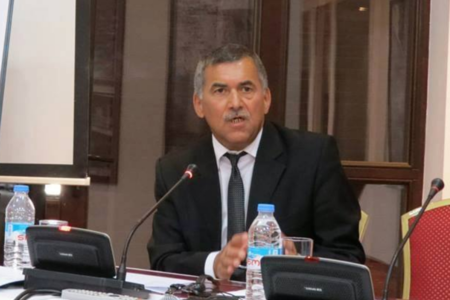
Azerbaijani political analyst Rauf Rajabov has said Moscow is struggling to accept President Volodymyr Zelensky’s recent contacts in the South Caucasus, including his visits to Baku and Yerevan.
Speaking on the YouTube channel Daily Europe Online, Rajabov said the Kremlin “cannot digest” Zelensky’s visit to Azerbaijan, his trip to Armenia, or his meeting with Armenian Prime Minister Nikol Pashinyan. In his view, Russia’s reaction reflects not confidence, but irritation over the region’s gradual movement beyond Moscow’s old sphere of control.
The discussion came against the backdrop of Pashinyan’s decision not to travel to Moscow for the May 9 Victory Day events. Rajabov described the refusal as the right step, but said Yerevan should have explained it more directly - not by referring to the election campaign, but by pointing to the current geopolitical reality.
According to Rajabov, Pashinyan’s presence at the Moscow parade would have created a serious contradiction, given Russia’s ongoing war against Ukraine. He noted that units involved in the war were expected to be represented at the parade, making attendance politically difficult for any leader trying to distance himself from Moscow’s military agenda.
Rajabov also responded sharply to former Ukrainian Prime Minister Mykola Azarov, who appeared on a Russian platform and accused Azerbaijani President Ilham Aliyev of moving away from the political line of Heydar Aliyev and turning toward the West. Rajabov dismissed those remarks as part of a wider Russian information campaign against Azerbaijan.
He said Azerbaijan’s foreign policy has been consistent under both Heydar Aliyev and Ilham Aliyev. Baku did not join the CSTO or the Eurasian Economic Union, did not accept a Russian bloc-based security model, and maintained its own strategic line, Rajabov argued.
“Azerbaijan has a clear line,” he said, adding that no major power had been able to force Baku to give up Karabakh, enter Russian-led integration projects or accept external control over its national security choices.
Rajabov said Azerbaijan’s priority is not bloc politics, but national interests, with a special focus on the Turkic world and the development of the Organization of Turkic States as a serious international actor.
Turning to Armenia, Rajabov warned that the situation around Yerevan remains tense. He said Russia has moved beyond normal diplomatic pressure and is openly unhappy with Armenia’s closer contacts with the European Union and Ukraine.
He did not rule out that Russia’s 102nd military base in Gyumri could become a pressure factor before or after Armenia’s parliamentary elections scheduled for June 7. In that context, he said Europe and NATO should have a clear contingency plan rather than limiting themselves to political statements.
Rajabov drew parallels with Georgia in 2008 and Crimea in 2014, arguing that hesitation by Western partners in a crisis could carry serious consequences for the region.
For Azerbaijan, the broader message of the interview was clear: Baku does not see its foreign policy through Moscow’s framework. Rajabov portrayed the latest Russian media attacks as a sign of frustration with a South Caucasus that is no longer moving according to the Kremlin’s script.
AZE.US