AZE.US
Armenia has started redirecting part of its export flow away from Russia after Moscow imposed new restrictions on several Armenian goods, Prime Minister Nikol Pashinyan said.
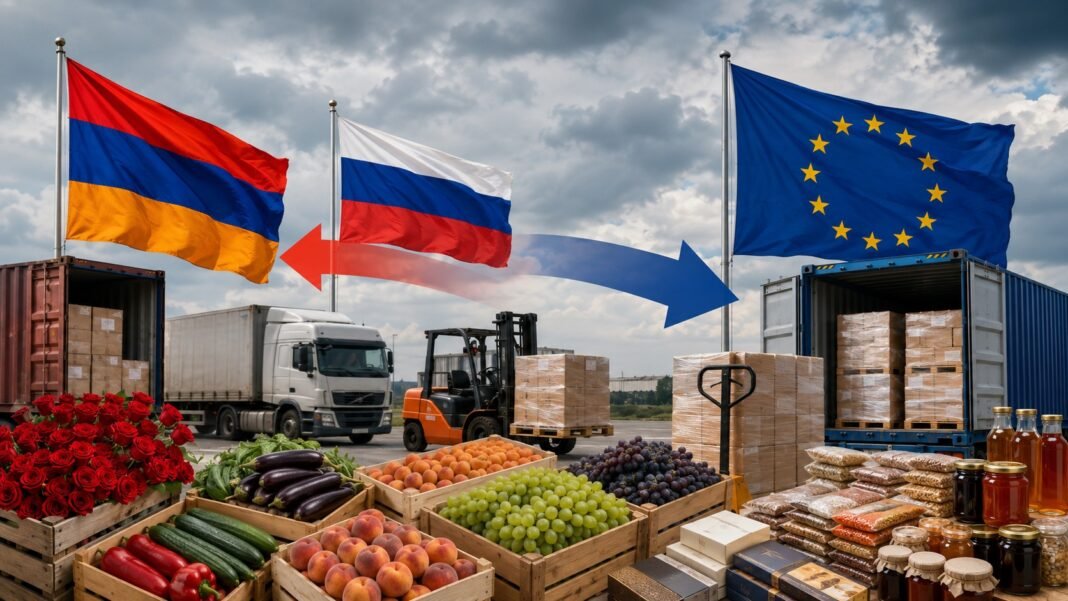
Speaking on June 2, Pashinyan said the first shipments of Armenian roses and vegetables that could no longer enter Russia had already been dispatched to new markets. He said some of those destinations were in the European Union, though he did not name specific countries.
“Several of our business delegations are already working, and the first batches of roses and vegetables have already been sent,” Pashinyan said, according to Armenian media. He added that he would reveal the exact destination countries later.
Pashinyan said Armenia did not expect major problems selling the affected products and insisted that no category of goods would be left without a market. “Exports are already moving in other directions,” he said.
The statement adds to a broader picture of worsening economic and political friction between Yerevan and Moscow.
Earlier, Pashinyan had promised compensation for farmers hurt by restrictions on exports to Russia. He also described the ban on some Armenian products as politicized, though he acknowledged that in some cases Armenian exporters had failed to meet quality standards. Those companies, he said, would also receive assistance to improve product quality.
Russia’s agricultural watchdog, Rosselkhoznadzor, imposed temporary restrictions from June 2 on imports of stone fruits and grapes from Armenia, including cherries, apricots, plums, peaches, nectarines and grapes. The agency linked the repeated violations to the dismantling of Armenia’s Agriculture Ministry.
On the same day, a temporary ban also took effect on certification of live fish from Armenia. Earlier, Russia had already restricted imports of Armenian flowers and all shipments of Jermuk mineral water after reporting excessive bicarbonate content.
The trade dispute comes against the backdrop of Armenia’s growing political push toward Europe.
In early 2025, Armenia’s government approved a bill on European integration. At the time, Pashinyan stressed that the move did not mean automatic EU membership and said any final decision on that path could only be made through a referendum.
Moscow has since signaled increasing frustration, warning Yerevan that it would have to make a strategic choice between the European Union and the Eurasian Economic Union.
For Armenia, the latest export redirection is more than a short-term commercial adjustment. It is also an attempt to reduce dependence on a market that Yerevan increasingly sees as a source of political pressure.
AZE.US