AZE.US
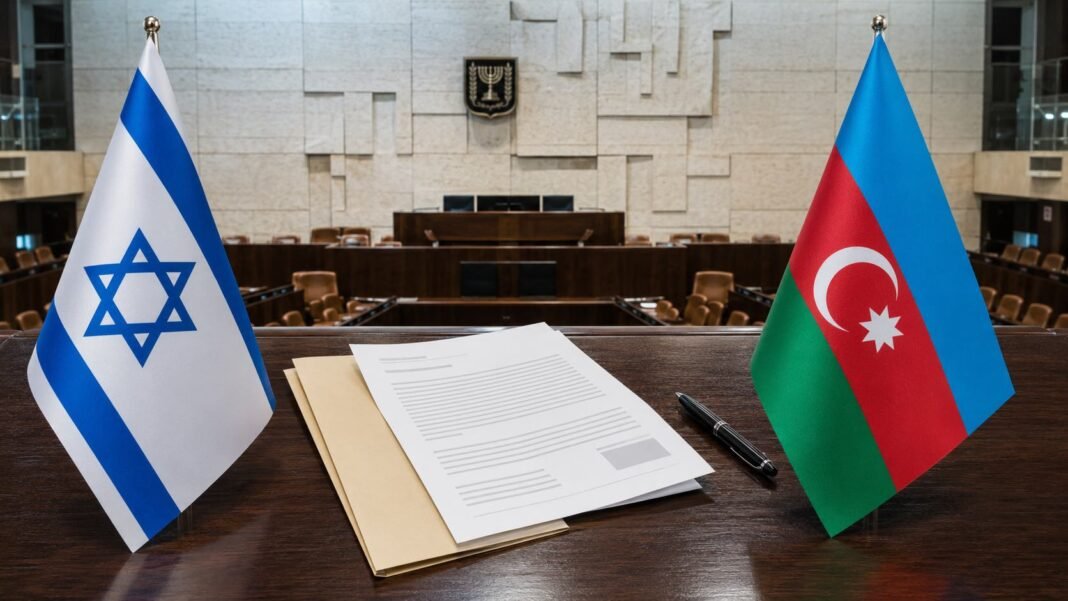
Israel halted the advancement of legislation recognizing the Armenian Genocide not only because of pressure from Baku but also because Azerbaijan’s strategic value has increased amid growing regional tensions, according to analysts Ahmad Alili and Samvel Meliksetyan.
The experts discussed the decision in the latest edition of “Events of the Week,” part of the Line of Contact program on the joint Armenian-Azerbaijani media platform Press Clubs TV.
Israel’s Cabinet unanimously approved the recognition proposal in late June. The measure still required a vote in the Knesset before it could become law.
However, Israel’s government subsequently prevented the legislation from moving forward.
The Israeli newspaper Haaretz reported that Israeli officials had assured their Azerbaijani counterparts that the issue would be removed from the Knesset’s agenda. Israeli Foreign Minister Gideon Sa’ar rejected the claim that Baku had pressured the government.
Azerbaijan’s Strategic Value
Alili said the decision should be understood not simply as a response to pressure but as a product of “geopolitical necessity.”
Relations between Israel and Turkey have deteriorated sharply, while Azerbaijan maintains strategic partnerships with both countries. This gives Baku a potential role as an intermediary capable of preserving channels between Ankara and Jerusalem.
“The geopolitical environment creates certain instruments for Baku,” Alili said.
Azerbaijan’s importance to Israel also stems from its location along Iran’s northern border, energy exports and ability to communicate with different political and ethnic groups across the region.
Israel has treated Iran as its principal regional threat for years. As that confrontation continues, maintaining a close relationship with Azerbaijan becomes increasingly valuable.
Baku is also a major energy supplier to Israel, while the country has an influential community of Jews whose families originated in Soviet Azerbaijan.
Alili argued that these factors give Azerbaijan leverage in its relationship with Israel, particularly when Israeli decisions affect Turkey’s core political interests.
A Test of Azerbaijan’s Reaction
Meliksetyan described Israel’s move as a form of “reconnaissance by combat” – an attempt to test how strongly Turkey and Azerbaijan would react before deciding whether to proceed.
The Israeli government was aware that the recognition initiative would provoke Ankara and create tensions with Baku, he said. Turkey’s opposition to international recognition of the Armenian Genocide is well established, while Azerbaijan has traditionally supported its closest ally on the issue.
According to Meliksetyan, Israel may have used the proposal to demonstrate that it possessed another instrument of political pressure against Turkey.
However, Azerbaijan’s reaction was stronger than expected, turning the measure into a potential liability for Israeli foreign policy.
“Azerbaijan is essentially Israel’s key partner in the post-Soviet space,” Meliksetyan said.
The strategic relationship with Baku ultimately proved more important than continuing an initiative that risked damaging Israel’s regional position.
Recognition as a Political Instrument
Both experts said the recognition issue has repeatedly been influenced by changing political calculations.
In Israel, debate over the Armenian Genocide has long included two separate dimensions. Israeli academics and genocide scholars have supported recognition, while successive governments have approached the subject through the prism of relations with Turkey and Azerbaijan.
The issue has often gained momentum during periods of Israeli-Turkish confrontation and lost urgency when political considerations required restraint.
Armenian Prime Minister Nikol Pashinyan also criticized the politicization of genocide recognition after the Israeli Cabinet’s decision. He argued that historical tragedy should not be used as an instrument in disputes between states.
Meliksetyan said Israel’s initial approval and subsequent retreat demonstrated how recognition can become part of broader geopolitical bargaining.
For Israel, the proposal delivered a warning to Turkey. For Azerbaijan, blocking its advancement demonstrated the strength of Baku’s influence and the strategic importance Israel places on the relationship.
The episode also underscored Azerbaijan’s unusual regional position: It remains Turkey’s closest ally while maintaining deep defense, intelligence and energy ties with Israel.
As tensions between Ankara and Jerusalem continue, both sides may increasingly depend on Baku to prevent their rivalry from escalating further.
AZE.US