AZE.US
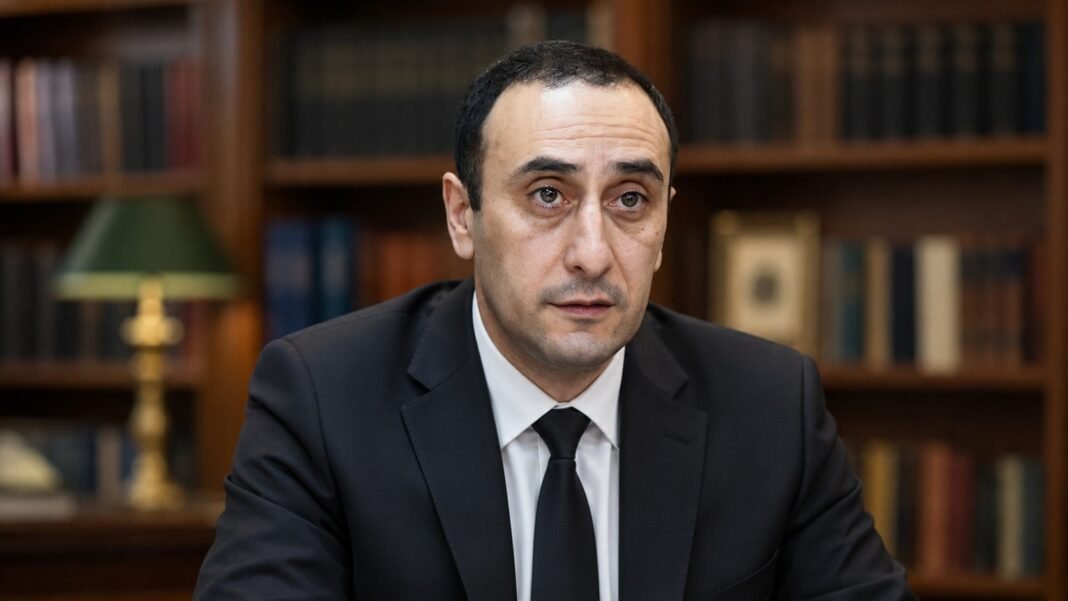
Russia will not be able to restore its former relationship model with the countries of the South Caucasus. Moscow’s loss of influence in Karabakh triggered a broader transformation of the regional order, Azerbaijani historian Rizvan Huseynov said.
As AZE.US reports, Huseynov made the remarks during an interview with the “News From the Caucasus” YouTube channel.
According to Huseynov, Russia’s war against Ukraine has accelerated geopolitical changes across Eurasia. Regardless of how the conflict ends, he argued, the positions of Azerbaijan, Armenia and other former Soviet republics will not return to their previous state.
“Russian-Armenian relations will not return to where they were. There is no turning back. Russia’s relations with the so-called post-Soviet space will be built differently – and this is already happening,” he said.
Huseynov linked Moscow’s declining position in the South Caucasus primarily to the outcome of the Karabakh conflict.
“After losing its influence in Karabakh through the conflict and occupation, Russia immediately lost Armenia as well. We are now witnessing a cascading collapse of Russian interests throughout the South Caucasus,” he said.
The historian argued that the former regional system, under which Russia and Iran could divide spheres of influence without considering the interests of local states, was disappearing. He described a possible attempt to revive such an arrangement as “Turkmenchay 2,” referring to the 1828 Treaty of Turkmenchay between the Russian and Persian empires.
In his assessment, Azerbaijan’s restoration of control over Karabakh undermined the political structure that had shaped the region since the Russian-Iranian agreements of the 19th century.
“All sides, including Russia and Iran, understand that a so-called Turkmenchay 2 cannot take place without Azerbaijan’s consent,” Huseynov said. “Russia has already passed the peak of its power. Iran is also unlikely to repeat the path of the Safavid or Qajar empires.”
He said the emerging situation had opened a historic window of opportunity for Azerbaijan, Georgia and Armenia. The three South Caucasus states, he argued, now have a chance to strengthen their sovereignty and shape a regional order of their own.
“Our task is to secure the greatest possible degree of sovereignty and ensure that the new order reflects the interests of the South Caucasus countries rather than those of neighboring empires,” Huseynov said.
The historian also pointed to Azerbaijan’s growing ties with Central Asian states. Relations between Baku and Kazakhstan, Uzbekistan and Kyrgyzstan are increasingly acquiring not only economic but also political and security dimensions, he said.
Huseynov separately addressed the International North-South Transport Corridor. He argued that developing the route would inevitably strengthen the role of Tatarstan, Bashkortostan, the Astrakhan region and other parts of Russia historically connected to the broader Turkic space.
“The Kremlin understands that implementing the North-South Corridor will strengthen the Turkic factor in both the economy and politics,” Huseynov said. “The process will be gradual, but it is inevitable.”
AZE.US