AZE.US
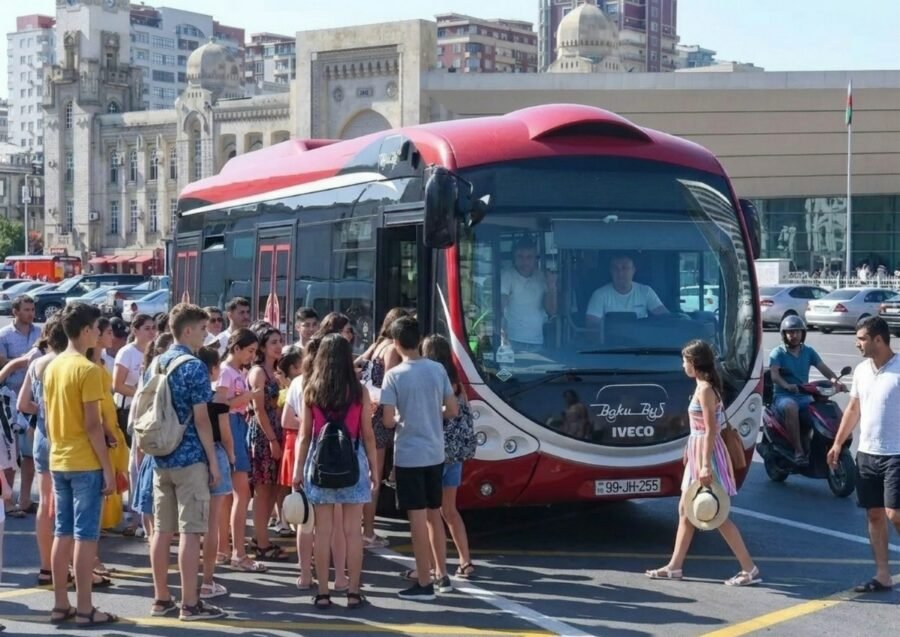
Express buses introduced after train service was suspended between Baku Metro’s 28 May and Nizami stations could operate free of charge during the nearly yearlong disruption, according to a proposal by economist Asif Ibrahimov.
The section was closed on Aug. 15 as part of construction work to separate the metro’s Red and Green lines. The restrictions are expected to remain in place for approximately 11 months.
Passengers arriving from the Darnagul direction must leave the train at Nizami and continue their journey on designated express buses. The transfer requires a separate fare of 0.60 manat, or about $0.35.
For commuters making the transfer twice a day, the additional expense reaches 1.20 manats ($0.71) daily, or about 26.4 manats ($15.53) over 22 working days.
Ibrahimov supported public calls to make the replacement bus service free, arguing that passengers should not have to pay twice because of restrictions within the metro system.
“Transport policy should not be based solely on fares and revenue,” he told Globalinfo.az. “Passenger convenience, accessibility and the reduction of daily expenses should also be priorities.”
The express routes should be treated as an essential replacement service rather than a regular commercial operation, he said.
“Passengers already pay to use public transportation. If they are forced to transfer to an express bus because of a disruption on the metro line, the additional financial burden should be reconsidered,” Ibrahimov said.
Although 0.60 manat may appear to be a small amount, repeated payments can become a significant monthly expense for students, low-income families and people who rely on public transportation every day, he added.
Free Transfer or Subsidized Fare
Ibrahimov said the express buses could be subsidized through the state or city budget while the affected metro section remains closed.
Another option would be a unified transfer system allowing passengers who have paid the metro fare to board the replacement bus without an additional charge.
“If one transport service is disrupted, citizens should not bear the burden by paying a second time,” he said.
The economist argued that the express routes should remain free or offer a substantial discount until normal metro service is restored. He cited Luxembourg’s free public transportation system as an example of a policy designed to improve mobility and reduce private car use.
Supporters of the proposal say free replacement buses could also encourage passengers to continue using public transportation instead of switching to private vehicles or taxis, helping limit additional traffic congestion in central Baku.
No official decision has been announced. For now, free travel or a unified metro-bus fare remains an expert proposal.
AZE.US