By AZE.US
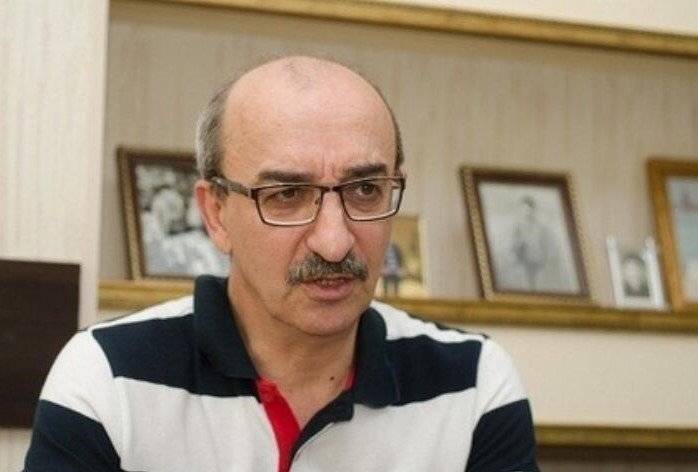
Reports that Tehran has demanded Armenian or Russian control over security along the proposed TRIPP route may reflect a coordinated attempt by Iran and Russia to preserve their influence in the South Caucasus, Azerbaijani political analyst Azad Isazade says.
Armenian news outlet NEWS.am reported on September 7 that Iran had presented Yerevan with new conditions concerning the Trump Route for International Peace and Prosperity, or TRIPP.
According to the report, Tehran wants security along the route to be provided either exclusively by Armenian forces or by the armed forces of a third country already stationed in Armenia – an apparent reference to Russia.
Neither Iran nor Armenia has publicly confirmed that such an ultimatum was delivered. Isazade, speaking in an interview with the Echo Baku YouTube channel, was analyzing the media report rather than an officially published Iranian document.
A Possible Moscow-Tehran Understanding
Isazade believes Iranian officials may have discussed the security issue with Moscow before communicating their position to Armenia.
“Iran may have consulted with Russia before making this demand. Moscow apparently wanted Tehran to mention that Russian forces could also provide security,” he said.
For Russia, participation in protecting the route would offer both financial and strategic benefits. It would allow Moscow to retain control over a major regional transport link at a time when its military and political influence in Armenia is being questioned.
Isazade said the reported Iranian position may therefore be directed not only at Washington but also at Armenian Prime Minister Nikol Pashinyan’s government amid continuing debate over the future of Russia’s 102nd Military Base in Armenia.
Tehran, meanwhile, is seeking to demonstrate that the South Caucasus remains within its sphere of strategic interest and that decisions affecting Iran’s northern border cannot be made without considering its position.
No US Military Deployment Has Been Announced
Isazade stressed that Washington has not announced plans to deploy regular US troops along the route through Armenia’s southern Meghri region.
If an outside operator is eventually brought in, the assignment could be given to a private security company rather than a military contingent.
Security along the road or railway could largely rely on surveillance cameras, sensors, drones and small mobile response units. Heavy weapons, armored vehicles and large numbers of foreign troops would not necessarily be required.
The analyst also cautioned that the dispute remains largely theoretical because construction of the route has not yet begun.
“The road does not exist yet, but we are already discussing who will guard it,” Isazade said.
Why Baku Would Resist Russian Control
The proposed route is expected to connect mainland Azerbaijan with its Nakhchivan exclave through Armenian territory. Isazade argued that Azerbaijan would be unlikely to accept a system under which its citizens and cargo depend on Russian troops and Russian-controlled checkpoints.
He pointed to Moscow’s failure to reopen transport links between Azerbaijan and Armenia following the trilateral statement signed on November 10, 2020.
“Almost six years have passed, but Russia has not managed to establish transport communication or normalize relations between Azerbaijan and Armenia,” he said.
Trust in Russian involvement has also been damaged by Baku’s experience with the Russian peacekeeping mission formerly stationed in Karabakh, according to the analyst.
Giving Moscow responsibility for TRIPP security would therefore risk turning protection of the route into political control over it.
Joint Azerbaijani-Armenian Security
One possible solution would be a joint Azerbaijani-Armenian security or monitoring mechanism, Isazade said.
Armenian forces could retain responsibility for security on Armenian territory, while Azerbaijani representatives could participate as observers to ensure safe passage between mainland Azerbaijan and Nakhchivan.
Such a model would preserve Armenia’s sovereignty while giving Azerbaijan greater confidence that passengers and cargo would not face interference.
Isazade recalled that joint Armenian-Azerbaijani border posts operated in some areas in the early 1990s, even as intense fighting continued elsewhere.
“If joint posts and patrols were possible at that time, the two sides should also be able to reach an agreement in the future,” he said. “It would address the concerns of both Azerbaijan and Armenia.”
A representative of a neutral country could help organize or supervise the system without deploying an armed foreign contingent.
Giving Iran an Economic Stake
Isazade proposed another way to reduce Tehran’s opposition: give Iran access to the transport network and a direct economic interest in its success.
A connecting branch could allow Iran to receive goods arriving from China and Central Asia while using the same corridor to send Iranian exports westward.
“If Iran is given access to the route, its position could become much more flexible,” Isazade said. “That would also benefit Azerbaijan by reducing tensions with Tehran.”
Iran could then view TRIPP not as a geopolitical threat or an attempt to isolate it, but as an additional trade route connecting it with the South Caucasus, Turkey and European markets.
This scenario would also depend on the wider confrontation between Iran and the United States, including the future of sanctions imposed on Tehran.
A Struggle for Regional Influence
Isazade argued that negotiations with Iran should focus on mutual benefit rather than threats and pressure. Despite political disputes, the South Caucasus remains one of the calmer sections of Iran’s border and presents no immediate military danger to the country.
The final security arrangement for TRIPP will not be decided by Azerbaijan and Armenia alone. Turkey, the United States, Russia and Iran all have interests in the project. China could also become an important stakeholder as a major potential user of an east-west transit route across the South Caucasus.
The argument over who will protect a road that has not yet been built is therefore about more than physical security. It is part of a wider contest over who will influence the next transport architecture of the South Caucasus.
In Isazade’s view, the most sustainable compromise could combine Armenian sovereignty, Azerbaijani participation in monitoring, neutral international oversight and an economic role for Iran.
AZE.US