By AZE.US
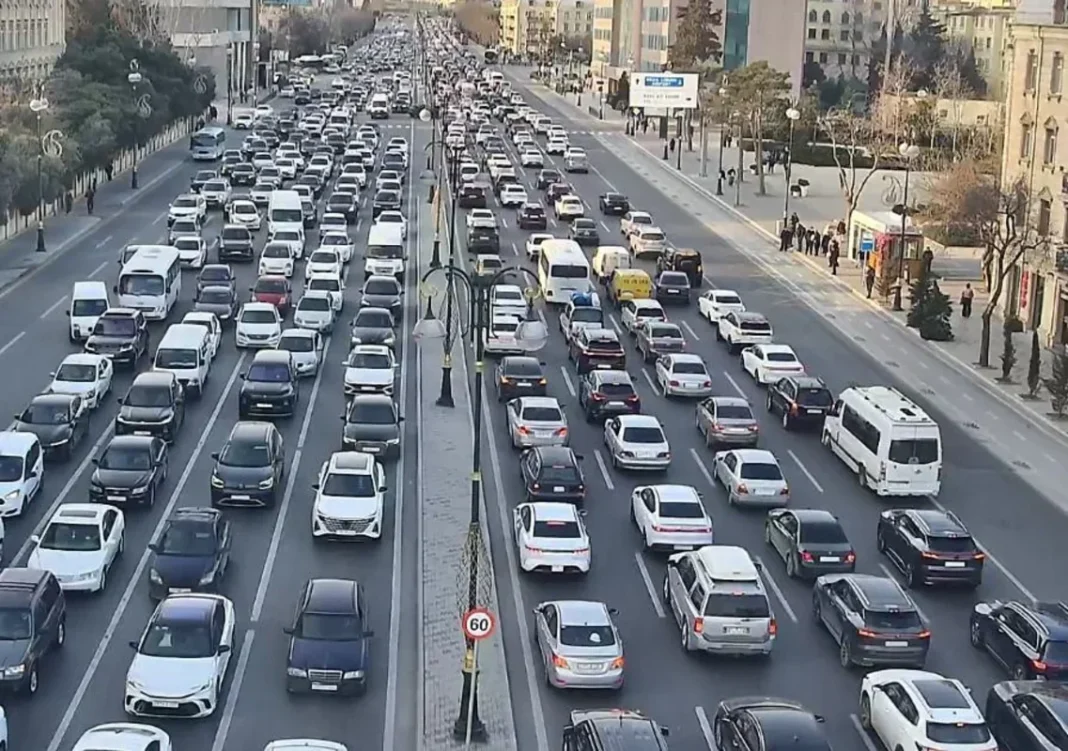
The start of the new academic year has once again brought severe traffic congestion to Baku. Long lines at bus stops, overcrowded metro trains, road closures and ongoing construction have turned daily commutes into an ordeal.
Musavat TV host Sevinj Telmangizi said the authorities should have anticipated the increased pressure on the capital’s transport system.

“We knew that classes would begin on September 15. It was neither a surprise nor an unexpected development. Yet there were such crowds at bus stops that someone unfamiliar with the situation might have thought a rally was taking place,” she said.
Telmangizi also questioned why extensive roadworks continued after the school year had begun.
“What were they doing during the summer? Why did large-scale work begin now? This is not a problem that will disappear in a day. We have nine months of the academic year ahead of us,” she said.
New Work Schedules Will Not Be Enough
Since September 15, several state institutions have introduced staggered working hours on a trial basis. Employees start work at different times in an effort to spread passenger flows and ease rush-hour congestion.
Telmangizi, however, said changing office hours alone would not solve the problem.
“Without comprehensive measures, changes to working hours will remain largely cosmetic. Baku needs a serious state program addressing not only transport but also the way schools and universities operate,” she said.
According to the host, a significant share of the congestion is created by parents driving children to schools located far from their homes. Every morning, cars stop outside school buildings, often blocking lanes while children get out and collect their bags.
‘The Best School May Be the One Near Home’
Telmangizi urged parents to reconsider sending their children to prestigious schools and lyceums on the opposite side of the city.
She said she had faced the same problem after enrolling her first child in a lyceum near Baku’s 28 May area.
“After two years, I realized that my child was spending more time in a taxi than studying, so I ended it,” she said. “As a mother of two children who entered university, I can tell you that the best school is the one near your home.”
She noted that many high school students take private lessons or attend preparatory courses regardless of which school they attend. In her view, spending hours in traffic every day merely to attend a well-known school often provides little educational benefit.
“Stop putting your children through Baku’s traffic,” Telmangizi said. “How long should a child see a bus or taxi driver more often than their own parents? Let them attend a school near home. It will make life easier for the children, their parents and the entire city.”
Baku Needs a Comprehensive Plan
Telmangizi said easing congestion would require several measures to be implemented simultaneously, including improvements to public transportation, alternative routes, wider roads where possible, additional interchanges and stricter parking restrictions on heavily congested streets.
She also pointed to the shortage and high cost of parking in central Baku. Many residents use private cars not simply for comfort, she argued, but because public transportation does not provide a reliable alternative.
“People no longer know how to get around: the roads are blocked, the metro is overcrowded and buses are packed,” Telmangizi said. “This cannot be solved with superficial measures. So far, there is no comprehensive solution in sight.”
AZE.US