By AZE.US
Azerbaijan’s fishing season officially opened on September 1, bringing more fresh local fish to markets and stores. However, vendors say demand remains weaker than expected, partly because of the continuing hot weather.
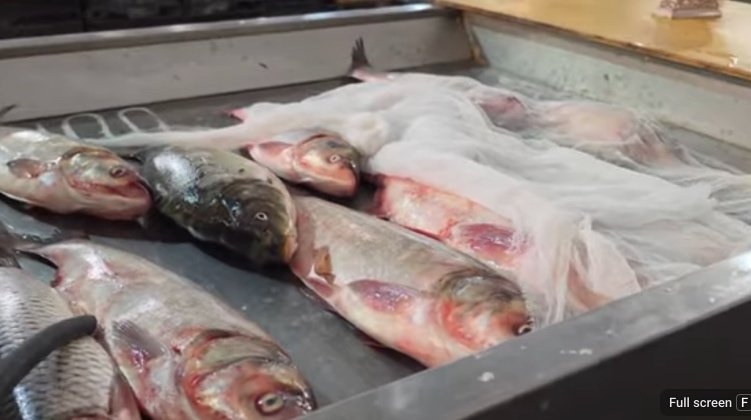
Following the start of the season, consumers are seeing a wider selection of fresh fish. Buyers are primarily looking for local products at affordable prices, although both availability and prices vary by region and place of sale.
At regional markets, zander is generally offered for 8 to 15 manats ($4.70–$8.80) per kilogram. Depending on its size, the price can reach 20 manats ($11.80).
Common carp sells for approximately 8 manats ($4.70) per kilogram, while grass carp costs around 9 manats ($5.30). Smaller, bonier fish are considerably cheaper, typically selling for 3-4 manats ($1.80–$2.40).
Vendors say demand remains modest despite the relatively low prices. They expect sales to increase once temperatures begin to fall.
Markets Offer Lower Prices Than Stores
In Sumgayit, consumers tend to prefer traditional markets to supermarkets. Kutum, zander, carp and trout are among the most popular varieties.
Baku markets offer a broad selection, although imported fish – particularly products supplied from Iran – account for a significant share of what is available.
- Common carp – about 6 manats ($3.50) per kilogram;
- Grass carp – approximately 8 manats ($4.70);
- Perch – around 6 manats ($3.50);
- Trout – between 10 and 12 manats ($5.90-$7.10).
The difference is especially noticeable for trout. While it sells for 10-12 manats per kilogram at markets, prices at some supermarkets reach 17-18 manats ($10-$10.60). Consumers can therefore pay as much as 6-8 manats more per kilogram when buying trout from a supermarket.
Some shoppers described fish as an affordable alternative to meat. Certain varieties cost only 4-6 manats ($2.40-$3.50) per kilogram and sell out quickly.
Why Azerbaijan’s Market Depends on Imports
Experts say natural fish stocks in the Caspian Sea have been declining for roughly two decades, with the trend becoming particularly pronounced in recent years.
They do not expect the populations to recover or stabilize in the near future. As domestic production remains insufficient to meet demand, imports are filling the gap.
Foreign supplies have had an especially significant effect on Azerbaijan’s trout industry. Iranian fish farms can offer trout at competitive prices, making it difficult for domestic producers to compete.
Industry specialists argue that relatively inexpensive Iranian imports are one reason local trout production has not yet reached the level needed to supply the Azerbaijani market. The government has begun providing subsidies to support domestic fisheries and aquaculture operations.
Authorities Seek to Restore Fish Stocks
Azerbaijan’s Fisheries and Aquaculture Center says it continues to release juvenile fish into the Caspian Sea and the country’s inland waterways.
The program is intended to restore populations of sturgeon, salmon and other commercially important species whose numbers have declined. Authorities have also intensified efforts against poaching. Dozens of people engaged in illegal fishing have reportedly been detained this year.
The opening of the fishing season has increased supply and helped keep prices relatively affordable.
Nevertheless, market conditions continue to depend on the size of the catch, imports, the condition of natural fish stocks and the ability of domestic farms to expand production.
AZE.US