AZE.US
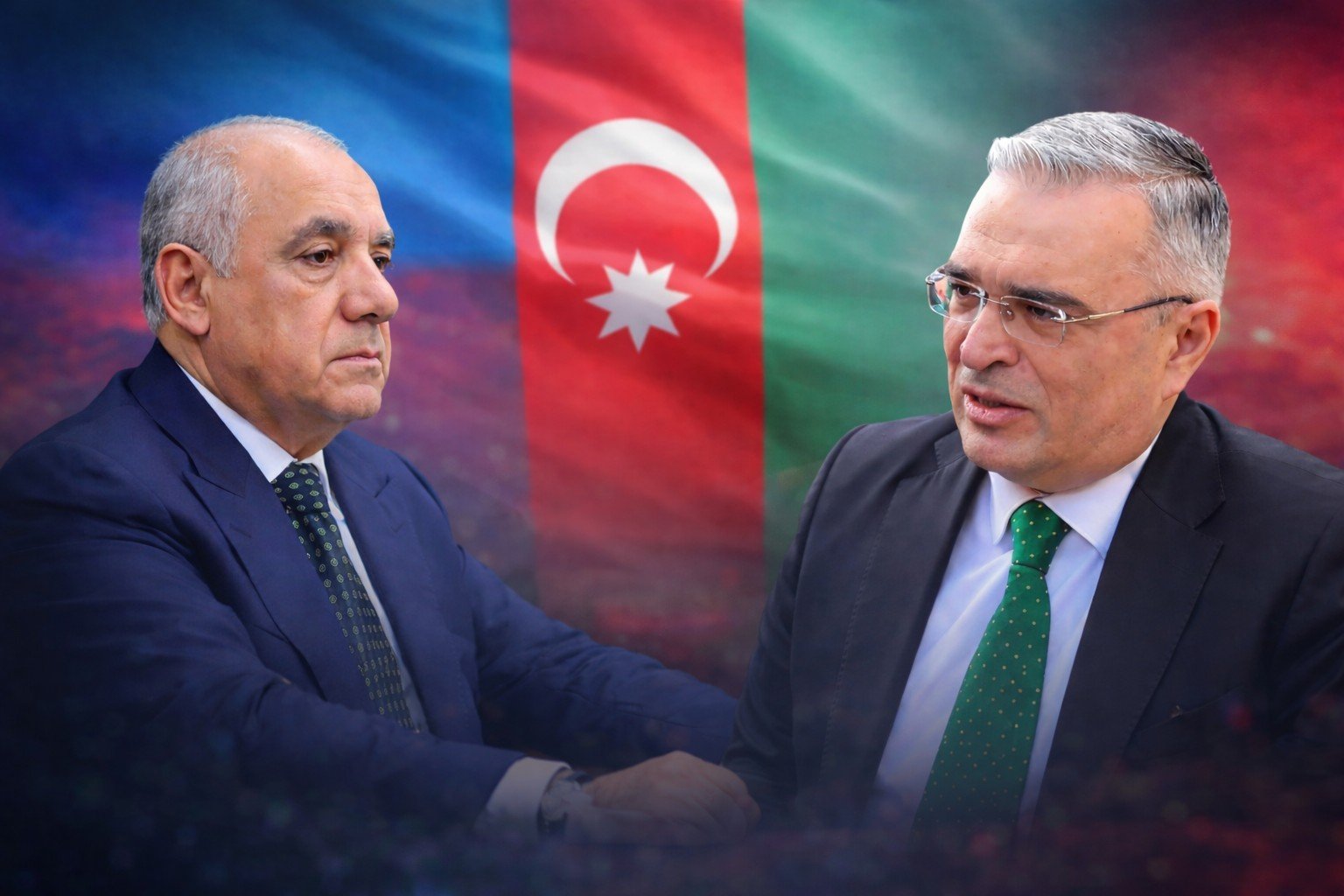
Azerbaijani politician and public figure Ilgar Mammadov says Prime Minister Ali Asadov is being targeted in the media because of the country’s weak economic results, but argues that the real failure is systemic, not personal.
In a Facebook post, Mammadov pointed to the economic figures that have unsettled the country’s leadership. He noted that President Ilham Aliyev, who also chairs the ruling New Azerbaijan Party, appeared deeply concerned by Azerbaijan’s 0.3% economic contraction in the first quarter of this year, especially as Armenia and Georgia posted growth of 7% to 8%.
According to Mammadov, those bleak numbers are the most likely reason Asadov has now come under public pressure.
But Mammadov’s broader point was harsher. He said the problem cannot be reduced to one prime minister. In his view, Azerbaijan has long been heading toward exactly this kind of test: not war, but economic competition and direct comparison with neighboring states. He said he had been warning about that challenge repeatedly after the war, including during the last election campaign, when his camp insisted that “the economy is reality,” but few wanted to listen.
Mammadov then went to the heart of his argument. In a country where the rule of law is absent, and where public and political life is not moving toward freedom but in the opposite direction, he said it makes no sense to expect even the most powerful official to deliver a high-quality economy.
That line was the core of his message: poor economic performance is not simply the result of weak management. It is the natural outcome of a political and legal system that blocks competition, suppresses initiative and leaves no serious foundation for sustainable development.
Mammadov also mocked the business logic he associates with Asadov. In a pointed passage, he wrote that the same man who pushed Azerbaijanis into a narrow vertical dream of “a car wash downstairs and a tea house upstairs” apparently had a more horizontal vision for his own model – a hotel on one side, a restaurant on the other, a residential complex nearby and an office building next to that.
Yet, he argued, both models amount to the same thing: trying to carve out either a small or a large share of the oil money pumped into the economy. In his telling, neither has any real value beyond dividing up rent from state-driven oil wealth.
His conclusion was blunt. If Azerbaijan wants a functioning economy, the answer is not to publicly punish one official while leaving the wider system untouched. The real issue, Mammadov suggested, is that the country continues to demand modern economic outcomes from a structure built to distribute oil money, not to create rule-based growth.
AZE.US