AZE.US
Azerbaijan exports oil, but many Azerbaijani drivers still rely on imported motor oil for their cars. That contradiction is now becoming more visible at service stations and auto parts shops.
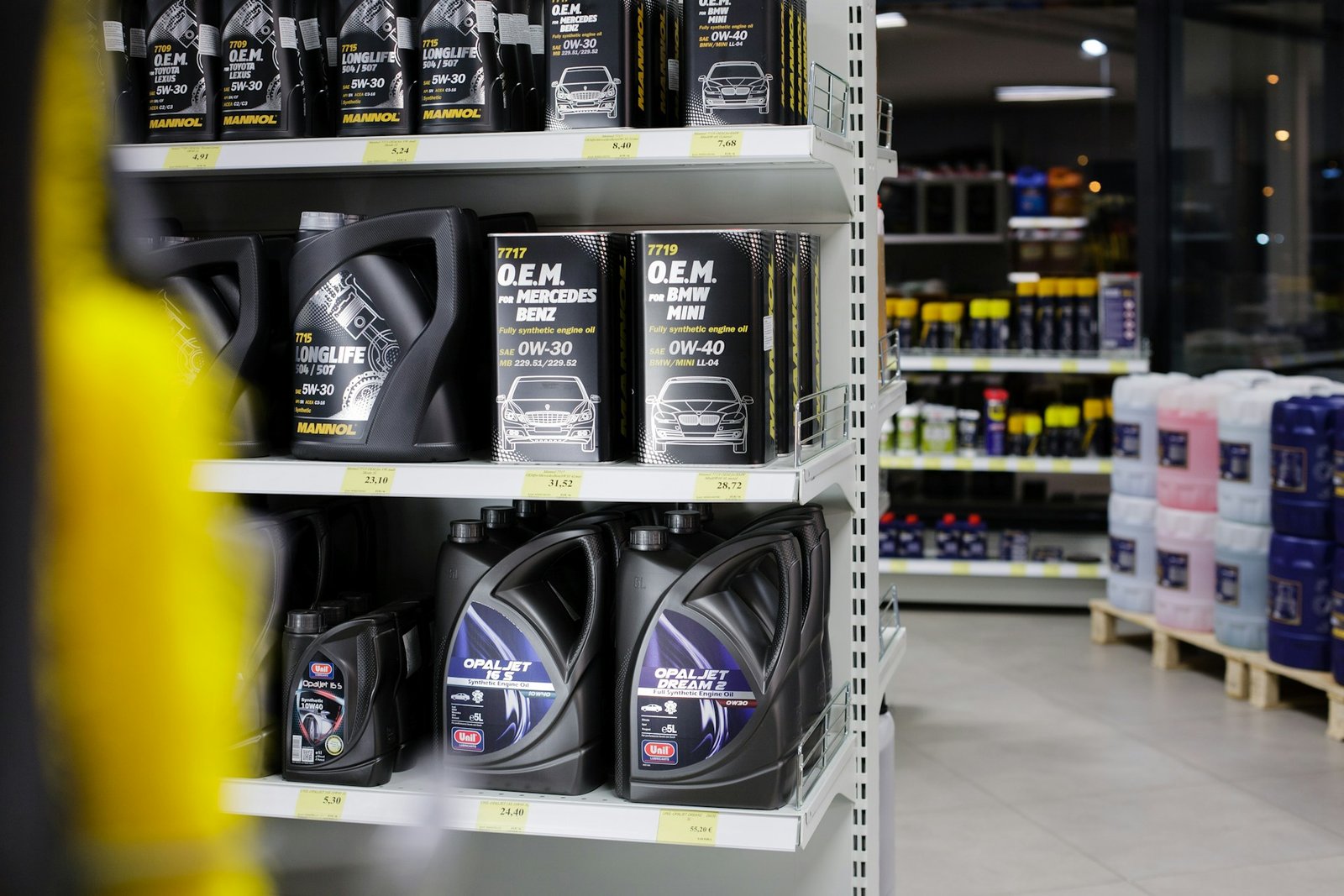
Motor oil prices in Azerbaijan have risen sharply in recent days, with sellers and market participants pointing to higher import costs, logistics disruptions and uncertainty around the Strait of Hormuz.
According to market estimates, the increase has mostly affected European-made motor oils. Some products that previously cost about 100 manats are now being sold for 120-125 manats. In several cases, prices have risen by 20–25%, while some brands have become almost 30% more expensive.
The situation is uneven across the market. Some shops and service centers are still selling from older stocks and have not yet changed prices. But where inventories are running low, new shipments are either delayed or have not arrived.
Drivers are already feeling the difference. Motor oil that recently cost 70-80 manats now sells for 95-110 manats in some cases.
European brands have been hit hardest.
On the surface, the explanation is simple: oil prices are rising, logistics are under pressure, and suppliers are building additional risks into their prices. But for Azerbaijan, the issue is more uncomfortable. The country has earned revenue from crude oil for decades, yet in a basic and high-demand segment such as motor oil, it remains dependent on imports.
Economist Natig Jafarli said higher crude prices push producers of petroleum products to raise prices as well. He also pointed to disruptions in supply chains and expectations of further shortages, which are encouraging market players to place larger orders in advance.
But Jafarli also raised the larger question: why does Azerbaijan, despite having its own oil, not produce more finished petroleum products for its domestic market?
Azerbaijani crude is considered high quality. A single barrel can be used not only to produce gasoline and diesel, but also motor oils, aviation kerosene and feedstock for other industries. The real profit is often not in selling crude oil, but in refining it into higher-value products.
For the domestic market, Azerbaijan would not necessarily need a giant industrial complex. Even a smaller motor oil production facility could cover part of local demand.
The market is there. According to official figures cited in the discussion, Azerbaijan has about 1-1.2 million vehicles. Even if each car changes oil once or twice a year, that creates a large and steady consumer base.
That is why the latest price increase is not just another market reaction to an external crisis. It points to an older structural problem: Azerbaijan sells raw material, then buys back finished products at higher prices, with added exposure to logistics risks and foreign suppliers.
Jafarli said the weak investor appetite for such production is not caused by a lack of crude oil. The problem, he argued, is the cost and complexity of doing business: production expenses, licensing, infrastructure connection costs, electricity prices and regulatory barriers.
As a result, an investor may buy Azerbaijani crude but refine it elsewhere, in a country where it is cheaper to build a plant, easier to obtain permits and less expensive to operate.
Regional competitors are moving more actively. Jafarli noted that Kazakhstan and Uzbekistan have already taken steps in this area, including refinery projects and motor oil production.
For Azerbaijan, the issue is not only economic. It is also a question of industrial logic. As long as the country remains mainly a crude exporter, every external shock - Hormuz, freight costs, oil prices or supply-chain disruption - can quickly reach ordinary drivers through the price of basic car maintenance.
Market participants warn that if tensions around the Strait of Hormuz continue, the first problem may be a shortage of new imported batches. After that, price increases could spread more widely across the market, especially affecting wholesalers, service networks and large vehicle fleets.
For ordinary drivers, the result is already clear: changing motor oil has become more expensive and may become costlier still.
For the wider economy, the question is sharper: how long can an oil-producing country continue to depend on imports for a product it could, at least partly, make at home?
AZE.US