AZE.US
Armenian-made goods could eventually appear on the Azerbaijani market as Baku and Yerevan explore the possibility of establishing two-way trade.
The two sides have exchanged lists of products that businesses may be interested in importing, but no date has been set for Armenian exports to Azerbaijan to begin.
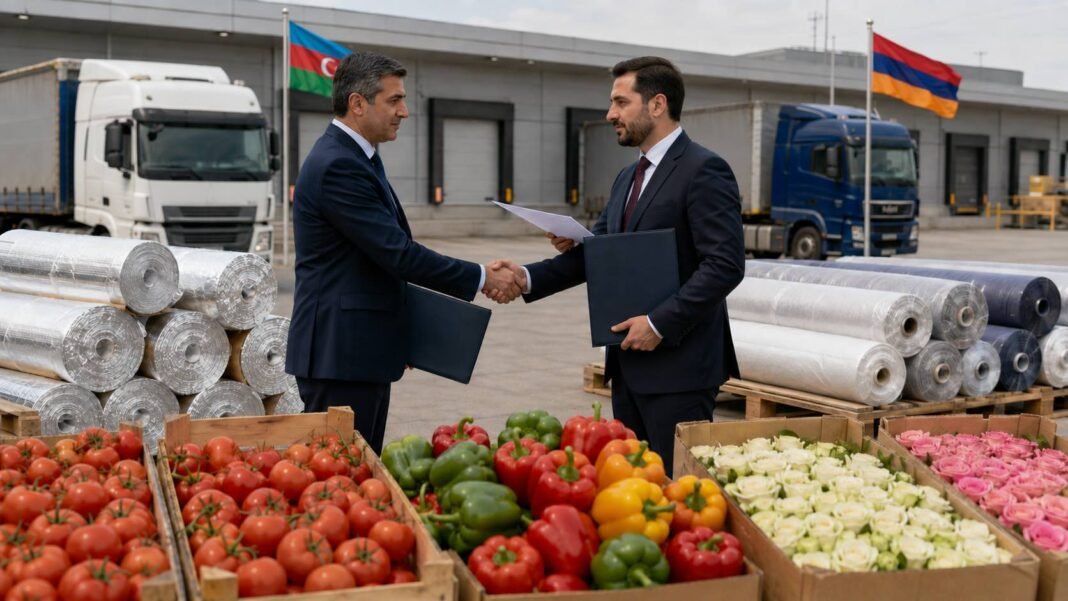
Armenian Economy Minister Gevorg Papoyan said Yerevan had offered a range of industrial and agricultural products, including:
- aluminum foil;
- raw materials used in foil production;
- ferromolybdenum;
- raw materials for brandy production;
- tobacco products;
- textiles;
- livestock;
- roses;
- tomatoes, peppers and other greenhouse produce.
According to Papoyan, Azerbaijani companies identified specific products they may be interested in purchasing. Armenian suppliers subsequently provided information on available quantities, prices and possible delivery schedules.
Azerbaijan reportedly expressed particular interest in aluminum foil of a specified thickness and quality. An Armenian producer submitted a commercial offer detailing the price, volume and delivery timetable, but had not received a final response from the Azerbaijani side at the time of Papoyan’s statement.
The first shipments will depend on whether private companies from the two countries can agree on commercial terms. As a result, reports that Armenian products will soon be widely available in Azerbaijani stores remain premature.
Why Azerbaijani Companies May Be Interested
Purchasing certain products from Armenia could make economic sense if the final price, including transportation costs, is lower than the cost of importing comparable goods from more distant markets.
Geographic proximity could reduce both freight expenses and delivery times, particularly for aluminum products, metallurgical raw materials and seasonal agricultural goods.
Azerbaijan already has a developed aluminum industry and is the South Caucasus’ only producer of primary aluminum. Business interest may therefore be focused on specific types of foil, processed materials or industrial inputs rather than basic aluminum.
Economist Natig Jafarli has also said Armenia has the potential to export metallurgical raw materials, wine and brandy spirit, tobacco, textiles and seasonal fruits and vegetables to Azerbaijan.
Food products and goods of plant or animal origin would have to pass inspections by Azerbaijan’s Food Safety Agency before entering retail circulation. The checks would cover possible diseases, harmful organisms, chemical residues and other safety risks.
Trade Has So Far Favored Azerbaijani Exports
Azerbaijan has already begun supplying petroleum products to Armenia. The first direct commercial shipment, consisting of more than 1,200 metric tons of SOCAR-produced gasoline, was sent through Georgia in December 2025.
Further fuel deliveries followed, while Azerbaijan also allowed Russian and Kazakh grain to transit its territory on the way to Armenia.
Yerevan is now seeking to make the emerging trade relationship two-way by gaining access to the Azerbaijani market.
Papoyan previously said Azerbaijani companies had submitted a list of goods they wanted to consider importing, while Armenia provided proposed prices and export volumes. He stressed that shipments would begin only after companies reached agreements. Some media reported that the exchanged list remained under consideration.
Broader trade normalization will depend on the peace process, transport arrangements, regulatory approvals and the willingness of companies on both sides to sign direct contracts.
For Azerbaijani consumers, the decisive issues are likely to be price, quality and safety rather than the country of origin. Armenian products will enter the market only if they meet Azerbaijan’s legal requirements and prove commercially competitive.
AZE.US