AZE.US
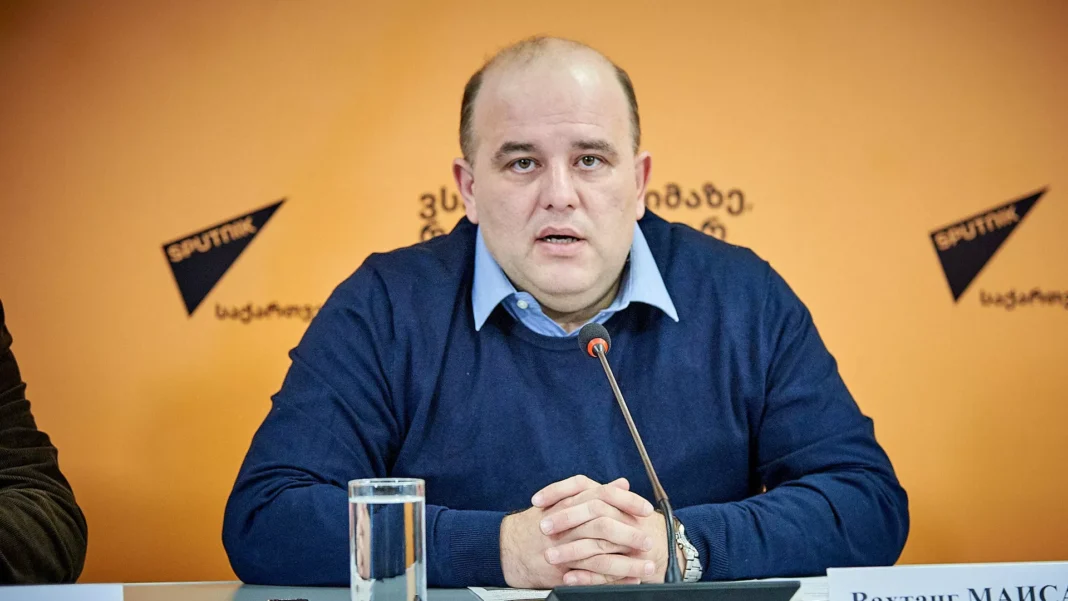
Georgia is facing growing military and geopolitical risks, but its current defense model does not reflect the changing security environment, according to military expert Vakhtang Maisaya.
Speaking in an interview with the Novosti Kavkaza YouTube channel, Maisaya said Georgia must restructure its military spending, revive its domestic defense industry and deepen cooperation with Azerbaijan and Turkey.
According to figures cited during the interview, Georgia spends about 1.7% of its gross domestic product on defense, while many NATO countries are significantly increasing their military expenditures.
Maisaya argued that much of the recent growth in Georgia’s defense budget has gone toward salaries and social spending rather than improving the armed forces’ combat capabilities.
A functioning defense budget, he said, should cover six principal areas: combat training, infrastructure and logistics, research and technological development, military personnel’s social benefits, weapons procurement and territorial defense.
However, Maisaya believes Georgia has developed what he described as a “Latin American model,” in which the authorities prioritize maintaining the military establishment and financing capital projects.
“Combat training, the development of the national military-industrial complex and the purchase of modern weapons must become the main priorities,” Maisaya said.
The expert stressed that simply increasing defense spending would not produce results without clearly defined objectives. He said additional resources should be directed toward drones, counter-drone systems, electronic warfare, intelligence, cybersecurity and other advanced military technologies.
Maisaya also called for the revival of Georgia’s defense industry. In his view, the country should seek to produce enough equipment domestically to cover at least 20% to 30% of its military requirements in selected areas.
He identified a lack of transparency and civilian oversight as another major problem, saying the public has limited information about how Georgia’s defense funds are distributed and whether the spending actually strengthens the country’s combat readiness.
Azerbaijan as an Example
Maisaya pointed to Azerbaijan as an example of a country that defined its strategic objectives, strengthened its armed forces and restored its territorial integrity.
He said Baku’s strategic partnership with Turkey, combined with expanding military and technical cooperation with Pakistan, contributed to Azerbaijan’s military success.
“Azerbaijan formulated its objectives and achieved superiority. It is now seeking the status of a middle power,” Maisaya said.
According to the expert, Azerbaijan’s experience demonstrates that the effectiveness of a defense budget depends not only on its size but also on whether spending is tied to a coherent political and military strategy.
Georgia’s objectives should include restoring its territorial integrity, protecting its sovereignty and building a defense system capable of responding to modern threats, Maisaya said. However, he argued that Tbilisi has yet to present a clear plan for achieving those goals.
“Baku and Ankara Need a Strong Georgia”
Maisaya stressed that a stable and defensible Georgia is important not only to Tbilisi but also to its regional partners.
Major energy and transportation routes connecting Azerbaijan and Turkey with Europe pass through Georgian territory. Any internal crisis or weakening of Georgian state institutions could therefore directly affect the interests of Baku and Ankara.
“Azerbaijan and Turkey need a strong Georgia today. For them, Georgia is a political and economic bridge, and the implementation of major regional projects depends on its stability,” Maisaya said.
Azerbaijan, Turkey and Georgia have maintained a trilateral defense cooperation format since 2013. It includes policy coordination, crisis management, peacekeeping activities and the protection of strategic energy infrastructure.
Maisaya said, however, that the existing framework remains limited and does not amount to a full military alliance capable of guaranteeing the security of its members.
In his view, Georgia must seek more reliable security partnerships now rather than relying solely on the prospect of eventual NATO membership. The war in Ukraine and the changing regional balance of power have opened a new window of opportunity for Tbilisi, he said.
Maisaya concluded that Georgia must define its strategic direction, modernize its defense system and strengthen cooperation with countries that have a direct interest in the stability of the South Caucasus.
AZE.US