AZE.US
Relations between Azerbaijan and Ukraine are gradually moving beyond strategic partnership toward a form of alliance,
Azerbaijani political analyst Eldar Namazov said, pointing to growing political contacts, humanitarian cooperation and shared security interests.
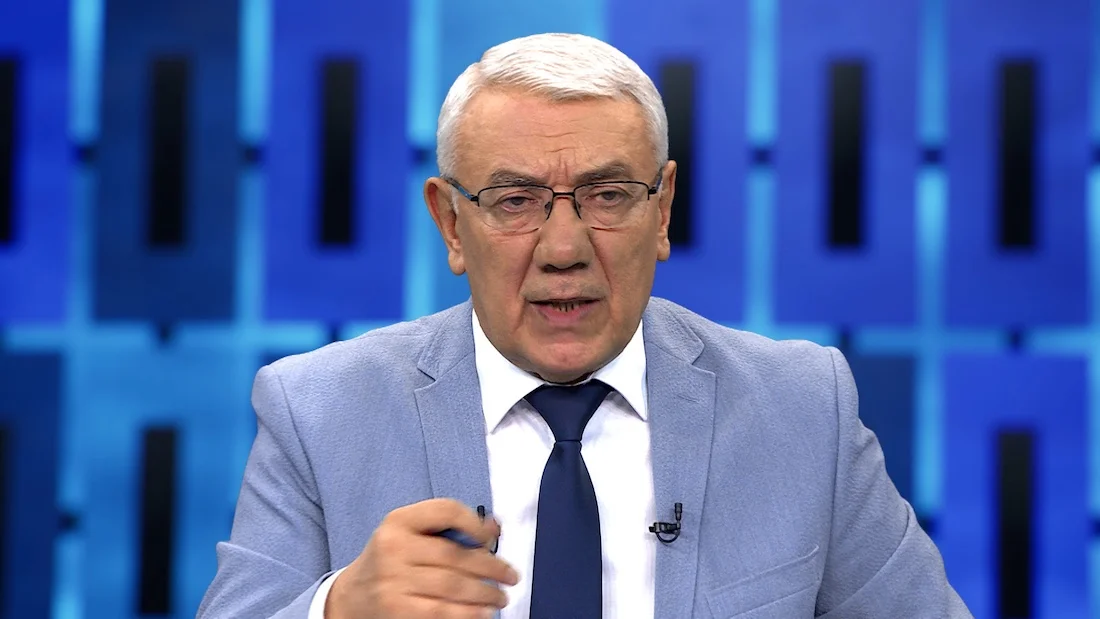
Namazov made the remarks in a television interview following President Ilham Aliyev’s meeting with former Ukrainian President Viktor Yushchenko in Baku on August 17.
During the meeting, Ukrainian Ambassador to Azerbaijan Yuriy Husyev presented Aliyev with a certificate naming him an honorary citizen of Irpin, a city heavily damaged during the Russia-Ukraine war.
“We are already moving from the status of strategic partnership toward allied relations,” Namazov said.
“It cannot yet be said that this process has been formally completed, but recent developments demonstrate how important Azerbaijan and Ukraine have become to each other.”
Aliyev and Yushchenko, whose relationship spans more than two decades, discussed their previous cooperation and the future of bilateral ties, according to the Azerbaijani president’s office.
The honorary citizenship was granted in recognition of Azerbaijan’s assistance to Irpin. With Baku’s support, the city’s Linguist Humanitarian Lyceum and a diagnostic clinic have already been restored. Additional projects are expected to include housing construction, the rehabilitation of a sports school and cultural facilities.
Ukraine’s ambassador thanked Aliyev and the Azerbaijani people for their solidarity and “concrete steps” supporting Ukraine’s reconstruction.
Namazov said the current partnership is rooted not only in relations between political leaders but also in the historical experiences of the two countries.
Both Azerbaijan and Ukraine regained independence after the collapse of the Russian Empire in 1918 and again after the dissolution of the Soviet Union in 1991.
The analyst recalled that Kyiv supported Baku’s participation in the December 1991 Alma-Ata meeting, where former Soviet republics recognized one another’s territorial integrity and existing borders.
He also pointed to cooperation within GUAM, the regional organization comprising Georgia, Ukraine, Azerbaijan and Moldova. The group emerged partly as an attempt to strengthen the sovereignty of its members and limit Moscow’s dominance across the former Soviet space.
According to Namazov, these shared experiences have created a durable foundation for Azerbaijani-Ukrainian relations.
“This partnership was not built in one day or one year,” he said. “It has deep historical roots, which means that it is likely to remain stable.”
The analyst argued that the relationship has gained additional importance as Azerbaijan’s influence in the South Caucasus and across major energy and transport routes has expanded.
Ukraine, meanwhile, is expected to play a significant role in any future European security system because of the battlefield experience accumulated by its armed forces, Namazov said.
He added that Ukrainian military and political analysts are closely examining Azerbaijan’s experience before and during the 2020 Second Karabakh War, including the diplomatic, military and economic preparations that preceded Baku’s victory.
Namazov said Ukraine could eventually follow what he described as Azerbaijan’s model of “small alliances” - close bilateral or trilateral partnerships built around specific security and economic interests.
Azerbaijan has developed such arrangements with Turkey, Georgia and Central Asian countries without seeking membership in a larger military bloc. A similar format involving Ukraine, Azerbaijan and Turkey could become relevant in the future, he said.
Namazov stressed, however, that no formal Azerbaijani-Ukrainian military alliance has been announced and described the process as a possible long-term direction rather than an existing agreement.
Turning to the war, the analyst predicted that the coming period would remain difficult for both Ukraine and Russia. He argued that Moscow faces greater long-term economic pressure, while Kyiv continues to receive financial, military and humanitarian assistance from European states and other partners.
Azerbaijan has not supplied weapons to Ukraine but has repeatedly provided humanitarian aid, including equipment for restoring damaged energy infrastructure and support for reconstruction projects.
Namazov said Russia would ultimately have to accept a ceasefire, arguing that continuing the war would require increasingly heavy financial and human resources.
His comments reflect a broader shift in Baku’s foreign policy environment. Azerbaijan continues to maintain working relations with both Moscow and Kyiv, but its assistance to Ukraine and repeated support for the principle of territorial integrity have brought the two countries closer since the start of Russia’s full-scale invasion.
AZE.US