AZE.US
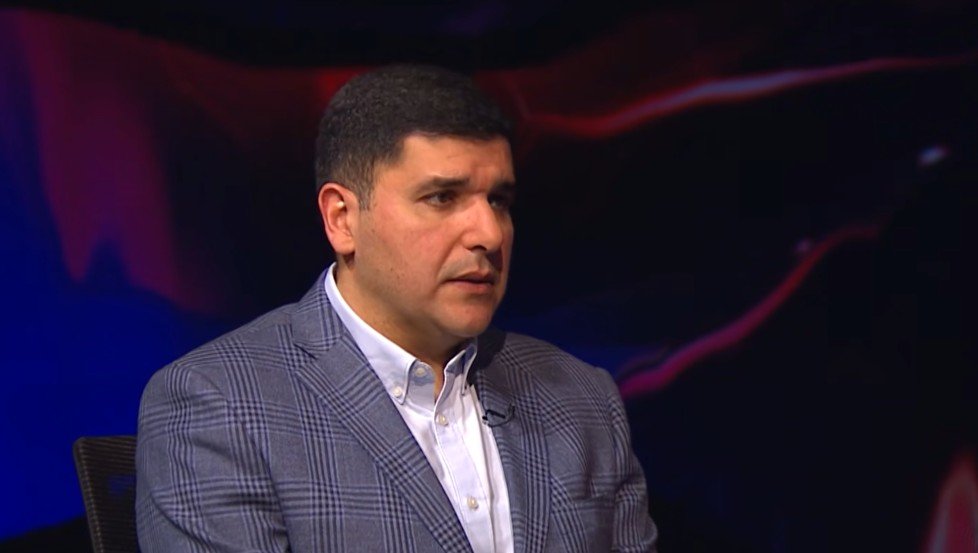
Rising tensions between Turkey and Israel represent one of Azerbaijan’s most difficult foreign policy challenges, and Baku could offer to mediate if the confrontation begins moving toward a direct military clash, political analyst Farhad Mammadov said.
Speaking on the Novosti Kavkaza YouTube channel, Mammadov said the worsening relationship between Ankara and Israel does not serve the strategic interests of either country.
The dispute has intensified over the war in Gaza, Israeli military actions in Syria and Lebanon, and competing Turkish and Israeli interests in the Eastern Mediterranean.
For Azerbaijan, the confrontation is particularly sensitive. Turkey is Baku’s closest ally, while Israel is a longstanding strategic partner in defense, security, energy and technology.
Turkey and Israel Emerged as the Region’s Strongest Powers
Mammadov said the regional balance has changed significantly since the Hamas-led attack on Israel in October 2023.
Israel has severely weakened Hamas and Hezbollah, eliminated much of Hezbollah’s senior command and reduced Iran’s regional military reach. The fall of Syria’s previous government also gave Israel greater operational freedom, including an air corridor for strikes against Iran.
However, Israel failed to achieve its most ambitious objective - bringing down Iran’s government.
“Did they manage to bring down the regime? No, they did not. That is it. The achievements now need to be consolidated,” Mammadov said.
In his assessment, Turkey and Israel have emerged as the two strongest powers in the western part of the Middle East. A direct confrontation between them would only create an opening for Iran and other weakened regional actors to recover.
“Why weaken each other and allow other forces to take advantage of the vacuum?” he asked, noting that neither Hamas nor Hezbollah has disappeared.
Syria Is the Main Flashpoint
Mammadov identified Syria as the most dangerous potential point of contact between the two countries.
Israel wants to ensure that no military threat emerges from Syrian territory and that Damascus does not rebuild an effective air defense system. Turkey, meanwhile, maintains a military presence in northern Syria and has become a major player in shaping the country’s new political and security order.
Israeli opposition to Turkish involvement in Syria is therefore unrealistic, Mammadov argued.
“If Turkey is not supposed to be in Syria, then Israel should also leave the Syrian territory it occupies,” he said.
The danger is that Turkish and Israeli forces, or groups supported by them, could eventually face each other inside a third country.
“The most important thing is to prevent a confrontation and bloodshed,” Mammadov said. “That risk must be contained and neutralized.”
He believes Washington would intervene quickly to prevent two of its most important regional partners from entering an open conflict. However, Israeli domestic politics and the approaching election could keep tensions elevated.
What Azerbaijan Can Do
Mammadov said Azerbaijan could become involved under two scenarios.
The first would be a direct request from Turkey and Israel for Baku to facilitate talks. The second would arise if Azerbaijan saw that the momentum of escalation was beginning to lead toward an armed confrontation.
“If we see that the process is gaining momentum and that its trajectory is leading toward a clash on the battlefield in a third country, Azerbaijan can take an initiative,” he said.
Preventing a Turkish-Israeli conflict also corresponds with U.S. interests, he added. The issue could therefore become part of the developing agenda between Washington and Baku.
Azerbaijan’s relationships with both countries give it a rare diplomatic advantage. Baku has deep political and military ties with Ankara while maintaining close security cooperation and direct channels of communication with Israel.
Mammadov said Azerbaijan’s immediate priority should be to help prevent an incident in Syria from triggering a wider confrontation.
Azerbaijan Expands Its Central Asian Strategy
Mammadov also discussed President Ilham Aliyev’s state visit to Uzbekistan and the signing of a declaration on “eternal friendship.”
He said the frequency of high-level visits demonstrates the special nature of relations between Baku and Tashkent. While a state visit often takes place only once during a presidential term, Azerbaijan and Uzbekistan have been exchanging visits at the highest level almost annually.
According to Mammadov, Azerbaijan has now formalized allied relations with three Central Asian countries: Kazakhstan, Uzbekistan and Kyrgyzstan. Relations with Turkmenistan and Tajikistan are also developing.
Transportation is central to this strategy. Any logistical agreement between Azerbaijan and landlocked Uzbekistan inevitably requires the participation of Kazakhstan or Turkmenistan, whose territory and Caspian ports connect Central Asia with Azerbaijan and onward routes to Europe.
Mammadov said Baku has chosen a “bottom-up” integration model: first building practical bilateral and trilateral mechanisms and then formalizing them through larger institutions such as the Organization of Turkic States.
“Bilateral relations form the foundation,” he said. “At the multilateral level, the existing realities are simply consolidated.”
India Could Again Block Azerbaijan’s SCO Bid
The analyst also addressed the possibility of Azerbaijan and Armenia seeking full membership in the Shanghai Cooperation Organization.
Mammadov recalled that India previously opposed Azerbaijan’s membership, after which Pakistan blocked Armenia’s application. He described New Delhi’s approach as increasingly obstructive within both the SCO and BRICS.
Azerbaijani diplomacy should determine in advance whether India intends to maintain its veto, he said.
If New Delhi’s position remains unchanged, Mammadov argued, Baku may be better served by not formally placing the membership issue on the agenda and avoiding another public rejection.
He nevertheless believes that SCO membership would benefit Azerbaijan by providing a platform for cooperation with China, Russia and Central Asian countries, including on terrorism, extremism and separatism.
China’s investments in Central Asian railways and transport corridors also align with Azerbaijan’s role as the main Caspian link in the Middle Corridor.
Ukraine’s Honor for Hikmet Hajiyev
Commenting on Ukraine’s decision to honor Azerbaijani presidential aide Hikmet Hajiyev, Mammadov cautioned against interpreting the move primarily as an anti-Russian signal.
He said it should be viewed in the context of bilateral relations between Baku and Kyiv.
Mammadov pointed to reciprocal foreign minister visits, presidential-level contacts and agreements aimed at expanding cooperation. The Ukrainian honor, he said, recognizes Hajiyev’s contribution to developing those ties.
The broader picture presented by Mammadov is one of Azerbaijan expanding its diplomatic reach in several directions at once: strengthening alliances in Central Asia, deepening engagement with China and Ukraine, and preserving the ability to mediate between Turkey and Israel - two of the country’s most important partners.
AZE.US