By AZE.US
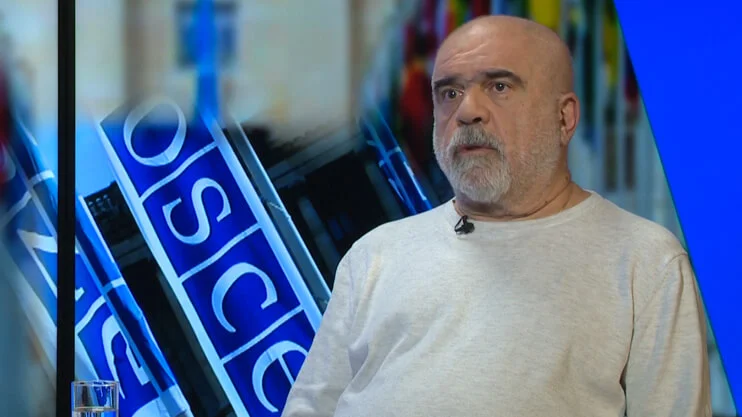
Azerbaijan has emerged as the country setting the terms in the South Caucasus as Russia loses its former monopoly over regional security, according to Armenian political analyst Alexander Iskandaryan.
Iskandaryan, director of the Caucasus Institute, said in an interview with Lratvakan Radio that Moscow’s declining influence did not begin with the latest tensions between Russia and Armenia. He described it as a decades-long process that accelerated after the 2020 war.
“Russia now treats Azerbaijan completely differently from the way it treats Armenia,” Iskandaryan said.
In his assessment, Baku’s increasingly assertive posture toward Moscow reflects a fundamental shift in the balance of power rather than merely tougher political rhetoric.
Azerbaijan’s message, he said, could be summarized as: “We are now the masters here, while you are on the sidelines.”
Azerbaijan Prepared for the New Balance
Iskandaryan argued that Azerbaijan’s rise was not sudden. Baku began laying the foundations for a more independent foreign and security policy soon after the collapse of the Soviet Union.
He cited Azerbaijan’s major energy agreements with Western companies, the construction of export routes bypassing Russia and its expanding defense cooperation with Turkey.
The Baku-Supsa and Baku-Tbilisi-Ceyhan oil pipelines, the Baku-Tbilisi-Erzurum gas pipeline and new railway connections all reduced Moscow’s ability to control Azerbaijan’s access to international markets.
“What were the oil contracts Azerbaijan signed with Western companies? What was the construction of pipelines bypassing Russia? What was Azerbaijan’s cooperation with Turkey in modernizing its army, if not evidence of Russia’s declining influence?” Iskandaryan asked.
Azerbaijan also began systematically strengthening its armed forces around 2004-2005, he said. This effort went far beyond purchasing weapons.
Baku reformed its military, sent young officers to train in Turkey, deepened its strategic partnership with Ankara and developed close defense ties with Israel. At the same time, it built the diplomatic and economic foundation required to conduct a more autonomous regional policy.
According to Iskandaryan, these developments were visible long before the 2020 war. Armenian political thinking, however, continued to place excessive confidence in two external mechanisms: the OSCE Minsk Group and Russia’s regional influence.
“Neither worked, because sooner or later neither was supposed to work,” he said.
Russia Lost Its Security Monopoly
Iskandaryan said Russia has been losing its position as the South Caucasus’ sole security power since 2020.
The process is evident not only in political statements from Yerevan but also in practical decisions. Armenia has largely stopped purchasing Russian weapons since 2022 and has increasingly sought new defense partners.
Iskandaryan also questioned the current military value of Russia’s base in Armenia, describing it primarily as a symbol of Moscow’s remaining presence.
“The base is now like the Russian flag. A flag is very important,” he said. “But in strategic terms, Russia can be said to have already left.”
He dismissed proposals from Armenian political figures to raise the cost of hosting the Russian base if Moscow increases the price of natural gas.
Such statements, he argued, are mainly intended for a domestic audience and reflect the accumulated grievances between Yerevan and Moscow. They do not represent serious bargaining over an exchange of cheap Russian gas for military access.
Russia’s wars in other former Soviet republics should also be viewed as signs of weakness rather than strength, according to Iskandaryan.
He said the 2008 war in Georgia demonstrated that Moscow could no longer maintain influence through political leverage alone.
“A strong and confident Russia would not have needed that war,” he said. “A powerful Russia would have had a pro-Russian Georgia with no other choice.”
In his view, Russia repeatedly gained control over individual territories while losing influence over entire countries.
Baku and Yerevan Carry Different Weight
Iskandaryan said the outcome of the 2020 war further widened the difference between Azerbaijan and Armenia in Moscow’s calculations.
Azerbaijan’s military victory, energy resources, strategic partnership with Turkey and independent relations with other global actors strengthened Baku’s position. Armenia, meanwhile, lost much of the leverage it had previously claimed in the regional security system.
As a result, Moscow finds it easier to disregard Armenian interests than Azerbaijani ones, he said.
Iskandaryan asked listeners to imagine how Armenia would be treated today if it had won the 2020 war. The answer, he suggested, illustrates how directly military and political power shape relations between states.
“Russia would have treated Armenia completely differently,” he said.
The analyst added that Azerbaijan can afford to speak to Moscow more forcefully because it possesses greater economic, military and diplomatic resources.
Baku’s conduct may sometimes appear deliberately demonstrative, he said, but it remains rational and is based on Azerbaijan’s understanding that the previous hierarchy in the South Caucasus no longer exists.
Russia Will Remain, but Its Role Will Change
Despite Moscow’s declining strategic position, Iskandaryan said Russia would not disappear from the South Caucasus.
Its geography, market, resources, military potential and long-established economic ties ensure that it will remain an important regional actor.
He noted that Armenia’s population is roughly 50 times smaller than Russia’s, while its territory is nearly 600 times smaller. Even if isolationist policies gain greater influence in Moscow, Russia will continue to affect developments in neighboring countries.
However, its influence will become more transactional and less hierarchical.
Armenia remains dependent on the Russian market, energy infrastructure and transportation routes, including the Upper Lars crossing through Georgia.
“Upper Lars cannot be moved to Switzerland,” Iskandaryan said, dismissing suggestions that Armenia could quickly redirect its traditional exports toward small European markets.
Russia will therefore retain economic and some cultural influence, but it will no longer exercise the same level of regional dominance. Turkey, the European Union and other powers will increasingly compete for influence.
Armenia Must Look at Its Own Region
Iskandaryan identified Armenia’s fixation on choosing between Russia and the West as a central weakness in its foreign policy debate.
Armenian political discourse, he said, is dominated by arguments over Moscow, Washington and Brussels, while insufficient attention is paid to Azerbaijan, Turkey, Iran and the wider Middle East.
“Sometimes I get the impression that my country is somewhere in the Atlantic Ocean, between Washington, Brussels and St. Petersburg,” he said.
Turkey, in particular, has moved from being viewed in Armenia primarily through the prism of history to being recognized as a powerful neighboring state with immediate interests in the region. Its alliance with Azerbaijan has become one of the defining elements of the new South Caucasus order.
Iran is also no longer an “exotic neighbor,” Iskandaryan said, but a country whose internal and foreign policies must be studied without emotional or ideological assumptions.
His broader conclusion is that the old regional order has already collapsed, while a new one is still emerging.
Russia will remain present but will no longer determine the South Caucasus’ future alone. Azerbaijan and Turkey have become far more influential, while Armenia must shape its policies around the actual balance of power on its borders rather than searching for another external patron.
AZE.US