AZE.US
Baby food prices are rising in Azerbaijan, putting additional pressure on young families already dealing with higher food costs.
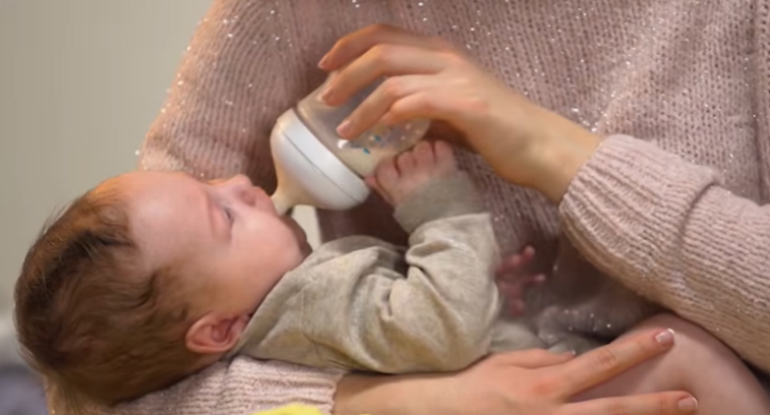
The issue mainly concerns baby formula, cereals and ready-made food products for children older than six months. While specialists still recommend breastfeeding as the best option for infants, it is not always possible for every family. In those cases, parents have to rely on artificial feeding, and the monthly cost can become a serious burden.
Parents say prices are already high. One buyer said a 500-gram package of baby food costs about 60 to 70 manats, or roughly $35 to $41. Cheaper alternatives are available, but some families avoid them because they do not fully trust the quality.
“It is very expensive. One package does not even last a week,” one customer said.
Pharmacist Galib Mammadov said baby food sold in Azerbaijan is imported mainly from Central Asian countries, Europe and Russia. Prices vary widely, from 5 to 6 manats to as much as 300 manats. That is approximately $3 to $4 at the low end and about $176 at the top end.
The most commonly purchased products for middle-income families, he said, are usually in the 15 to 45 manat range, or about $9 to $26.
But prices in that segment have also increased. Products that previously cost 12 manats are now selling for 15 to 18 manats. Baby food that used to cost 15 manats has risen to 20 manats, while products priced around 40 manats are now being sold for 48 to 50 manats, or roughly $28 to $29.
Sellers link the increase to higher logistics costs and more expensive ingredients. Economists, however, say the problem is broader.
Economist Khalid Kerimli said baby food prices are affected by import dependence, general inflation and weak competition. He noted that food prices in Azerbaijan rose by more than 7% in 2025, and baby food has followed that wider trend.
Another factor is the market structure. According to Kerimli, several large importers dominate the baby food market, and limited competition among suppliers contributes to higher prices.
He said greater product supply and imports from more destinations could help reduce prices. Lowering or removing customs duties on baby food could also make these products cheaper for consumers in Azerbaijan.
The State Service for Antimonopoly Control and Consumer Market Supervision said baby food prices are set freely by businesses under market principles, based on supply and demand and in accordance with existing legislation.
The agency said it regularly monitors the consumer market to prevent unjustified price changes and ensure compliance with competition rules. If violations are found, it said, measures are taken under the law.
For parents, however, the issue is immediate. Baby food is not a luxury purchase. For families whose children rely on artificial feeding, it is a product they have to buy again and again. When each package becomes 3, 5 or 10 manats more expensive, the increase is no longer just an inflation figure. It becomes a direct hit to the household budget.
AZE.US