AZE.US
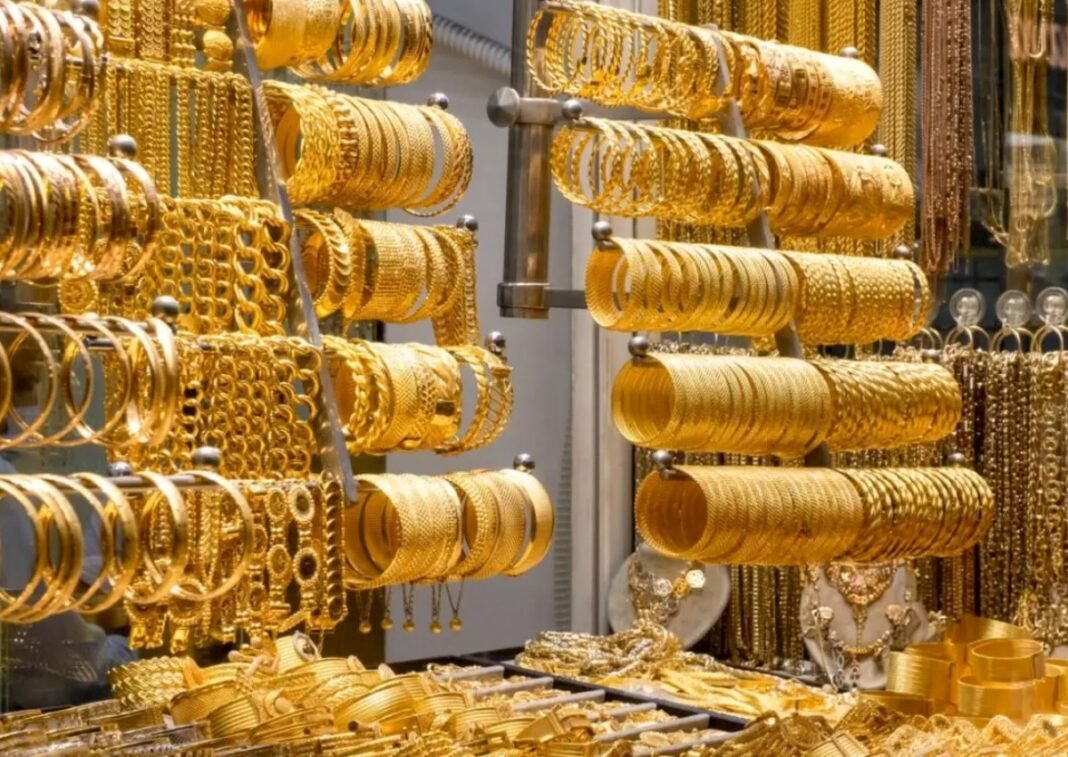
Gold prices in Azerbaijan have taken a noticeable turn, with the price of one gram falling from nearly 200 manats to around 165 manats.
The decline has drawn attention from both buyers and investors, especially as jewelers say prices across several categories of gold products have dropped significantly in recent weeks.
Market sellers say the change has been visible at retail level.
“If earlier we were selling at 185-195 manats per gram, now the price fluctuates between 160 and 175 manats. Italian gold used to sell for 250-280 manats, but now it costs 220-250 manats,” one seller said.
Other sellers said prices have fallen sharply over the past two months. Jewelry that previously sold for about 230 manats per gram can now be found for around 170 manats.
“Prices have dropped. On average, the decline is 30-35 manats per gram. Turkish gold, which used to cost 235 manats, is now being sold for 165 manats. That means the decline per gram is already about 70 manats,” another seller said.
According to market participants, the most visible price drop has been seen in 585-karat gold, especially Turkish-made jewelry. This category remains one of the most popular among buyers in Azerbaijan.
Sellers believe the current period is more favorable for buying gold than for selling it.
“One item that previously cost 6,200 manats is now being sold for 5,270 manats. Another item that used to cost 7,500 manats can now be bought for 5,700 manats. Turkish gold that was selling for 3,000 manats now costs about 2,400-2,500 manats,” one trader said.
Economist Khalid Kerimli told Demokrat.az that the decline in gold prices is not linked to Azerbaijan’s domestic market, but to global trends.
He said the price of gold is formed on international markets, so changes on global commodity exchanges are reflected in Azerbaijan as well.
“The price of gold is not formed locally, but on international markets. Since prices fell on global commodity exchanges, this trend was also reflected in Azerbaijan. However, it should be noted that in recent days the price of gold has started rising again. In the past few days, prices have increased by about 7 percent,” Kerimli said.
According to the economist, the earlier decline was partly linked to tensions around the Strait of Hormuz.
At first glance, that issue may not appear directly connected to gold. But Kerimli said the effect works through a chain reaction. Rising tensions in the region push oil prices higher. More expensive oil increases global inflation expectations. Against that background, markets begin to price in the possibility that the U.S. Federal Reserve could raise interest rates.
Higher interest rates usually strengthen the dollar and make bonds and other financial instruments more attractive to investors. In such conditions, some capital moves away from gold, demand weakens and prices come under downward pressure.
“It was because of these expectations that the number of gold buyers on the global market declined and prices fell,” Kerimli said.
But the situation has changed again in recent days, he added.
The economist said gold prices are rising again on exchanges. Reports suggesting a possible easing of tensions between the United States and Iran over the Strait of Hormuz, as well as signals of agreements between the sides, have changed market expectations.
After those developments, oil prices began to fall, while gold prices started moving upward again.
Kerimli said the probability of a sharp drop in gold prices in the near future is not considered high. At the same time, he warned that it is impossible to say with certainty whether buying gold now is the right decision.
Any investment carries risks. New inflation data, decisions by the U.S. Federal Reserve or unexpected developments in the global economy could quickly change the situation in the markets.
According to Kerimli, forecasts since the beginning of the year had generally pointed to a continued upward trend in gold prices. Despite the recent decline, those expectations have not fully disappeared.
AZE.US