AZE.US
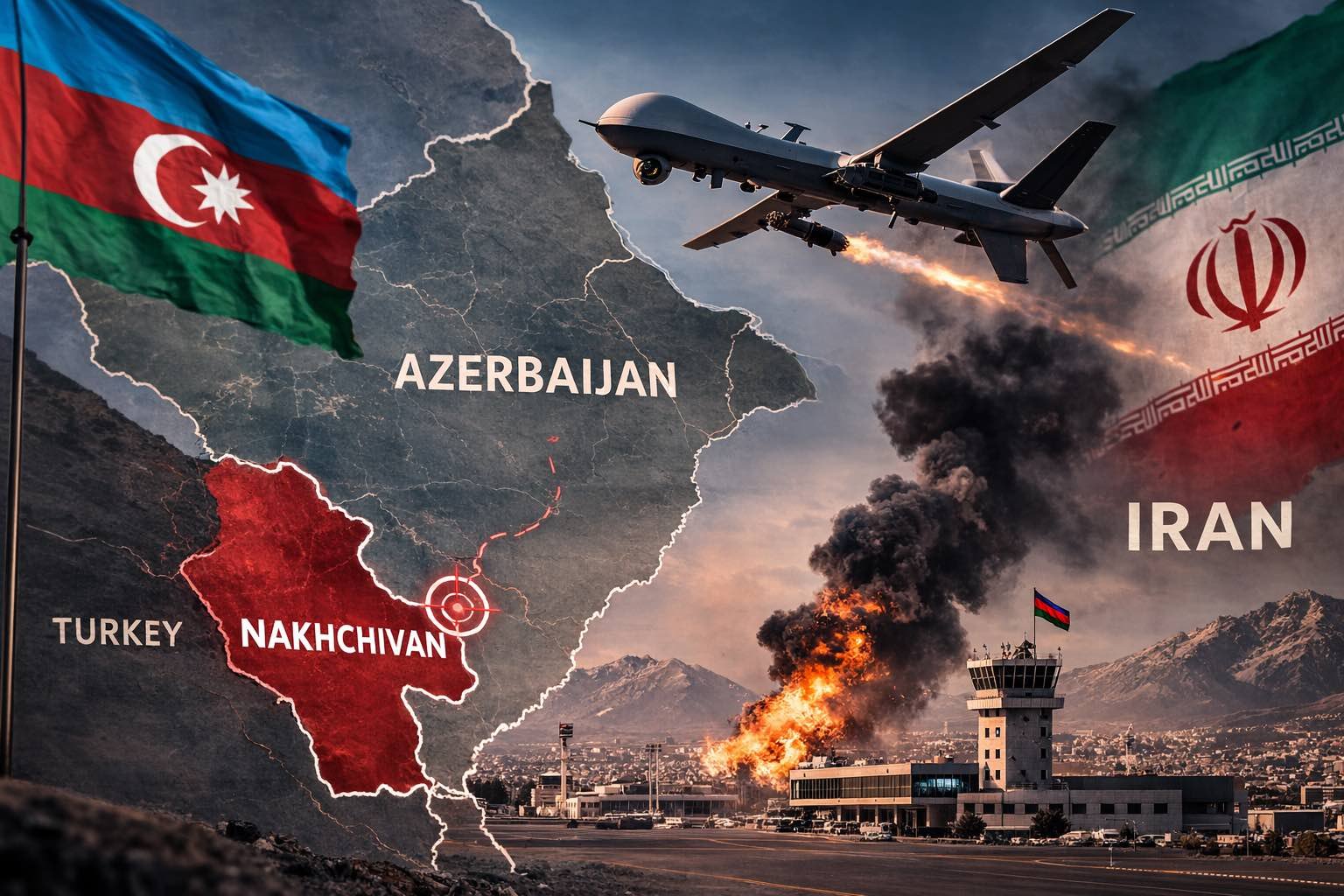
Iran’s drone strike on Azerbaijan’s Nakhchivan exclave has raised a deeper question across the region: what exactly was Tehran trying to signal? Beyond the immediate security implications, the incident may reflect broader geopolitical tensions, internal pressures inside Iran, and a test of Azerbaijan’s response.
The drone strike launched from Iranian territory against Azerbaijan’s Nakhchivan Autonomous Republic marks one of the most serious incidents between the two neighbors in recent years.
For decades, relations between Baku and Tehran have fluctuated between cautious cooperation and periodic tension. Yet both sides had largely avoided direct military confrontation. The attack on Nakhchivan appears to cross that line.
Nakhchivan is not just another Azerbaijani region. The landlocked exclave borders Turkey and holds significant strategic value in the South Caucasus. Any attack on the territory inevitably carries wider geopolitical implications.
Tehran has yet to provide a convincing explanation for the incident. But several possible motivations are already being debated by analysts and policymakers.
One explanation points to Iran’s broader strategy of signaling strength during a period of regional confrontation. Facing mounting pressure and multiple fronts of tension across the Middle East, Tehran may be attempting to demonstrate that it is prepared to act unpredictably – even toward neighboring states.
Yet the question remains: why Azerbaijan?
Baku has repeatedly stated that its territory will not be used for military operations against Iran. In recent years, Azerbaijani officials have also sought to maintain working relations with Tehran despite political disagreements.
For that reason, the strike on Nakhchivan appears less like a logical military move and more like a geopolitical signal.
Some analysts believe Iran may be testing Azerbaijan’s reaction – and by extension the reaction of its allies. Since the 2020 Second Karabakh War, Azerbaijan has emerged as a far more confident regional actor. Its strategic alliance with Turkey, growing cooperation with Israel, and expanding ties with Western partners have strengthened Baku’s geopolitical position.
For parts of Iran’s political establishment, this shift has been viewed with suspicion.
Another possible factor is internal instability within Iran itself. The country is navigating a period of intense pressure, including regional conflict, economic strain, and political uncertainty. In such circumstances, foreign actions can sometimes serve to project strength or redirect domestic attention.
But this also creates risk. When strategic decisions are made under pressure or amid competing power centers, the likelihood of miscalculation rises sharply.
The fact that the drones struck civilian infrastructure – including an airport facility and an area near a school – adds to the seriousness of the incident. From a purely military standpoint, the targets offer little strategic value, which raises further questions about the logic behind the attack.
Baku’s response so far has been firm but measured. Azerbaijani authorities summoned Iran’s ambassador, restricted certain cross-border transport links, and placed security structures on heightened alert.
At the same time, officials have emphasized that Azerbaijan remains interested in avoiding escalation and prefers a diplomatic resolution.
How Tehran responds in the coming days may determine whether the incident remains a dangerous episode – or becomes a turning point in Azerbaijani-Iranian relations.
In geopolitics, it often takes only a single drone strike to undo years of cautious diplomacy.