By AZE.US
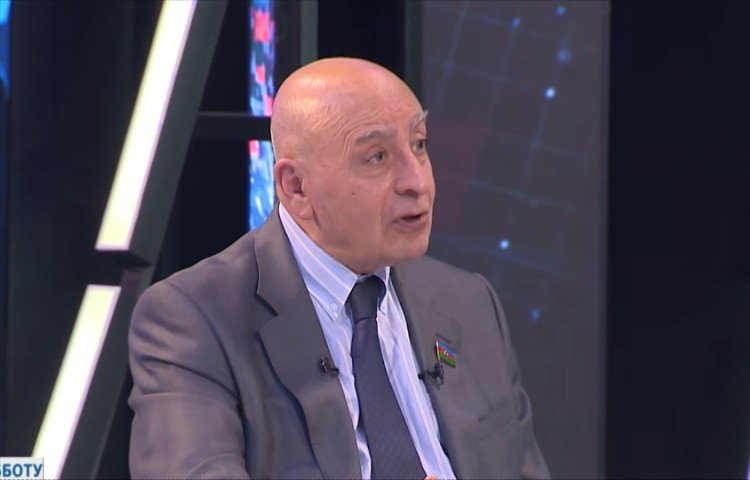
Armenia remains heavily dependent on Russia, but Prime Minister Nikol Pashinyan has several ways to respond if Moscow intensifies its political and economic pressure, Azerbaijani lawmaker Rasim Musabekov said.
Speaking on the YouTube channel News from the Caucasus, Musabekov discussed Russia’s remaining leverage over Armenia, Moscow’s opposition to the Trump Route for International Peace and Prosperity, or TRIPP, Iran’s position and Azerbaijan’s growing role in the region.
According to Musabekov, the dispute is no longer limited to foreign policy. It could soon involve gas prices, control of Armenia’s railways and the financial terms governing Russia’s military presence in the country.
Gas Remains Russia’s Main Lever
Musabekov said Moscow could attempt to pressure Yerevan by raising the price of Russian gas. He did not rule out a limited increase but argued that Russia’s room for maneuver is smaller than it may appear.
He estimated that Gazprom supplies gas to its Armenian subsidiary for about $170 per 1,000 cubic meters, while Armenian consumers ultimately pay between $320 and $400, depending on consumption and other factors.
By comparison, he said consumers in Georgia, which receives gas from Azerbaijan, pay approximately $200 per 1,000 cubic meters.
The Armenian government could refuse to authorize a sharp increase in domestic tariffs, Musabekov said. If Gazprom were unwilling to continue operating under the existing conditions, Yerevan could raise questions about the Russian company’s assets in Armenia and invite alternative suppliers.
Iran could potentially provide some of the required gas, while Azerbaijan might also participate in limited volumes, he said. However, replacing Russian supplies would be a gradual process because Armenia’s energy dependence on Moscow remains significant.
Musabekov considered pressure involving the Armenian Nuclear Power Plant less likely. Any deliberate disruption of its maintenance, he argued, would damage Russia’s reputation as a nuclear technology supplier and undermine Rosatom’s projects in other countries.
Armenia Could Demand Payment for the Russian Base
A more direct Armenian response could involve revising the conditions under which Russian troops and border guards remain in the country.
Musabekov said Armenia has not traditionally charged rent for Russia’s military facilities and has also covered some of their utility expenses. Pashinyan could now demand that Moscow pay both the operating costs and rent for its continued military presence.
Musabekov described previously discussed estimates of as much as $2 billion as excessive but said the principle of charging Russia could become part of future negotiations.
He compared the situation with Azerbaijan’s experience involving the Gabala radar station. Russia previously paid approximately $15 million annually for the facility, but Baku later sought to raise the rent to $300 million. The two sides failed to reach an agreement, and Russia eventually left the base.
“Pashinyan could put the issue directly: pay the rent and cover all utility costs yourselves,” Musabekov said.
In his assessment, revenue from the military base and reduced Armenian spending on Russian facilities could offset at least part of any increase in gas prices.
Why Moscow Opposes TRIPP
Musabekov linked Russia’s criticism of TRIPP primarily to the expanding U.S. role in the South Caucasus.
Moscow views initiatives backed by Washington as a threat to its influence in Armenia, he said. The condition of Armenia’s railway network, which is operated under concession by a subsidiary of Russian Railways, has become another major source of tension.
The approximately 200-kilometer railway between Gyumri and Yeraskh requires extensive modernization. According to Musabekov, trains are limited to speeds of about 30 kilometers per hour on parts of the route because of deteriorated tracks and electrical infrastructure.
Russian Railways reportedly wants guarantees of sufficient future cargo volumes before making further investments. But Armenia cannot attract those volumes without first modernizing the line, creating what Musabekov described as a circular problem.
International sanctions against Russian Railways create an additional obstacle. Foreign cargo owners could be reluctant to transfer goods from a U.S.-supported transport route to infrastructure controlled by a sanctioned Russian company.
Pashinyan has therefore raised the possibility of returning the railway concession to Armenian control. According to Musabekov, Yerevan may be prepared to compensate approximately $400 million that the Russian side says it invested. Moscow, however, could also seek compensation for expected profits, further complicating negotiations.
Meanwhile, Turkey is developing a railway from Kars to Azerbaijan’s Nakhchivan exclave. Unless the Armenian section is upgraded, much of the future freight traffic could bypass Armenia entirely.
How Far Could Iran Go?
Iran remains wary of TRIPP because of the possible long-term U.S. presence near its northern border. Musabekov stressed, however, that the route will pass through Armenian territory and that Tehran cannot hold Azerbaijan responsible for Armenia’s decisions.
Azerbaijan and Iran are also developing an alternative route along the Iranian bank of the Araz River. A bridge already exists at Julfa, while another crossing is being constructed near Aghband.
Iran can complete the required road on its territory and use that corridor if it does not want its cargo transported through the U.S.-supported section in Armenia, Musabekov said.
He did not rule out limited Iranian provocations once construction begins but argued that any serious attack would affect not only Armenia and Azerbaijan but also U.S. interests.
In his view, Tehran understands that such actions would not go unanswered.
Azerbaijan Is Becoming an Alternative Lifeline for Armenia
Musabekov estimated that Azerbaijan is already meeting as much as 15% of Armenia’s demand for fuel and lubricants. Large cargoes, grain, mineral fertilizers and liquefied gas are also reaching Armenia through Azerbaijani territory, he said.
The importance of this route is likely to grow as Russia’s export capacity declines. Azerbaijani transit and supplies are helping Pashinyan’s government maintain fuel availability and limit price increases at Armenian gas stations, according to the lawmaker.
Musabekov said these developments have also made Section 907 of the U.S. Freedom Support Act increasingly difficult to justify. The restriction was introduced in 1992 over allegations that Azerbaijan was blockading Armenia.
Azerbaijan is now effectively becoming an alternative gateway for Armenia, he said, calling the continued application of Section 907 an “absurdity.”
Baku Has Already Taken the Path Yerevan Is Beginning
Musabekov rejected the idea that Armenia is leading the South Caucasus in reducing dependence on Russia. Azerbaijan and Georgia began that process much earlier, he argued.
Russia accounts for approximately 7% of Azerbaijan’s foreign trade, according to his estimate, while its share in Armenia’s trade remains above 30%. Armenia’s efforts appear more dramatic because Yerevan is trying to dismantle a model of dependence that developed over several decades.
Azerbaijan has already secured the early departure of Russian peacekeepers from its territory. Musabekov also said that, to the best of his knowledge, Baku did not purchase Russian oil or gas this year.
Azerbaijan previously imported around 1 billion cubic meters of Russian gas for storage and winter consumption and approximately 1.5 million metric tons of Russian crude for domestic refining, he said.
The decision to stop those purchases was partly motivated by the risk of exposure to U.S. sanctions, according to Musabekov.
Azerbaijan Is Building Its Own Balance
Musabekov described Baku’s current foreign policy as a transition from adapting to a balance created by major powers to actively shaping that balance according to Azerbaijan’s national interests.
The European Union alone accounts for approximately 45% to 50% of Azerbaijan’s foreign trade, he said. When the United Kingdom, Turkey and the United States are included, the broader Western direction represents nearly 70% of Azerbaijan’s diplomatic, economic and informational ties.
Baku does not intend to reduce those relationships. Instead, it is attempting to balance them by expanding cooperation with China and Central Asia.
Musabekov linked this strategy to Azerbaijan’s interest in the Shanghai Cooperation Organization, its strategic partnership with China, investment initiatives in Central Asia and transport projects with Kazakhstan.
He urged caution over full membership in the SCO but said cooperation with the organization remains useful because Azerbaijan has close relations with many of its members, including Kazakhstan, Uzbekistan, Kyrgyzstan, Pakistan, China and Russia.
Musabekov was considerably more skeptical about BRICS, describing it as an artificial grouping whose members have little chance of developing a unified political position. Azerbaijan, he argued, has no reason to join a structure that may be perceived as anti-American or anti-Western.
He also predicted that the Commonwealth of Independent States will gradually lose relevance. Practical agreements covering trade, visas, education and other issues may survive, but high-level CIS meetings are increasingly becoming ceremonial.
Musabekov’s broader conclusion was that the old system of Russian dominance in the South Caucasus is steadily weakening. Azerbaijan has already built a more independent foreign policy, Georgia has completed much of the same journey, and Armenia is only beginning the difficult process of reducing Moscow’s military, economic and energy leverage.
AZE.US