By AZE.US
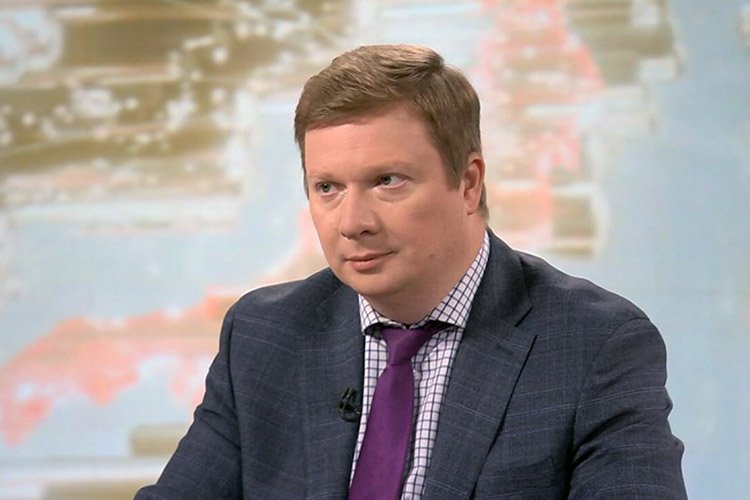
Moscow reacts more sharply to Armenia’s foreign policy moves than to similar or even stronger steps taken by Azerbaijan because Baku, unlike Yerevan, has never been Russia’s formal treaty ally, according to Russian analyst Dmitry Suslov.
Suslov, an expert at the Center for Comprehensive European and International Studies at Russia’s Higher School of Economics, made the remarks in an interview with the Echo Baku YouTube channel.
Azerbaijan is not a member of either the Russian-led Collective Security Treaty Organization or the Eurasian Economic Union.
Although Baku and Moscow officially describe their relationship as a strategic partnership and alliance, Azerbaijan does not have the same institutional obligations to Russia as Armenia does, Suslov said.
Armenia, by contrast, remains a member of both organizations, receives economic benefits from its relationship with Russia and hosts a Russian military base. Yerevan’s continued movement toward Europe is therefore seen in Moscow as a rejection of commitments made by a formal ally.
“Armenia’s behavior causes much more visible and pronounced irritation in Russia than Azerbaijan’s actions,” Suslov said.
Moscow No Longer Sees Pashinyan as a Partner
According to Suslov, Armenian Prime Minister Nikol Pashinyan has personally crossed Moscow’s red line and is no longer viewed by the Russian leadership as a reliable partner.
The analyst argued that Pashinyan’s government had been oriented toward closer relations with the West from the beginning. In his assessment, removing the Karabakh issue from Armenia’s political agenda also reduced Yerevan’s dependence on Russia and made a European pivot easier.
This remains Suslov’s interpretation of the Armenian government’s policy rather than an officially acknowledged strategy by Yerevan.
Armenia, he said, is trying to move closer to the European Union while retaining the economic advantages of Eurasian Economic Union membership for as long as possible. Moscow regards that approach as an attempt to use Russian-led institutions to soften the economic consequences of Armenia’s geopolitical reorientation.
Suslov said the red line had been crossed in Moscow’s relationship with Pashinyan personally, but not yet in its relations with Armenia as a country.
Russia still appears to hope that Armenian policy could change, either through a referendum on European integration or a future change of government.
Russia Unlikely to Reopen Karabakh Issue
Suslov rejected speculation that Moscow could attempt to revive the Karabakh conflict after the war in Ukraine ends.
He noted that Russia had always legally recognized Karabakh as part of Azerbaijan and did not characterize Baku’s military actions on internationally recognized Azerbaijani territory as an attack on Armenia.
Russia may have preferred the interim arrangement created after the 2020 war because it preserved Russian peacekeepers and Moscow’s central role in the region. However, that model no longer exists, and Suslov does not believe Russia has either the resources or the intention to restore it.
Rebuilding Moscow’s former dominance would also require weakening the Azerbaijan-Turkey partnership, which he described as unrealistic in the foreseeable future.
“Russia will not have the geopolitical influence in the South Caucasus that it had before the 2020s,” Suslov said. “The situation has changed, and Russia will have to adapt.”
Military Action Against Armenia Deemed Unlikely
Suslov also dismissed comparisons between Armenia and Ukraine, describing a potential Russian military intervention in Armenia as highly unlikely.
Russia and Armenia do not share a border, and Armenia’s closer relations with Europe do not currently create the same direct military-security concerns for Moscow that Russia claims it faced in Ukraine, he said.
However, tensions over Armenia’s potential EU integration, the Russian military base in Gyumri and the Russian-managed railway concession are likely to continue.
For Moscow, the dispute is no longer about individual disagreements. It concerns Armenia’s broader attempt to move away from Russia while remaining inside institutions that provide it with substantial economic and security benefits.
AZE.US