By AZE.US Editorial Team
Cashless payments are transforming everyday life in Azerbaijan, but the convenience of cards, mobile wallets, cashback offers and installment plans may also be making it easier for consumers to lose track of their spending.
Azerbaijan is rapidly becoming a cashless economy. Shoppers can now pay for groceries, transportation, restaurant bills and online purchases in seconds, often without taking out a wallet.
The transition offers clear benefits. Digital payments are fast, convenient and generally safer than carrying large amounts of cash. Banking apps also provide a record of transactions and make it easier to pay bills remotely.
But convenience has a price: when spending becomes almost effortless, consumers may feel less resistance before making a purchase.
According to Central Bank data, Azerbaijan had approximately 22.8 million payment cards in circulation at the end of July 2026, up 8.9% from a year earlier. The figure does not represent the number of individual cardholders, since one person may use several cards.
Domestic cashless card transactions totaled approximately 9.7 billion manats ($5.7 billion) in July alone. About 8.45 billion manats ($4.97 billion) was classified by the Central Bank as e-commerce transactions, while another 1.25 billion manats ($735 million) was spent through point-of-sale terminals.
During the first seven months of the year, cashless payments accounted for nearly 70% of the value of domestic card transactions, according to Central Bank of Azerbaijan payment system statistics.
The numbers show how deeply digital payments have entered the lives of Azerbaijani consumers. They also raise a question: does paying by card or smartphone encourage people to spend more?
Do Card Users Really Spend Twice as Much?
The widely repeated claim that people are willing to spend twice as much when paying by card comes from an experiment conducted by Massachusetts Institute of Technology professors Drazen Prelec and Duncan Simester.
Participants were asked to bid for tickets to a sold-out basketball game. One group was told that payment would be made in cash, while the other was instructed to use a credit card. On average, those in the credit card group offered more than twice as much.
However, the finding should not be interpreted as proof that every card transaction doubles consumer spending. It was a specific auction involving scarce and emotionally desirable tickets.
Still, the Prelec and Simester study provided evidence of what researchers describe as the “credit card effect.”
A more recent meta-analysis published in the Journal of Retailing examined 392 results from 71 studies. It found a small but statistically significant tendency for consumers to spend more when using cashless methods. The effect was particularly visible in purchases involving status, pleasure and emotional appeal.
Cashless payments, therefore, do not “deceive” consumers in a literal sense. They reduce the psychological discomfort associated with handing over money.
Why Cash Feels Different
When consumers pay with banknotes, they physically see the amount of money in their wallets decline. Behavioral researchers call the resulting discomfort the “pain of paying.”
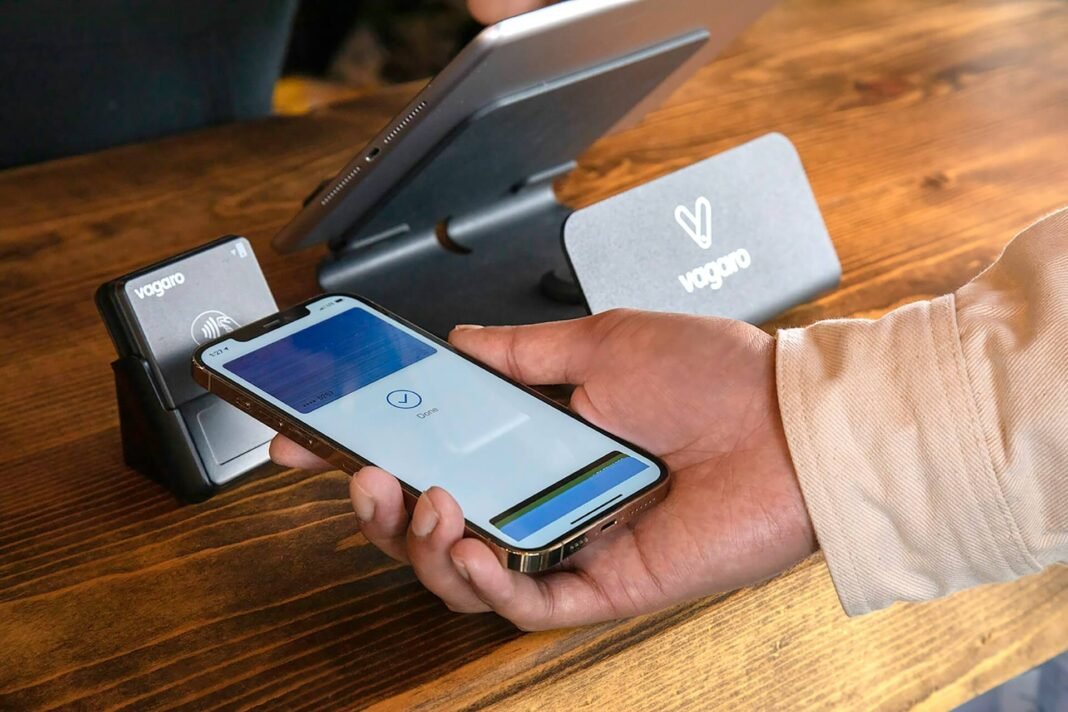
That feeling becomes weaker with a card or smartphone. The customer taps a device against a terminal, hears a short confirmation sound and takes the product. No money physically changes hands, and the financial loss becomes less visible.
The effect can be reinforced by:
- Contactless and mobile payments;
- Saved card details and one-click checkout;
- Automatic subscription renewals;
- Cashback and loyalty programs;
- Installment plans;
- “Buy now, pay later” services;
- Advertising that highlights a small monthly payment instead of the product’s full price.
Cashback is a particularly effective psychological tool. Receiving 2 manats in cashback on a 100-manat purchase does not mean the customer earned 2 manats. The customer still spent 98 manats. If the item was unnecessary, the promised reward merely created an illusion of savings.
Installment plans can be even more misleading. A product priced at 1,200 manats ($706) may appear affordable when advertised as “only 100 manats per month.” For the household budget, however, it remains a 1,200-manat obligation that will restrict disposable income for an entire year.
Most Azerbaijani Cards Are Debit Cards
Azerbaijan has an important local distinction. Of the country’s 22.8 million payment cards, around 20.76 million are debit cards and approximately 2.02 million are credit cards.
This means that most cashless purchases are made with consumers’ own money and do not automatically create debt.
The psychological effect can nevertheless remain. A bank balance declines immediately after a debit card purchase, but consumers may not realize how much they have spent after making numerous small payments throughout the day.
Credit cards and installment plans add another risk: they allow consumers to spend income they have not yet earned.
As of August 1, 2026, consumer loans issued by Azerbaijani banks had reached approximately 10.04 billion manats ($5.91 billion), compared with about 9 billion manats a year earlier. Consumer borrowing represented more than 31% of the banking sector’s total loan portfolio, according to Central Bank figures.
These figures do not prove that cashless payments are responsible for the growth in household borrowing. But easy checkout, aggressive installment advertising and reduced awareness of financial loss can create conditions for impulsive consumption.
How Consumers Can Regain Control
A return to an entirely cash-based economy is neither necessary nor realistic. Digital payments improve convenience, security and transparency. The problem begins when consumers stop reviewing their transactions and allow technology to make purchasing decisions almost automatic.
Several simple rules can help.
Use a separate card for everyday spending. A fixed weekly amount can be transferred to a card used for groceries, transportation, restaurants and small purchases. Once the balance runs low, it provides a digital version of the traditional envelope-budgeting system.
Enable instant transaction alerts. Seeing the purchase amount and remaining balance immediately makes the cost more tangible.
Review spending at least once a week. Banking apps can help divide expenses into essentials, groceries, transportation, entertainment and unplanned purchases.
Calculate the full cost of installment purchases. Consumers should record the complete obligation, including interest and fees, rather than focusing only on the monthly payment.
Do not shop simply to earn cashback. A reward is beneficial only when the purchase was already planned and the price is competitive.
Introduce a waiting period. Consumers could adopt a personal rule requiring a 24-hour pause before making an unnecessary purchase above 50 manats ($29).
Audit subscriptions and automatic payments. Small recurring charges can go unnoticed but add up to a significant amount over a year.
Set daily and online payment limits. Most Azerbaijani banking apps allow customers to restrict card transactions. A limit can create an additional pause before an impulsive purchase.
Cashless payments do not make consumers poorer by themselves. What they do is shorten the distance between desire and purchase.
The essential financial skill of the digital era is therefore not rejecting technology. It is learning to pause, check the balance and ask one basic question: Was this purchase actually planned?
AZE.US