By AZE.US
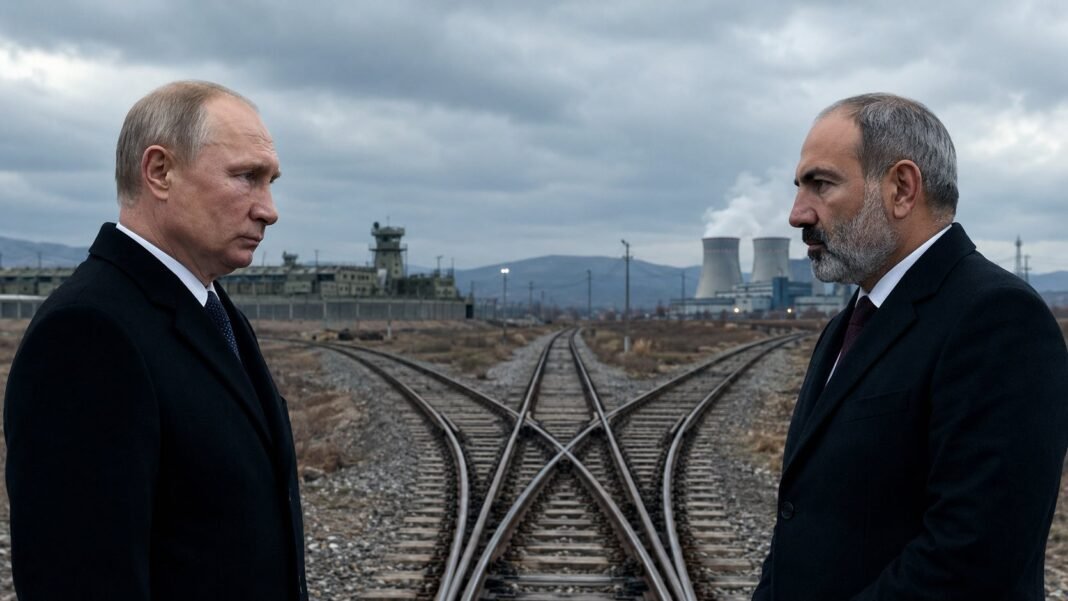
Russian President Vladimir Putin and Armenian Prime Minister Nikol Pashinyan have agreed to continue their talks in Moscow, with Armenia’s foreign policy direction, economic ties and security relations expected to dominate the agenda.
No exact date has been announced. Kremlin spokesman Dmitry Peskov said the visit could take place before the end of 2026 and that the schedule would be coordinated through diplomatic channels.
Putin invited Pashinyan to Moscow after the two leaders met Sept. 1 on the sidelines of the Shanghai Cooperation Organization summit in Bishkek. The Armenian prime minister accepted the invitation.
According to Peskov, one of the central issues will be Armenia’s future development, its foreign policy orientation and the possibility of holding a referendum on the country’s geopolitical direction.
EU or Eurasian Economic Union
The most contentious issue is whether Armenia intends to remain a member of the Russian-led Eurasian Economic Union, or EAEU, while pursuing closer integration with the European Union.
During the Bishkek meeting, Putin said Armenia has the sovereign right to seek EU membership but argued that simultaneous membership in the EU and EAEU would be impossible. He called for Armenian citizens to make that choice through a referendum, saying Moscow needs clarity to plan its future economic relationship with Yerevan.
Pashinyan rejected the need for an immediate vote. He said Armenia has not initiated the procedure for leaving the EAEU and has not violated its obligations within the organization.
Armenia’s parliament approved legislation in March 2025 launching a process toward possible EU accession. Moscow views that step as a political declaration of Armenia’s changing strategic orientation, while Yerevan maintains that it does not automatically constitute withdrawal from the EAEU.
Russia remains Armenia’s largest trade and economic partner, accounting for approximately 30% of its foreign trade. Moscow has also emphasized the discounted energy prices and other economic benefits Armenia receives through its participation in the EAEU.
Trade Restrictions on the Agenda
The leaders are also expected to address recent economic disputes.
Armenian officials have complained about restrictions affecting the export of Armenian goods to Russia, arguing that some of the barriers conflict with EAEU rules. Yerevan has asked Moscow to restore unrestricted access for Armenian products.
Peskov said the leaders identified specific trade and economic issues during their talks in Bishkek and that the relevant government agencies would continue working on them.
The Moscow meeting is therefore expected to cover practical matters affecting Armenian exports, Russian energy supplies and the operations of Russian companies in Armenia, in addition to the broader dispute over the country’s geopolitical direction.
Armenian Railway Concession
Another major issue is the future management of Armenia’s railway network.
Since 2008, the system has been operated under a concession by South Caucasus Railway, a subsidiary of Russian Railways. The agreement was signed for 30 years, with an option for an extension.
Yerevan has proposed that Russia transfer or sell the concession rights to a third party acceptable to both countries. Pashinyan has described that option as the best possible solution for Armenia.
Putin has said that further investment in Armenia’s railway infrastructure must be justified by expected freight volumes.
The issue also has direct implications for Azerbaijan. Sections of Armenia’s railway network could become part of restored transport links connecting Armenia with Azerbaijan and Turkey. The identity of the future operator and the source of investment will influence how quickly those routes can be rehabilitated and reopened.
Russia Raises Possibility of Military Withdrawal
The future of Russia’s 102nd Military Base in Gyumri has also entered the public debate.
Putin said Russia would withdraw its forces if Armenia decided that the base was no longer needed. He added that Moscow would not impose its military presence on the country.
Pashinyan has not formally called for the base’s removal. However, Putin’s willingness to publicly discuss a withdrawal illustrates the depth of the changes underway in relations between the two countries.
Following the Bishkek talks, Pashinyan described the meeting as “very good” and said Armenia and Russia needed to reconsider their relationship in light of the new regional environment.
The forthcoming Kremlin meeting could therefore determine whether Russia and Armenia preserve their traditional alliance or move toward a more limited and pragmatic partnership.
For Azerbaijan and the wider South Caucasus, the outcome will be significant. It could affect regional transportation projects, Russia’s military footprint and the broader balance of influence between Moscow and the West.
AZE.US