By AZE.US
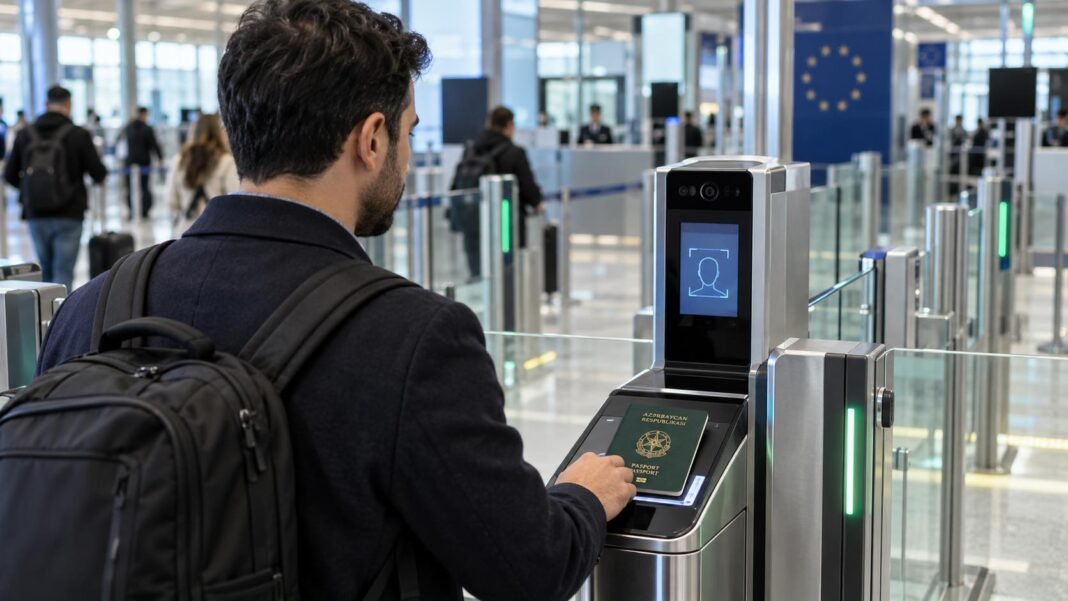
Europe’s new border system does not eliminate Schengen visas for Azerbaijani citizens. Instead, it changes how travelers are checked: passport stamps are being replaced by electronic records, biometric identification and automatic monitoring of permitted stays.
The European Union is implementing two separate reforms. The Entry/Exit System, known as EES, is already operational, while the EU’s unified digital platform for Schengen visa applications has not yet launched.
Biometrics Replace Passport Stamps
EES began its phased introduction on Oct. 12, 2025, and became fully operational at participating countries’ external borders on April 10, 2026.
The system applies to non-EU citizens entering Europe for short stays, including travelers who require Schengen visas and those eligible for visa-free travel.
EES electronically records the date and location of every entry and exit, as well as any refusal of entry. It also processes passport and biometric information, according to the EU’s official EES guidance.
For Azerbaijani travelers, this means passports are scanned and facial images are registered electronically at the border. The fingerprints of Schengen visa holders may be checked against information previously submitted to the EU’s Visa Information System.
Initial biometric registration may take longer than the former passport-stamping procedure, potentially resulting in additional waiting time at airports and other border crossings.
Overstays Will Be Detected Automatically
EES automatically calculates how long a traveler has remained in the Schengen Area.
The general limit for short visits is 90 days within any 180-day period, although an individual visa may authorize a shorter stay. Travelers must therefore follow both the visa’s validity dates and the number of permitted days stated on it.
Under the previous system, border officers relied largely on passport stamps to calculate a visitor’s stay. EES can now detect even a one-day overstay electronically.
Violations may lead to penalties under the relevant country’s laws, including fines, visa cancellation, refusal of entry or restrictions on future travel. The change is particularly important for people who frequently travel between Azerbaijan and Europe or hold multiple-entry visas.
The EU regulation establishing EES provides for electronic border records and automatic calculation of authorized stays.
Do Azerbaijani Citizens Still Need Schengen Visas?
Yes. EES is not a visa and does not introduce visa-free travel for Azerbaijani citizens.
The European Union continues to list Azerbaijan among the countries whose citizens must obtain visas before crossing the Schengen Area’s external borders, according to the current EU visa regulation.
Azerbaijani citizens traveling with ordinary passports must therefore continue applying for Schengen visas.
ETIAS, the EU’s separate electronic travel authorization, generally does not apply to Azerbaijani citizens traveling on Azerbaijani passports because it is intended for visitors from visa-exempt countries. Azerbaijani Schengen visa holders are subject to EES border checks but do not need to obtain ETIAS.
The Digital Schengen Visa Is Not Yet Available
The EU has adopted legislation to digitize the Schengen visa process, but the change should not be confused with the EES border system.
As of September 2026, a unified EU platform has not yet replaced the current application process. The European Commission must separately set the platform’s launch date after technical testing has been completed.
Once operational, the EU Visa Application Platform is expected to allow applicants to complete forms, upload passport copies and supporting documents, pay fees and receive decisions online.
Physical visa stickers will eventually be replaced by digital visas secured through cryptographically signed two-dimensional barcodes.
The EU regulation on digitalizing visa procedures also allows participating countries a transition period of up to seven years after the platform begins operating.
Until official implementation is announced, Azerbaijani applicants should continue following the procedures published by embassies, consulates and authorized visa centers.
Some Applicants Will Still Need In-Person Appointments
Digitalization will not eliminate every visit to a consulate or visa center.
An in-person appearance may still be required for:
- First-time Schengen visa applicants;
- Applicants using a new passport;
- Travelers who need to submit updated biometric data;
- Applicants called for an interview or additional document verification.
Repeat applicants may eventually be able to complete the process entirely online if they use the same passport and their biometric information was collected within the previous 59 months.
Digitalization also does not mean that visas will automatically be approved more quickly. Processing times and final decisions will remain the responsibility of the relevant consulate and will depend on the documents submitted and the circumstances of each application.
What Azerbaijani Travelers Should Do
Azerbaijani citizens planning trips to Europe should:
- Allow additional time for border checks, particularly during their first EES registration;
- Ensure their passport details match the information on their visa;
- Carefully track the number of days they are permitted to remain in the Schengen Area;
- Avoid relying on the absence of passport stamps when calculating previous trips;
- Remember that ETIAS is not required when traveling with an Azerbaijani passport and a Schengen visa;
- Use only official embassy, consular or authorized visa-center websites.
For law-abiding travelers, the new system should eventually make border records clearer and future checks more efficient. For those who exceed their permitted stay, however, the digital system leaves significantly less room for error.
AZE.US