By AZE.US
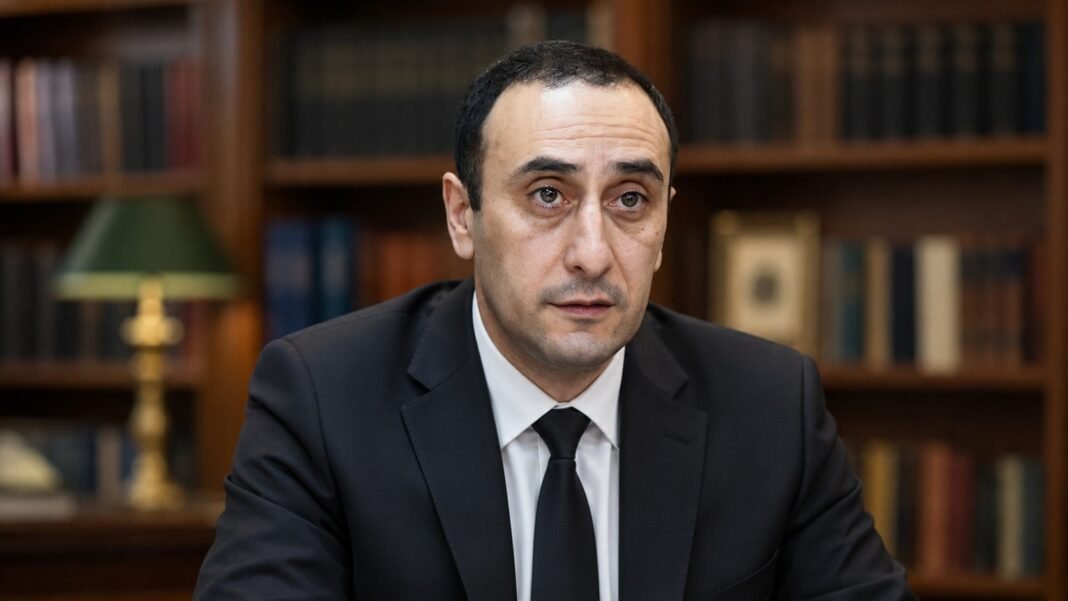
The latest phone conversation between the presidents of Azerbaijan and Russia may indicate that Moscow is seeking to retain influence over regional processes increasingly unfolding without its participation, historian and political analyst Rizvan Huseynov said.
Speaking on the Novosti Kavkaza YouTube channel, Huseynov discussed Vladimir Putin’s call with Azerbaijani President Ilham Aliyev, the future of Russia’s position in Armenia, emerging transport routes and the normalization process between Baku and Yerevan.
The analyst stressed that official statements did not disclose the full substance of the presidential conversation. Any claims about specific requests made by Moscow therefore remain speculation.
However, Huseynov believes Russia is concerned about several interconnected issues, including the North-South corridor, transit through Azerbaijan, relations with Iran, Armenia’s changing foreign policy and Moscow’s diminishing role in the South Caucasus.
Russia Left Outside the New Logistics System
According to Huseynov, Azerbaijan is pursuing an independent transport strategy based primarily on its national interests.
The Middle Corridor, which connects China and Central Asia with Azerbaijan, Georgia, Turkey and Europe, occupies a central place in that strategy.
“Azerbaijan has never sought to befriend one country against another. If trade is beneficial, we trade,” Huseynov said.
He argued that the development of the Trans-Caspian route is not directed against Russia. Its purpose is to turn Azerbaijan into a major Eurasian logistics hub, increase transit revenues and strengthen the country’s political independence.
Russia, he said, has limited its own involvement in regional projects by continuing to view the South Caucasus largely through the lens of political and military control. As a result, several initiatives in which Moscow could have participated are now being developed with other partners.
Huseynov cited plans to restore railway connections through southern Armenia. Russia had an opportunity to participate in the project alongside Azerbaijan and Armenia but failed to take advantage of it, he said.
Azerbaijan Will Not Accept Risky Military Transit
The possibility of Russian military cargo being transported to Iran through Azerbaijan was another sensitive issue raised during the discussion.
Huseynov said Baku has no interest in becoming involved in confrontations involving Russia, Iran, the United States or Israel.
Russia could theoretically use maritime routes across the Caspian Sea, he noted, but the security of such shipments has become increasingly uncertain. Allowing military transit across Azerbaijani territory would expose Baku to serious diplomatic and security risks.
The analyst did not rule out the possibility that transit was discussed during the conversation between Putin and Aliyev. He again emphasized, however, that there is no confirmed information about such negotiations.
Azerbaijani Gas Could Give Armenia an Alternative
Huseynov also addressed suggestions that Russia could use natural gas supplies to pressure Armenia.
In his assessment, Yerevan’s dependence on Russian gas is no longer without alternatives. Armenia could eventually receive some of its gas from Azerbaijan, either directly, through Georgia or under swap arrangements involving Turkey.
Such supplies would require the restoration and modernization of infrastructure, including pipeline sections connecting western Azerbaijan with northeastern Armenia.
“Armenia has several possible alternatives. Gas can therefore no longer be regarded as Moscow’s unconditional instrument of pressure on Yerevan,” Huseynov said.
The volumes required by Armenia are relatively limited, he added, making alternative arrangements technically possible if the necessary political decisions are made.
Economic Normalization Has Already Begun
Huseynov said relations between Azerbaijan and Armenia are changing even before the signing of a final peace agreement.
Energy products and other transit cargo are already reaching Armenia through Azerbaijan, while the first Armenian goods have reportedly entered the Azerbaijani market.
The analyst said the beginning of bilateral trade was politically significant regardless of the initial volumes or range of products.
Economic ties, transportation links and mutual commercial interests could create a more durable foundation for peace than political documents alone, he argued.
For Azerbaijan, the priority is therefore not the hurried signing of an agreement but the creation of a functioning system of regional cooperation.
Georgia has an important role in this process as the main transit link currently connecting Azerbaijan and Armenia. Turkey could later become part of a broader regional trade and transportation network.
Iran Is Reconsidering Its Position on TRIPP
Huseynov also pointed to signs that Tehran may be changing its approach to the Trump Route for International Peace and Prosperity, or TRIPP, which would pass through southern Armenia.
He described recent calls by Iranian Foreign Minister Abbas Araghchi for a new chapter in relations with Azerbaijan as a positive signal.
According to the analyst, Tehran appears to be recognizing that the emerging transport system in the South Caucasus could provide substantial economic benefits for Iran.
The Araz Corridor through Iranian territory could be developed alongside the route through Armenia. Huseynov said the two routes did not necessarily have to compete.
“The more roads there are, the more attractive our region becomes to international logistics companies,” he said.
Iranian carriers could use Azerbaijan to reach Georgia and Black Sea ports, while Tabriz could gain additional trade and investment opportunities.
Huseynov suggested that Russia and Iran no longer share entirely compatible interests in the South Caucasus. Parts of the Iranian establishment, he said, believe Moscow failed to provide Tehran with the support it expected during recent regional confrontations.
Russia’s Military Base in Armenia Is Losing Its Purpose
The future of Russia’s military base in Gyumri depends not only on the policies of Armenian Prime Minister Nikol Pashinyan but also on the transformation of the wider regional security system, Huseynov said.
Russia’s military presence was traditionally presented as protection for Armenia against Turkey. Gradual normalization between Armenia and both Turkey and Azerbaijan is weakening that justification.
The base was also part of a broader Russian military network connected to Moscow’s presence in Syria and the Eastern Mediterranean. As Russia’s position on those fronts has weakened, the Gyumri facility has lost part of its former strategic importance, according to Huseynov.
Economic relations with Azerbaijan and the prospect of opening the Armenian-Turkish border could eventually reshape Armenia’s security strategy and further reduce its reliance on Russia.
Azerbaijan Is Turning Regional Change Into Opportunity
Huseynov said the South Caucasus is gradually moving away from a system based on military dominance toward competition among transport and economic projects.
Azerbaijan is benefiting from that transition by building highways, railways, ports and other infrastructure connecting Central Asia, the Caspian region, the South Caucasus and Europe.
The analyst acknowledged that a weakened Russia could still create risks for neighboring countries. Georgia, where Russian forces remain stationed in the occupied territories, could be particularly vulnerable.
For now, however, Moscow remains heavily focused on its confrontation with Ukraine and the broader strategic struggle in Eastern Europe.
“Azerbaijan is working with the new opportunities while containing the risks,” Huseynov concluded.
AZE.US