AZE.US
The Armenia-Azerbaijan peace process could face another delay because Armenian Prime Minister Nikol Pashinyan’s ruling party does not have enough seats to independently push constitutional changes to a referendum, Azerbaijani expert Chingiz Mammadov said.
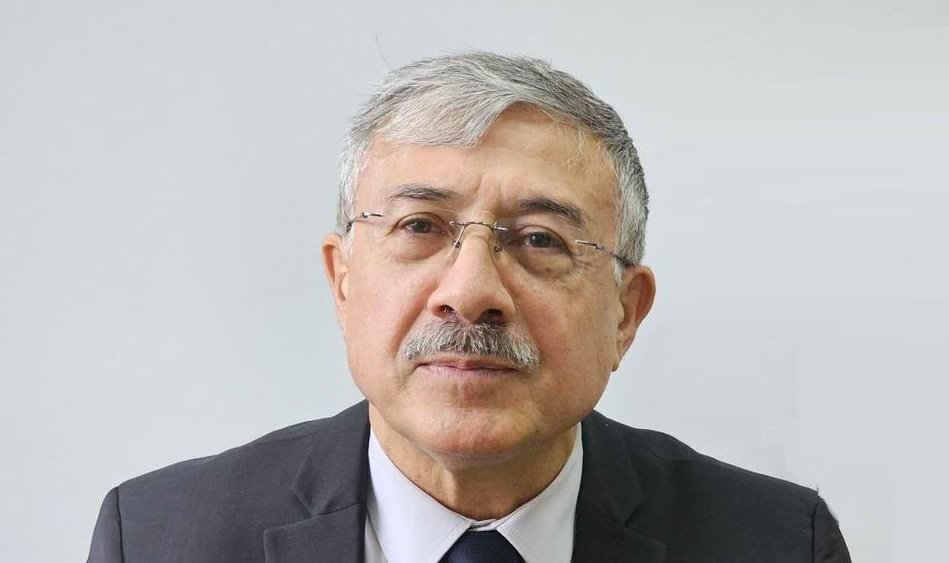
Mammadov, an independent expert, former head of UNDP environmental projects in Azerbaijan and former head of the communications office of the President of Azerbaijan, made the comments in an interview with the YouTube channel “Modern Conversation With Rasim Babayev.”
According to Mammadov, the main result of Armenia’s parliamentary elections is that Pashinyan remains in power and his party has a parliamentary majority. However, that majority is not enough for constitutional changes, which Azerbaijan has repeatedly linked to the final peace agreement.
“Pashinyan remains prime minister. His party has a majority in parliament. But this number of votes is not enough to put constitutional amendments to a referendum. Pashinyan does not have a constitutional majority,” Mammadov said.
He said this creates a difficult political reality for the peace process.
Mammadov noted that Pashinyan could theoretically try to win over several opposition lawmakers. But he said the idea of a constitutional referendum remains unpopular inside Armenia, especially on issues related to Azerbaijan.
“Most likely, the peace treaty between Armenia and Azerbaijan will not be signed,” Mammadov said. “Most likely, because it is hard to say. Maybe Pashinyan will manage to bring several votes to his side.”
The expert said that for Azerbaijan, the launch of the transport route through the Zangezur corridor may now be even more important than the formal signing of a peace treaty.
He argued that the route would serve the interests of Azerbaijan, Turkey, the member states of the Organization of Turkic States, as well as major international players including the United States, Europe and China.
“For Azerbaijan, it is probably more important than the peace treaty that the road through the Zangezur corridor starts working,” Mammadov said.
At the same time, he said Iran remains the main opponent of such a route, both for geopolitical and commercial reasons.
According to Mammadov, Tehran would prefer regional transport routes to pass through Iranian territory, allowing Iran to benefit economically. But if the Zangezur route is opened, Armenia would also gain a new source of transit revenue.
He said this creates a contradiction between Armenia and Iran, despite the close ties between the two countries in recent decades.
Mammadov also said Pashinyan’s tougher line toward some opposition figures may be part of a post-election show of strength and a signal to Moscow.
He pointed to Armenia’s complicated geopolitical position: the country still hosts Russia’s 102nd military base and remains a member of the CSTO, while at the same time holding military exercises with the United States, France and Greece.
“On one side, Armenia has the 102nd Russian military base. On the other, Armenia is holding exercises with NATO countries. This is a very complicated situation,” Mammadov said.
He added that Moscow tried to limit Pashinyan’s room for maneuver through both old and new political forces in Armenia, but the election results showed that the opposition electorate is unstable and not ready for mass street protests.
According to Mammadov, some voters supported new political forces not necessarily because they were pro-Russian, but because of fatigue, apathy and a desire to try a “new face.”
The expert said that if Armenia eventually holds a referendum on constitutional changes, it would become an important signal for both Azerbaijan and the wider region.
Mammadov said Baku is not interested only in an agreement with specific Armenian politicians, but in a peace backed by Armenian society.
“We do not want to make peace with Pashinyan or other political leaders. We want to make peace with the Armenian people. The form of expression of the will of the Armenian people is a referendum,” Mammadov said.
AZE.US