AZE.US
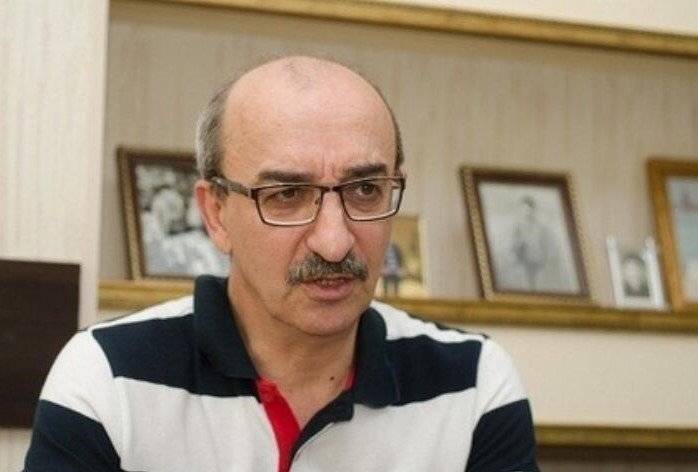
Russia could theoretically launch a limited provocation against a NATO member, but Moscow does not currently have sufficient forces to wage a full-scale war against the alliance, Azerbaijani military analyst Azad Isazade said.
In an interview with the Echo Baku YouTube channel, Isazade said a hybrid operation intended to test the speed and strength of NATO’s response appeared more plausible than an overt invasion.
After Russia’s full-scale invasion of Ukraine, even scenarios once considered highly unlikely can no longer be completely dismissed, he added.
From the Suwalki Gap to Narva
Isazade identified the Suwalki Gap - a narrow strip of land between Belarus and Russia’s Kaliningrad region that connects Poland with Lithuania - as one of the most vulnerable areas.
In theory, control of the corridor could sever the Baltic states’ primary land connection with the rest of NATO. Such an operation, however, would require substantial military resources and risk an immediate confrontation with the alliance.
The analyst said more limited hybrid actions were more likely, including border provocations, sabotage operations involving personnel without military insignia or attempts to exploit tensions among Russian-speaking communities.
He cited Narva, an Estonian city on the Russian border with a predominantly Russian-speaking population, as one potential flashpoint.
“If such an operation takes place, its purpose would be to test NATO’s resolve,” Isazade said. “Everything would depend on the response during the first three or four days. If the reaction is sufficiently tough, Russia would be forced to end the operation quickly.”
The Baltic states, Poland and Finland have spent years preparing for such risks, strengthening their borders and adjusting defense planning based on lessons from the war in Ukraine, he said.
Belarus More Vulnerable Than Russia
Isazade expressed doubt that Belarus would commit its armed forces to a wider war.
Belarus lacks Russia’s strategic depth, has a limited number of critical industrial and energy facilities and does not have an army with comparable combat experience, he said.
He also argued that there was little public appetite in Belarus for direct participation in a major war.
Belarus allowed Russia to use its territory during the February 2022 assault on Ukraine, but President Alexander Lukashenko did not send Belarusian forces directly into combat.
Isazade said Minsk would probably attempt to maintain that position, particularly because Belarusian territory and infrastructure would be highly vulnerable to retaliation.
Russia’s main military resources also remain tied down in Ukraine. According to Isazade, the concentration of Russian forces near NATO’s borders has not yet reached the level required for a major ground invasion.
Nuclear Threats Offer Little Military Advantage
The interview also addressed recurring statements by Russian politicians about the possible use of tactical nuclear weapons.
Isazade said such weapons would offer limited military value on the current Ukrainian battlefield. The front is no longer held by continuous formations of large units, with both sides increasingly operating in small, dispersed groups across a broad contested zone.
Under those conditions, a tactical nuclear strike would not guarantee a Russian breakthrough but would create catastrophic political and strategic consequences, he said.
China remains one of the few countries capable of exercising meaningful influence over Moscow because Russia’s economy, access to components and the financial interests of parts of its political elite are deeply connected to Beijing, according to the analyst.
Isazade also noted that the use of nuclear weapons would require orders and actions at several levels of Russia’s military command and could not be carried out by one person alone.
“Russia Lost Strategically in 2022”
Isazade argued that Russia suffered a strategic defeat when it failed to capture Kyiv and withdrew its forces from northern Ukraine in 2022.
“By failing to take Kyiv and beginning to withdraw its troops, Russia had already suffered a strategic defeat,” he said. “That outcome made Western governments more confident and encouraged them to expand military support for Ukraine.”
Moscow now faces difficult choices, the analyst said. A major new offensive would require another large mobilization, carrying serious domestic political risks. Nuclear escalation, meanwhile, could unleash an uncontrollable chain of events.
Isazade suggested that warnings about opening another front may therefore be intended primarily to intimidate Western governments and pressure them to reduce support for Ukraine.
Could Russia Intervene in Armenia?
Another part of the interview focused on the possibility of Russian intervention in Armenia if Yerevan continues distancing itself from Moscow.
Isazade said a major Russian military operation in Armenia would be extremely difficult to organize because the two countries do not share a border.
Moving significant numbers of troops would require access through Georgia or Azerbaijan, or a much longer route across the Caspian Sea and Iran.
Russia’s military base in Gyumri does not have sufficient forces to conduct a large independent operation, he said. Any preparations at the base would also likely be detected quickly.
Moscow could theoretically attempt to seize Yerevan’s airport through an airborne operation. However, that would require a secure air corridor, complete surprise and the ability to deliver reinforcements continuously.
“Logistics decides everything,” Isazade said. “In Armenia’s case, the supply route would be so long and unstable that sustaining a large military force would be extremely difficult.”
Why Armenia Is Buying Indian Weapons
Isazade also addressed Armenia’s expanding purchases of Indian weapons, saying Azerbaijan should monitor the process closely.
Any weapon deployed in Armenia could potentially be used against Azerbaijan in the future, he warned. At the same time, he said the current deliveries did not represent an immediate military threat.
Armenia lost a significant amount of equipment during the 2020 war, while much of its remaining artillery and other hardware has a reduced operational lifespan.
As an independent state, Armenia has the right to rebuild its armed forces, Isazade said, although Azerbaijan must carefully assess the type, quantity and location of the systems being purchased.
Yerevan will need to train personnel, build supporting infrastructure and establish a continuous ammunition supply before the new systems become fully operational. That process could take about a year.
Isazade suggested that Baku’s relatively restrained public response may reflect prior knowledge about the purpose and planned deployment of the weapons, though he stressed that this was only one possible explanation.
“These deliveries do not pose an immediate threat today,” he said. “But the weapons will remain in Armenia and could be used ten years from now. Azerbaijan must therefore monitor whether the acquisitions are approaching a critical mass.”
Armenia’s military buildup should be assessed within the broader context of the peace process, the characteristics of the weapons being acquired and their long-term effect on the regional balance of power, Isazade concluded.
AZE.US